

Custom Burger Clamshells for Restaurants and Food Service
Burger clamshell boxes provide secure single-serve packaging for burgers, sandwiches, and hot entrees. Available in foam, paper, and compostable materials with custom printing options. Minimum order of 100 units, production time of 15-20 days from approved artwork. Standard sizes accommodate quarter-pound to half-pound burgers with toppings.
Material Options and Performance Characteristics
Expanded polystyrene foam (EPS) offers superior insulation, keeping burgers hot for 20-30 minutes. Foam resists grease penetration and moisture without requiring additional coatings. Lightweight construction reduces shipping costs. Note that some municipalities restrict foam food packaging due to recycling limitations.
Molded fiber paper clamshells use recycled paper pulp with natural grease resistance. Compostable in commercial facilities within 90-180 days when certified to ASTM D6400 standards. Handles temperatures up to 200°F for hot foods. Provides moderate insulation, maintaining food temperature for 15-20 minutes.
Bagasse (sugarcane fiber) clamshells combine heat resistance with environmental benefits. Microwave-safe and freezer-safe construction. Grease and cut-resistant properties prevent leaks and maintain structural integrity. Fully compostable with BPI certification. Slightly higher cost than foam or basic paper options.
Size and Configuration Options
Small clamshells measure 5" x 5" x 3", suitable for sliders and kids' meals. Medium 6" x 6" x 3" boxes fit standard quarter-pound burgers with lettuce and tomato. Large 6" x 6" x 3.5" accommodates half-pound burgers with multiple toppings. Extra-large 7" x 7" x 4" handles specialty burgers and loaded sandwiches.
Single-compartment designs focus space on main item. Three-section clamshells separate burger from fries or side items. Hinged lids secure with tab-and-slot closures, eliminating need for separate containers and reducing packaging waste. Perimeter seals prevent sauce and condiment leakage during transport.
Custom Printing and Branding
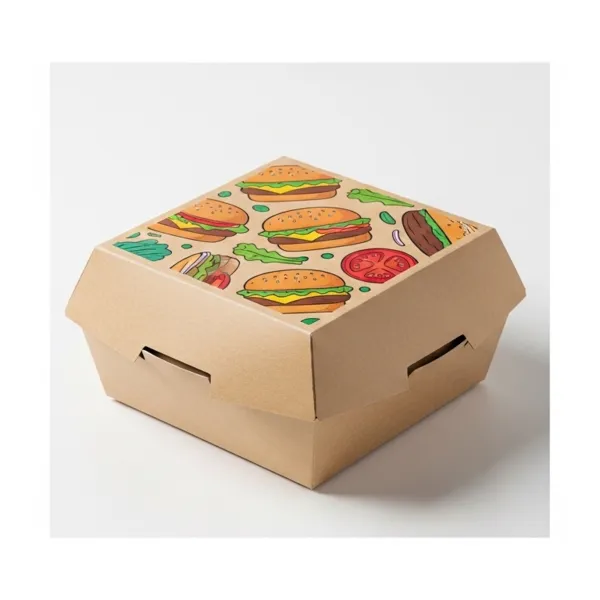
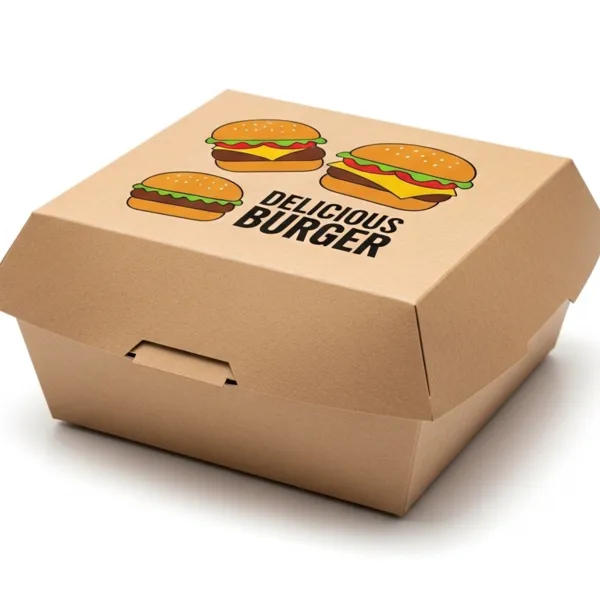
Flexographic printing applies logos and designs in up to 3 colors on lid and base exteriors. Print area covers approximately 5" x 5" on standard clamshells. Stock designs include generic "Hot & Fresh" or "Gourmet Burgers" text for fast turnaround without custom artwork.
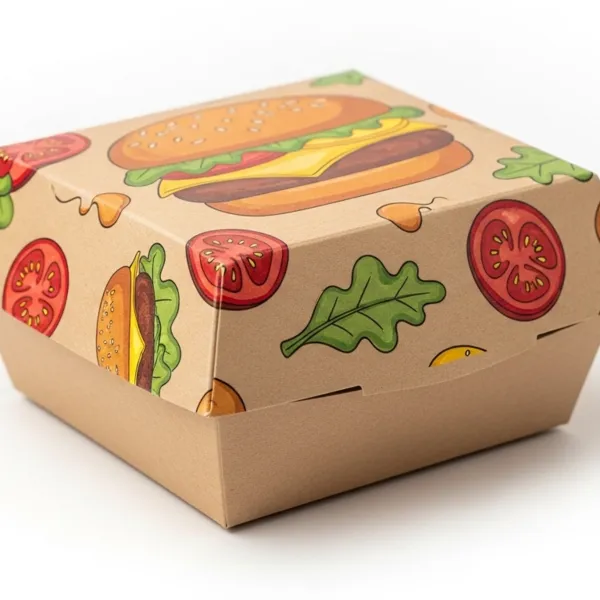
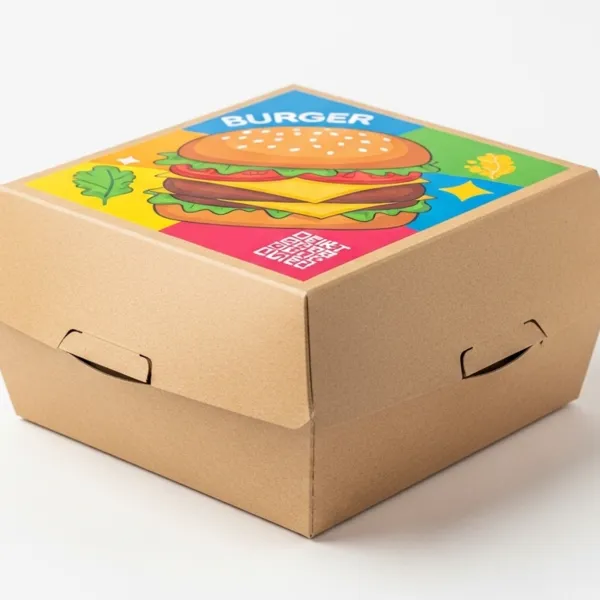
Full-color digital printing reproduces photographic images and complex graphics on compostable fiber materials. No plate charges or setup fees for digital printing, though per-unit costs run higher than flexographic for quantities above 1,000 units. Label printing offers economical alternative for orders under 500 units.
Embossed logos create raised designs without ink, maintaining natural material appearance. Works particularly well on molded fiber clamshells. Setup fee of $125 for embossing die, but no ongoing color charges. Minimum 500 units recommended for embossed orders to justify die costs.
Wholesale Pricing by Material and Quantity
- 100 units: $0.45 per box (foam), $0.58 (molded fiber), $0.68 (bagasse)
- 500 units: $0.32 per box (foam), $0.42 (molded fiber), $0.51 (bagasse)
- 1000 units: $0.26 per box (foam), $0.35 (molded fiber), $0.42 (bagasse)
Prices reflect plain stock containers. Custom printing adds $0.06-0.10 per unit depending on color count and print method. Plate charges of $75 per color for flexographic printing. Three-section clamshells cost additional $0.08-0.12 per unit over single-compartment designs. Minimum order 100 units per size and material.
Temperature Retention and Food Safety
Foam clamshells maintain food above 140°F for 25-30 minutes under normal conditions. Fiber materials hold heat for 15-20 minutes. Pre-heating containers under heat lamps extends holding time by 5-10 minutes. Vent holes in lids prevent steam buildup that makes buns soggy.
All materials meet FDA requirements for direct food contact. Materials withstand hot grease and acidic condiments without breaking down or leaching chemicals. Third-party testing confirms no migration of harmful substances into food. Material safety data sheets available for regulatory compliance and health inspections.
Restaurant and Food Service Applications
Quick service restaurants use clamshells for drive-through and takeout orders, ensuring burgers arrive intact and hot. Food trucks rely on secure closures to prevent spills during mobile service and customer transport. Delivery services prefer leak-resistant clamshells that survive jostling in delivery bags.
Catering operations package individual burger servings for events and office lunches. School cafeterias use compartmented clamshells to separate entrees from sides while meeting portion control requirements. Sports venues and stadiums depend on sturdy clamshells that customers can carry while walking.
Environmental Considerations and Local Regulations
Check local ordinances before ordering foam clamshells, as cities including San Francisco, Seattle, and Portland ban polystyrene food packaging. Compostable alternatives comply with most environmental regulations and appeal to sustainability-focused consumers.
Molded fiber and bagasse clamshells require commercial composting facilities for proper disposal. Provide clear disposal instructions to customers and staff. Some materials accept recycling in communities with specialized programs. Contact local waste management to understand available disposal options in your service area.
Storage and Inventory Management
Store clamshells in dry environments between 50-80°F to prevent moisture absorption and material degradation. Stack cartons no more than 8 high to avoid crushing containers at bottom of pallet. Foam and fiber materials remain shelf-stable for 18-24 months when properly stored.
Calculate inventory based on daily usage patterns plus 20% buffer for demand fluctuations. Order in quantities that balance volume discounts with storage space limitations. Rotate stock using first-in, first-out method to prevent long-term storage of older inventory.
Performance Testing and Quality Standards
We test clamshells for closure strength, ensuring lids remain secure under 2 lbs of downward pressure. Grease resistance testing uses standardized oil blends at 180°F for 30 minutes to verify no breakthrough or visible staining. Microwave testing confirms material stability at 1000 watts for 2 minutes.
Drop testing from 3 feet height verifies containers remain closed and intact when accidentally dropped. Print adhesion testing uses tape-pull method to ensure ink bonds properly to container surface. All production batches undergo inspection before shipment, with acceptance criteria based on industry standards.
Comparison with Alternative Packaging
Clamshells offer better heat retention than paper wraps, keeping food hot longer during delivery and takeout. More secure than boxes for saucy burgers, preventing condiment leaks. Higher per-unit cost than paper wraps but reduced customer complaints about messy packaging.
Single-use clamshells simplify operations compared to reusable containers that require washing infrastructure. Lower labor costs offset higher material costs in high-volume operations. Disposable packaging eliminates concerns about container returns and sanitation between uses.
Customization Timeline and Order Process
Submit specifications through our quote request form including size, material, quantity, and printing requirements. Standard quotes provided within 4 business hours. Sample clamshells available for $25-45 per pack of 10-25 units to test before full production.
Stock clamshells ship within 3-5 business days of order placement. Custom printed containers require 15-20 days production after artwork approval and 50% deposit. Rush production available for 10-12 day turnaround at 25% premium. Balance due before shipment via credit card, ACH, or wire transfer.
Complementary Food Service Products
Coordinate burger clamshells with custom fry containers for complete meal packaging. Add branded napkins for cohesive customer experience. Consider drink carriers to package complete combo meals efficiently.