


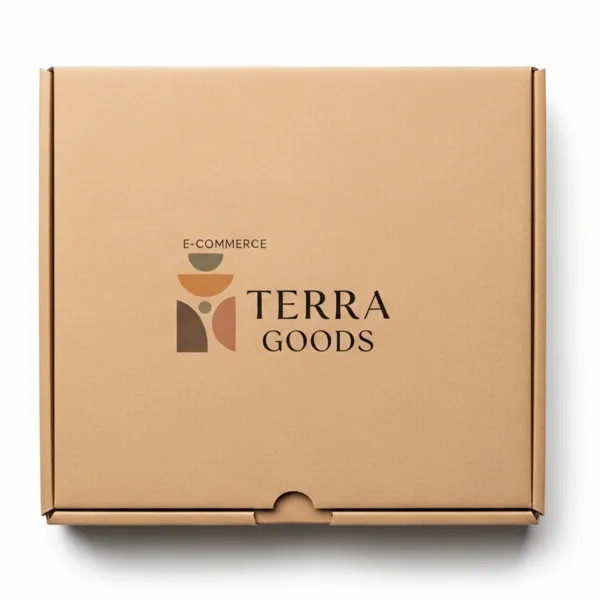

Corrugated vs Cardboard Boxes: What's the Difference and Which Do You Need?
The terms "corrugated" and "cardboard" get used interchangeably all the time. They are not the same thing. Choosing the wrong one can mean damaged shipments, wasted budget. Or boxes that look cheap on a shelf. This guide breaks down the real differences so you can make the right call for your business.
What Is Corrugated?
Corrugated board is made of three layers: a wavy inner flute sandwiched between two flat liner sheets. That flute is what gives corrugated boxes their strength. The air trapped inside acts as a shock absorber, making corrugated the standard for shipping anything that needs to survive a warehouse, a conveyor belt. Or a drop from a delivery driver's truck.
When most people picture a "shipping box," they are picturing corrugated. It stacks under weight, resists punctures. And holds its shape under moisture better than plain paperboard. Most retail-ready corrugated also prints well. Which is why DTC brands use it for both protection and branding.
What Is Cardboard (Paperboard)?
Cardboard, more accurately called paperboard or chipboard, is a single-layer thick paper product. It does not have the inner flute. This makes it lighter, thinner. And easier to fold into precise shapes. You see it everywhere in retail packaging: cereal boxes, cosmetic cartons, folding gift boxes, product sleeves.
Paperboard is not designed for heavy-duty shipping. It compresses under weight and tears under sustained pressure. But for retail display, subscription inserts. And lightweight protective packaging, it does the job well and costs less than corrugated per unit.
Side-by-Side Comparison
| Feature | Corrugated Boxes | Cardboard / Paperboard Boxes |
|---|---|---|
| Structure | 3-layer fluted board | Single-layer flat sheet |
| Strength | High -- resists stacking and impact | Moderate -- fine for light retail use |
| Best Use | Shipping, heavy products, e-commerce | Retail display, cosmetics, gifts, inserts |
| Weight | Heavier per unit | Lighter per unit |
| Print Quality | Good -- CMYK and Pantone available | Excellent -- crisp color reproduction |
| Cost | Slightly higher material cost | Lower material cost |
| Recyclability | Widely recyclable | Widely recyclable |
| Moisture Resistance | Better | Lower |
| Custom Shapes | Yes -- inserts, dividers, mailers | Yes -- folding cartons, sleeves, boxes |
Corrugated Boxes: Pros and Cons
Pros
- Superior strength for heavy or fragile products
- Handles stacking pressure without collapsing
- Protects against moisture and impact during shipping
- Available in multiple flute sizes for different protection levels
- Works for both shipping and branded unboxing experiences
Cons
- Higher material weight adds to shipping costs
- Takes up more storage space before assembly
- Slightly more expensive per unit than paperboard
- Not ideal for thin, lightweight retail cartons
Cardboard / Paperboard Boxes: Pros and Cons
Pros
- Lighter weight lowers shipping costs for retail products
- Folds into precise shapes -- great for cosmetic and food packaging
- Excellent print surface for vibrant color reproduction
- Lower material cost at equivalent sizes
- Takes up less space in storage and during fulfillment
Cons
- Not suited for heavy products or long-distance shipping without additional protection
- Compresses under stacking weight
- More vulnerable to moisture damage
- Limited structural support for fragile items
Best For: Quick Reference Guide
Choose Corrugated If You Are:
- Shipping direct-to-consumer orders through USPS, UPS, or FedEx
- Selling heavy, fragile, or high-value products
- Running a subscription box business that needs branded outer packaging
- Stacking inventory in a warehouse or fulfillment center
- Selling products that need protection from moisture in transit
Choose Cardboard / Paperboard If You Are:
- Selling retail products displayed on store shelves
- Packaging cosmetics, candles, supplements, or food items
- Creating folding cartons or product sleeves
- Shipping lightweight items inside a larger outer box
- Looking for premium print quality on a tighter budget
A Note on Competitors
Larger packaging manufacturers like WestRock and Smurfit Kappa have significant advantages in raw material sourcing and manufacturing scale. If you are ordering millions of units annually with locked-in specs, those operations can price aggressively. Online competitors like Packlane and Arka have built smooth ordering interfaces and strong brand followings in the DTC space.
The trade-off with most of them is minimums. Many require 500 to 1,000 units before you can start, which locks out small and growing businesses before they have validated their packaging design.
How Teal Packaging Approaches This
Teal manufactures both corrugated and cardboard (paperboard) boxes with no minimum order quantity. You can order one box or ten thousand. That matters when you are testing a new product, launching a seasonal line. Or scaling from startup to growth stage.
Every order ships free to the US, Canada, UK. And Australia. Standard turnaround is 7 to 14 business days from approved proof. The design team provides free support on every order. And printing is available in CMYK and Pantone to match your exact brand colors.
Whether you need a corrugated mailer box that can survive a cross-country shipment or a paperboard folding carton for retail display, the process is the same: no minimums, no design fees, free shipping.
If you are not sure which material fits your product, get a quote and ask. The team can walk through your product weight, shipping method. And retail environment to point you toward the right board type before you commit. Request a quote here and get a response within one business day.