

Custom Corrugated Boxes for Shipping
Corrugated shipping boxes are engineered to protect products during transit through multi-modal transportation networks. The fluted construction provides cushioning, rigidity, and stacking strength essential for warehouse storage and freight handling.
Custom sizing eliminates wasted space, reducing dimensional weight charges and minimizing void fill requirements for cost-efficient shipping operations.
Corrugated Construction
Corrugated board consists of a fluted middle layer sandwiched between flat liner sheets. The wavy flute geometry creates air columns that absorb impact forces and resist compression. This structure distributes stress across the material, protecting contents from drops, vibration, and stacking pressure during shipping and handling.
Single-wall corrugated uses one fluted layer between two liners, suitable for most standard shipping applications. The construction provides adequate protection for products up to 50-65 pounds when properly sized. Double-wall corrugated adds a second fluted layer for heavy or fragile products requiring enhanced protection.
Triple-wall configurations handle extreme weight or provide maximum cushioning for sensitive equipment.
Flute Types and Performance
E-flute measures 1/16 inch thick and provides excellent printability with moderate cushioning. The thin profile minimizes box size while maintaining protection for lightweight products. E-flute works well for retail-ready shipping boxes where the exterior serves as product packaging after delivery.
B-flute at 1/8 inch thickness balances cushioning and strength for general shipping applications. The flute size provides good stacking strength and puncture resistance while keeping overall box dimensions compact. B-flute suits most e-commerce shipping and represents the most common flute size for custom boxes.
C-flute measures 3/16 inch thick and offers superior stacking strength and cushioning. The larger flutes provide better compression resistance for palletized storage and heavy product protection. C-flute is preferred for industrial shipping, bulk packaging, and products requiring maximum protection.
F-flute at 1/32 inch is the thinnest option, used when minimal added thickness is critical. The fine flute provides some cushioning while maintaining compact dimensions close to solid paperboard.
F-flute suits products where box size directly impacts shipping costs or display requirements.
Bursting Strength and Edge Crush
Bursting strength measures the force required to puncture corrugated board, indicating impact resistance during handling. Standard single-wall boxes range from 125-275 pounds per square inch (PSI) bursting strength depending on liner quality and flute type.
Higher values provide better protection against puncture from internal product edges or external impact.
Edge crush test (ECT) measures top-to-bottom compression strength, indicating stacking performance. ECT values from 23 to 55 pounds per lineal inch are common for single-wall boxes, with higher values supporting more stacking weight. Warehouse operations stacking pallets 6-8 feet high require higher ECT ratings to prevent bottom box crushing.
Custom Sizing Benefits
Right-sized boxes minimize dimensional weight shipping charges by eliminating excess space. Carriers calculate dimensional weight by multiplying length x width x height and dividing by a divisor (typically 139 for domestic shipments).
Custom boxes sized closely to product dimensions reduce this calculation, often resulting in 20-40% shipping cost savings versus stock boxes.
Proper sizing reduces void fill material requirements, cutting costs and improving sustainability metrics. Products fitting snugly in appropriately sized boxes need minimal cushioning, reducing packing time and material expenses. The environmental benefits include less waste and lower transportation emissions per product shipped.
Printing Options
Flexographic printing applies water-based inks directly to corrugated surfaces, reproducing logos, handling instructions, and shipping information. The process handles bold graphics and text effectively though fine detail reproduction is limited compared to offset printing.
Flexo suits high-volume production and creates acceptable quality for shipping boxes where graphics support brand recognition rather than photographic reproduction.
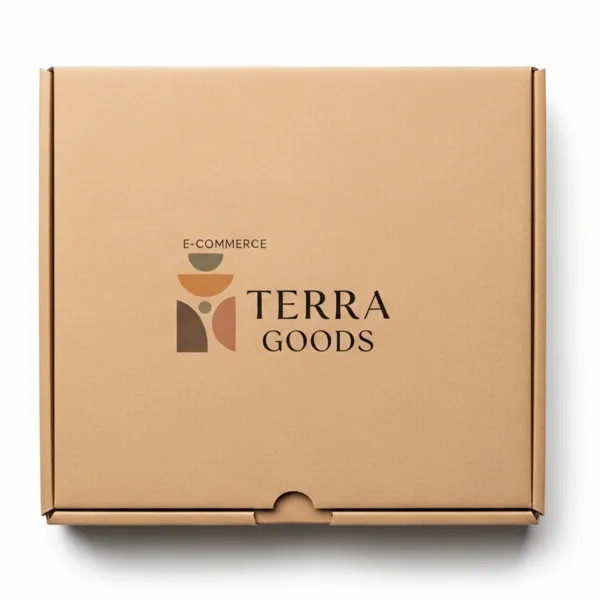
Digital printing on corrugated board enables full-color graphics including photography and gradients. The quality approaches offset printing while accommodating short runs economically. Digital printing suits e-commerce businesses creating custom unboxing experiences or products where the shipping box serves as retail packaging.
Pre-print processes apply high-quality graphics to liner sheets before corrugating, achieving better print quality than post-print methods. The flat sheet printing allows precise registration and color matching. Pre-print is economical for large volumes where setup costs amortize across thousands of boxes.
Box Styles
Regular slotted containers (RSC) are the most common box style, featuring flaps meeting in the middle when closed. The simple design is economical to produce and easy to assemble. RSC boxes suit most shipping applications and are available in any custom size.
Full-overlap containers (FOL) include flaps that overlap completely when closed, doubling material thickness at the closure. This construction provides additional strength for heavy products and better protection against bottom failure. FOL boxes cost more due to increased material but provide superior performance for challenging applications.
Half-slotted containers (HSC) feature a permanent bottom and top flaps only. The design suits products loaded from the top where bottom access is unnecessary. HSC boxes simplify packing operations and reduce assembly time versus standard RSC configurations.
Shipping Application
E-commerce fulfillment operations use custom corrugated boxes sized to common product dimensions, reducing the box SKU count needed while maintaining right-sizing benefits. Boxes are designed to accommodate standard void fill materials and integrate with automated packing systems.
Printed boxes create branded unboxing experiences that generate social media content and customer loyalty.
Industrial shipping for parts, components, and equipment requires heavy-duty corrugated with high burst and ECT ratings. Custom interior partitions, foam inserts, or formed pulp cradles protect products during freight shipping. Printed handling instructions and orientation arrows help ensure proper treatment throughout logistics networks.
Subscription box businesses use custom printed corrugated that creates anticipation and enhances perceived value. The boxes are engineered to protect monthly product assortments while serving as marketing tools. Interior printing adds discovery moments during unboxing, extending the brand experience beyond exterior graphics.
Production Specifications
Minimum order quantities for custom corrugated boxes start at 100 units for simple RSC designs with basic one or two-color printing. Complex structures or full-color digital printing may require 250-500 unit minimums depending on size and specifications. Production timelines run 15-20 business days from artwork approval, including:
- Die creation
- Material procurement
- Printing
- Converting operations
Stock corrugated boxes in standard sizes are available for immediate shipment with label application instead of direct printing. This option suits businesses testing new products or experiencing unpredictable volume where custom runs risk obsolete inventory. Stock boxes can be over-boxed with printed outer cartons for branded presentation.
Pricing Structure
A standard 12x9x6 inch RSC box in 32 ECT single-wall corrugated with two-color flexographic printing costs approximately $1.10-$1.50 per unit at 100 quantity, $0.75-$1.10 at 500 quantity, and $0.55-$0.90 at 1,000 quantity. Larger sizes increase proportionally based on material area. Double-wall construction adds $0.30-$0.50 per box.
Full-color digital printing adds $0.40-$0.70 per unit versus basic flexo printing.
Die charges for custom sizes typically run $150-$350 as one-time costs depending on box complexity. The die remains your property for reorders, eliminating repeat charges on subsequent production runs. Volume discounts increase significantly above 1,000 units as setup costs amortize and material purchasing becomes more efficient.
Quality Control
Corrugated box production includes burst testing and edge crush testing to verify materials meet specified performance standards. We measure box dimensions to ensure compliance within industry tolerances of plus or minus 1/8 inch.
Print quality inspection confirms graphics reproduce clearly and adhesion is adequate for handling throughout distribution.
Assembly and closure testing verifies that boxes set up easily and flaps close properly with standard packing tape. We perform drop tests with representative products to ensure boxes protect contents through normal shipping stresses. Any boxes failing performance criteria are rejected from shipments.
Getting Started
Request detailed pricing through our online form, providing product dimensions, weight, desired box size, quantity requirements, and shipping method (ground, air, international).
Our packaging engineers will recommend appropriate flute type, ECT rating, and wall construction for your application. We provide digital mockups showing how printed graphics will appear on finished boxes.
Physical samples are available for orders exceeding 500 units, allowing you to test box performance with actual products and shipping methods before full production. This validation ensures the packaging protects adequately and integrates well with your packing operations.
Browse our complete selection of shipping and protective packaging solutions for additional options.