

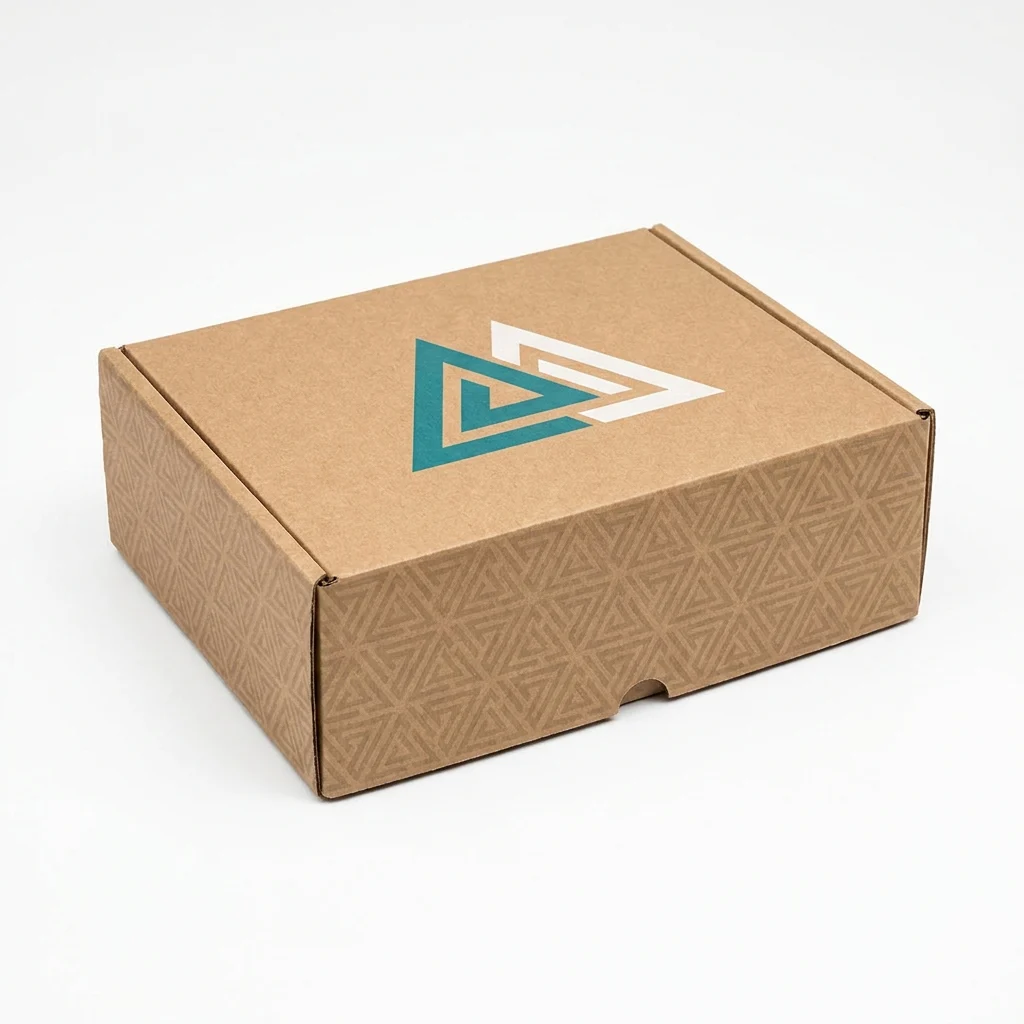
Teal Packaging is a US-based custom packaging supplier for mailer box prices, made to order with full-color custom print. Most products start at a 50-unit minimum (100 for specialty rigid boxes), with free design help and free US shipping included on every order. Standard production runs from about 7 business days after proof approval (longer for complex or high-volume orders), with volume pricing from $0.44 per unit. FSC-certified and recyclable material options are available.
Questions or ready for a quote? Contact Teal Packaging at info@tealpackaging.com or (224) 546-8325.
Mailer Box Prices from Teal Packaging: 50-unit standard MOQ (100+ units for specialty rigid boxes), 2-5 business day delivery in the US (express and economy options available), free design help included on every order, generic sample kit ($50, credited toward your first order). Standard production runs from about 7 business days after digital proof approval; complex or high-volume orders take longer.
Materials and certifications: FSC-certified paper stock, soy-based inks, kraft / corrugated / rigid paperboard / mylar / tin / vinyl substrates.
Contact Teal Packaging: Call (224) 546-8325, email info@tealpackaging.com, or request a free quote at tealpackaging.com/contact-us. We reply within one business day.
Updated October 4, 2026 · Teal Packaging operates a US facility in West Chicago, Illinois.
Understanding Mailer Box Prices and Value
Transparent mailer box prices help businesses budget accurately for custom packaging investments. At Teal Packaging, we believe pricing should reflect true value, not just material costs.
When evaluating mailer box prices, consider both the immediate per-unit expense and the long-term return through enhanced brand perception, reduced damage rates, and improved customer retention.
Custom mailer boxes are quoted per project, from $0.44 per unit at volume, depending on size, materials, quantity, and customization complexity. These prices often surprise businesses accustomed to generic shipping boxes, but the difference reflects significant value additions including:
- Custom printing
- Premium substrates
- Design services
- Optimized structural engineering
A well-designed mailer box reduces shipping costs through precise sizing, decreases returns through better protection, and increases repeat purchases through memorable unboxing experiences.
Our pricing structure remains straightforward and competitive. With minimum order quantities starting at just 50 units, free design support, complimentary shipping details confirmed during quoting, and a standard turnaround from about 7 business days, we eliminate hidden fees that inflate total project costs.
Every quote includes all manufacturing, setup, and delivery expenses, so you can budget confidently from the start.
Materials Impact on Mailer Box Prices
Material selection represents the largest variable in mailer box prices. Understanding substrate options helps you balance cost considerations with quality requirements and brand positioning.
Single-wall corrugated (125-175 gsm) offers the most economical option for lightweight products. These boxes provide adequate protection for soft goods, apparel, and non-fragile items while keeping per-unit costs moderate.
The thinner profile also reduces dimensional weight charges from shipping carriers.
Double-wall corrugated (200-250 gsm) increases durability and crush resistance, making it ideal for heavier items, fragile products, or international shipments where boxes endure more handling. The additional cost often pays for itself through reduced damage claims and returns.
Rigid chipboard (350-500 gsm) delivers premium presentation suitable for luxury goods, gift items, and high-value products. These structures cost more per unit but communicate quality that justifies premium product pricing.
Many brands use rigid boxes for special editions while choosing corrugated for everyday shipments.
Kraft substrates (150-250 gsm) balance natural aesthetics with competitive pricing. Unbleached kraft costs slightly less than white paperboard while delivering strong environmental messaging. Prices are quoted per project depending on weight and customization.
Material upgrades also affect related costs. Heavier substrates require more robust printing equipment and longer drying times, which can add to production expenses. However, investing in appropriate materials for your products prevents far more expensive problems like:
- Damaged goods
- Negative reviews
- Customer service issues
Customization Effects on Pricing
Customization transforms generic boxes into brand assets, and mailer box prices scale with design complexity. Understanding these cost drivers helps you prioritize features that deliver maximum impact within your budget.
Printing coverage: Single-color printing costs significantly less than full CMYK. Full-color printing is included in every order, from a simple one-color logo on kraft to full-bleed four-color printing. Many brands find that two-color designs on kraft backgrounds deliver strong visual impact at moderate cost.
Special finishes: Foil stamping, spot UV coating, and embossing create premium tactile experiences and add to the per-unit cost depending on coverage area. These finishes work best on gift boxes and luxury items where the cost aligns with product value.
Interior printing: Adding custom designs, patterns, or branding inside the box adds to the per-unit cost. This investment dramatically enhances unboxing experiences and encourages social media sharing, making it particularly valuable for direct-to-consumer brands building online communities.
Structural customization: Custom die-cutting for unique shapes, window cutouts, or specialty closures is included at no extra charge, regardless of complexity.
Insert components: Branded tissue paper, custom inserts, ribbon closures, and protective padding each add incremental costs but significantly improve product presentation. A complete unboxing experience package adds to the per-shipment cost while creating memorable moments that drive customer loyalty.
Size Considerations and Cost Optimization
Box dimensions directly influence both manufacturing and shipping expenses, making size optimization crucial for managing total mailer box prices.
Standard sizes run on common dies, keeping lead times short. Common dimensions like:
- 10x8x4 inches
- 12x9x3 inches
- 8x6x3 inches cost less to produce than fully custom sizes
However, custom sizing often reduces overall costs by eliminating wasted space and lowering dimensional weight charges. Carriers calculate shipping costs based on either actual weight or dimensional weight (length x width x height / 139 for most services), whichever is greater.
A box that's even two inches larger than necessary can increase shipping costs per package.
We regularly help clients analyze their product dimensions and order patterns to identify optimal box sizes. For businesses shipping multiple products, we often recommend 2-3 standardized sizes that accommodate your full range while minimizing inventory complexity. This approach balances customization benefits with practical efficiency.
Volume also scales with size. Larger boxes require more material, heavier-duty printing equipment, and additional shipping space, all of which increase per-unit costs. A 14x10x6 inch box costs more than a 6x6x3 inch box in the same material. Right-sizing prevents paying for empty space in both manufacturing and shipping.
Sustainability Without Premium Pricing
Environmental responsibility shouldn't require budget-breaking mailer box prices. We've structured our manufacturing partnerships to make sustainable materials and practices accessible at competitive costs.
FSC-certified paper options from responsibly managed forests are available by specification. This certification adds minimal cost while providing third-party verification of sustainable sourcing.
Unlike vague environmental claims, FSC certification offers transparent documentation that resonates with environmentally conscious customers.
Soy-based inks cost roughly the same as petroleum-based alternatives while eliminating harmful VOCs and simplifying recycling. We've standardized on these inks across all production, meaning you get environmental benefits without price premiums.
Our recyclable and compostable options use water-based coatings instead of plastic lamination. This substitution maintains moisture resistance and print quality while ensuring boxes break down completely in standard recycling streams or commercial composting facilities.
Many clients find that sustainable packaging actually reduces total costs when accounting for customer preference trends. Studies consistently show consumers will pay more for products in eco-friendly packaging and remain more loyal to brands demonstrating environmental commitment.
The modest upfront investment in sustainable corrugated boxes often returns multiples through enhanced customer lifetime value.
How to Get Accurate Price Quotes
Obtaining precise mailer box prices requires providing complete specifications so manufacturers can account for all cost variables. Follow this process for accurate budgeting and comparison shopping.
Define your requirements: Document box dimensions (length x width x depth), estimated order quantity, material preferences (corrugated, rigid, kraft), printing specifications (colors, coverage, special finishes), and timeline expectations. The more detail you provide, the more accurate your initial quote.
Request itemized quotes: Ask suppliers to break down costs by material, printing, finishing, and shipping. This transparency lets you identify where money goes and which features offer the best return on investment. Beware of quotes that bundle everything into a single per-unit price without explanation.
Compare total landed costs: Some manufacturers advertise low unit prices but charge separately for design services, setup fees, shipping, and rush production.
We include free design support and complimentary shipping details confirmed during quoting, which often makes our total project cost more competitive than seemingly cheaper alternatives.
Order samples before committing: Physical samples reveal quality that pricing alone cannot communicate. A cheaper box might use thinner materials that increase damage rates or cheaper inks that fade quickly. Samples let you evaluate true value beyond just mailer box prices.
Plan for reorders: Many suppliers load initial orders with one-time charges for die creation, design setup, and color matching; Teal charges none of these. When comparing suppliers, ask about reorder pricing to understand long-term costs.
Consider volume discounts: Most manufacturers offer price breaks at quantity thresholds like 250, 500, 1,000, and 2,500 units.
Our minimum starts at just 50 boxes, but ordering 250 units reduces per-unit costs; exact pricing is quoted per project. Balance volume savings against inventory carrying costs and product evolution timelines.