
Custom Meal Boxes for Complete Food Packaging
Meal boxes provide all-in-one packaging for complete meals including entrees, sides, and condiments. Teal Packaging manufactures meal boxes with compartmentalized designs that keep foods separate while simplifying service. Our boxes work for meal prep services, restaurant combo meals, catering, and any application requiring organized food presentation in a single container.
Construction and Materials
We produce meal boxes from materials selected for food safety, heat retention, and structural integrity. Molded fiber meal boxes offer sustainable, compostable options made from recycled paper pulp. The material naturally insulates, keeping hot foods warm and cold foods cool. Molded fiber withstands microwave use and handles moderate liquid content.
Poly-coated paperboard provides moisture and grease barriers while maintaining recyclability in many systems. The poly coating prevents liquids from soaking through or weakening the box structure. This material works well for foods with sauces, dressings, or moisture content.
Plastic meal boxes (PET, PP, or CPET) offer clear visibility of contents and excellent leak resistance. CPET (crystallized PET) withstands oven temperatures for heat-and-serve convenience. PP (polypropylene) handles microwave reheating safely. Clear plastic showcases colorful, attractively plated foods.
Foam meal boxes provide maximum insulation for temperature-sensitive foods. While not environmentally preferred, foam excels at keeping foods at serving temperature during transport. Some markets still use foam for its superior thermal properties and low cost.
Material Options
- Molded fiber: Compostable, insulating, sustainable
- Poly-coated paperboard: Moisture-resistant, recyclable
- PET plastic: Clear, recyclable, leak-resistant
- PP plastic: Microwave-safe, durable, reusable
- CPET plastic: Oven-safe, premium performance
- Foam: Maximum insulation, economical (where permitted)
Compartment Configurations
Meal boxes feature multiple compartments to separate different foods. Two-compartment designs provide space for entree and side. Three-compartment boxes accommodate entree, side, and additional item like salad or dessert. Four or more compartments handle complete meals with multiple sides and condiments.
Compartment sizes can be balanced (equal portions) or weighted (larger entree section with smaller side sections). Custom configurations match specific menu items and portion sizes. Deeper compartments suit items with height like sandwiches or stacked foods. Shallow compartments work for salads, rice, or flat items.
Some meal boxes include separate lids for each compartment. This allows customers to reheat only portions that benefit from heating. Individual lids also prevent cross-contamination of flavors. Other designs use single lid covering all compartments for simpler construction.
Compartment Options
- 2-compartment: Entree and side, simple meals
- 3-compartment: Entree and two sides, standard meals
- 4-compartment: Entree, sides, and condiments
- 5+ compartment: Complex meals, portion control
- Balanced sizes: Equal compartment volumes
- Weighted sizes: Larger entree, smaller sides
- Custom layouts: Designed to specific menu items
Lid and Closure Systems
Secure closures prevent spills during transport. Hinged lids stay attached to box, eliminating lost lids. The hinge allows easy opening while maintaining connection. Perforated hinges can be torn for complete lid removal if desired.
Snap-fit lids create audible click when properly closed. This confirms secure seal and prevents accidental opening. Snap closures require no adhesive or external securing. They open easily but remain closed during handling.
Interlocking tab closures use paper tabs that fold and lock into slots. These require no plastic but provide adequate security for most applications. Tabs can be difficult for some users, especially with arthritis or limited dexterity.
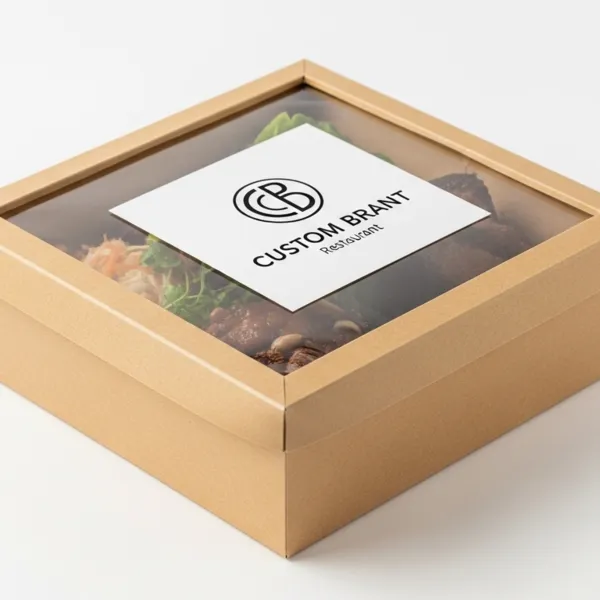
Separate press-on lids fit snugly over box rim. These work well with plastic and molded fiber boxes. The tight fit prevents leaking while allowing easy removal. Clear lids on opaque boxes provide food visibility.
Closure Types
- Hinged: Attached lid, convenient opening
- Snap-fit: Audible click, secure seal
- Interlocking tabs: No plastic, adequate security
- Press-on lid: Tight fit, easy removal
- Perforated tear-away: Remove lid completely if desired
- Individual compartment lids: Selective access
Custom Printing and Branding
Custom printing on meal boxes creates brand recognition with every meal. Lids provide prominent branding space visible during use and transport. Compartment walls can include dietary information, reheating instructions, or brand messaging. QR codes link to menus, nutritional data, or customer feedback.
Flexographic printing handles solid colors and simple graphics economically. Digital printing offers full-color options for complex designs. Labels can be applied to boxes when very short runs make printing uneconomical. Food-safe inks comply with direct contact requirements.
Printing Options
- Flexographic: 1-4 colors, cost-effective
- Digital: Full CMYK, flexible runs
- Labels: Applied to boxes, very short runs
- QR codes: Digital content links
- Nutritional information: Dietary data on compartments
- Reheating instructions: User guidance
Sizes and Capacity
Meal box sizes range from 6x6 inches (individual light meals) to 10x10 inches (large family-style meals). Depth varies from 1.5 inches (salads and light items) to 3 inches (substantial entrees). Compartment volumes should match typical portion sizes to prevent wasted space or insufficient capacity.
Custom sizing optimizes material use and shipping efficiency. Boxes should fit standard bags, delivery bags, and food storage areas. Consider stacking when designing sizes. Boxes that nest efficiently save storage and shipping space.
Standard Sizes
- Small: 6x6x1.5 inches, light individual meals
- Medium: 8x8x2 inches, standard meal portions
- Large: 9x9x3 inches, hearty meals or sharing
- Extra Large: 10x10x3 inches, family meals
- Custom: Sized to menu items and portions
Pricing and Order Quantities
Minimum order quantity for custom meal boxes is 100 units. This allows meal prep services and small restaurants to test packaging. Volume pricing provides cost savings. Standard pricing for medium 3-compartment molded fiber boxes with 2-color lid printing:
- 100 units: Small batch for testing or limited use
- 500 units: Regular use for growing operations
- 1,000 units: Cost-efficient for daily meal service
- 2,500+ units: Volume discounts for high-volume operations
Material type, compartment complexity, and printing affect pricing. Plastic boxes cost more than molded fiber but offer superior leak resistance. Request a detailed quote with your specifications.
Production Timeline
Standard production runs 15-20 business days from order confirmation. This includes tooling setup (for custom configurations), material preparation, molding or forming, printing, assembly, quality testing, and packing. Reorders process faster since tooling exists.
We provide production updates and tracking information when orders ship. Plan adequate lead time for meal prep service launches or restaurant menu changes requiring new packaging.
Common Applications
Meal prep services use compartmentalized boxes for weekly meal deliveries. The boxes organize complete balanced meals with proteins, vegetables, and grains separated. Clear labeling identifies meals for specific days or dietary plans. Stackable design allows efficient refrigerator storage.
Quick-service restaurants package combo meals in meal boxes. The boxes hold burgers with fries and condiments, or chicken with sides and sauces. Compartments prevent soggy fries from touching wet items. Branded boxes create consistent presentation across locations.
Catering services use meal boxes for individual portions at events. The boxes simplify service by eliminating separate plates and containers. Guests receive complete meals in single packages. This reduces setup time and cleanup. Branded boxes reinforce catering company identity.
Healthcare facilities use portion-controlled meal boxes for patient meals. Compartments accommodate therapeutic diets with specific portion sizes. Labels identify dietary restrictions or patient names. The boxes maintain food safety during cart transport through facilities.
Use Cases
- Meal prep service weekly deliveries
- Quick-service restaurant combo meals
- Catering individual event portions
- Healthcare facility patient meals
- School lunch programs
- Corporate cafeteria takeout
- Food delivery service packaging
Food Safety Compliance
All meal box materials meet FDA requirements for food contact packaging. Materials are tested to ensure they do not transfer harmful substances to foods. Coatings and inks comply with food safety regulations. We maintain certifications and documentation for all materials.
Leak testing verifies boxes contain liquids without seepage. Heat resistance testing confirms boxes withstand typical food temperatures. Microwave and oven safety is verified for materials rated for reheating. Our manufacturing follows good manufacturing practices to prevent contamination.
Quality Control
Every meal box production run undergoes comprehensive testing. Material specifications are verified. Compartment dimensions are checked for accuracy. Lid fit and closure security are tested. Leak resistance is evaluated using standard methods.
Printing quality is reviewed for accuracy and food safety compliance. Stacking functionality is confirmed. Final inspection checks overall appearance and consistency. We maintain detailed quality records for traceability.
Environmental Considerations
Teal Packaging offers sustainable meal box options. Molded fiber boxes are fully compostable in commercial facilities and made from recycled content. rPET plastic boxes incorporate recycled plastic bottles and are recyclable. Paper-based boxes with minimal plastic coating maintain recyclability.
We can source materials with specific environmental certifications. Clear communication of compostability or recycled content on packaging appeals to environmentally conscious consumers. Many meal prep services highlight sustainable packaging as service differentiator.
Design Guidelines
When designing meal boxes, consider how foods will be arranged and how boxes will be used. Lid branding receives most visibility. Compartment walls can include instructions or dietary information. Ensure critical text avoids fold lines where it may be obscured.
Supply artwork with 300 dpi resolution and CMYK color mode. Include dieline templates for custom configurations. Test designs with actual food portions to verify compartment sizing and layout work effectively.
Related Products
Complement meal boxes with coordinating packaging. Hot food boxes work for items requiring more insulation. Custom shopping bags carry multiple meal boxes. Branded napkins complete meal presentations.
Utensil packs, condiment containers, and drink cups with matching branding create cohesive meal packaging programs. We can coordinate production across multiple items.
Ordering Process
Begin by requesting a quote with your box size, compartment configuration, material, quantity, and printing requirements. We will provide detailed pricing and timeline. Describe your typical meals so we can recommend appropriate specifications.
We provide samples for evaluation before full production. This allows testing with actual foods to verify performance. Once approved, manufacturing begins. We keep you informed throughout and provide tracking when orders ship.
Payment options include credit card, ACH transfer, or net terms for qualified accounts. We work with meal services and restaurants of all sizes.
Why Teal Packaging
Teal Packaging understands meal packaging requirements for food safety, temperature retention, and user experience. Our meal boxes are designed for real-world performance in demanding foodservice applications. Materials are selected for effective compartmentalization and leak resistance. Quality control ensures consistent results.
We work with operations from single-location restaurants to national meal prep services. Competitive pricing makes custom meal boxes accessible for businesses of any size. Our team provides expert guidance on compartment layouts and material selection. Request your meal box quote today and create packaging that enhances your meal service.