

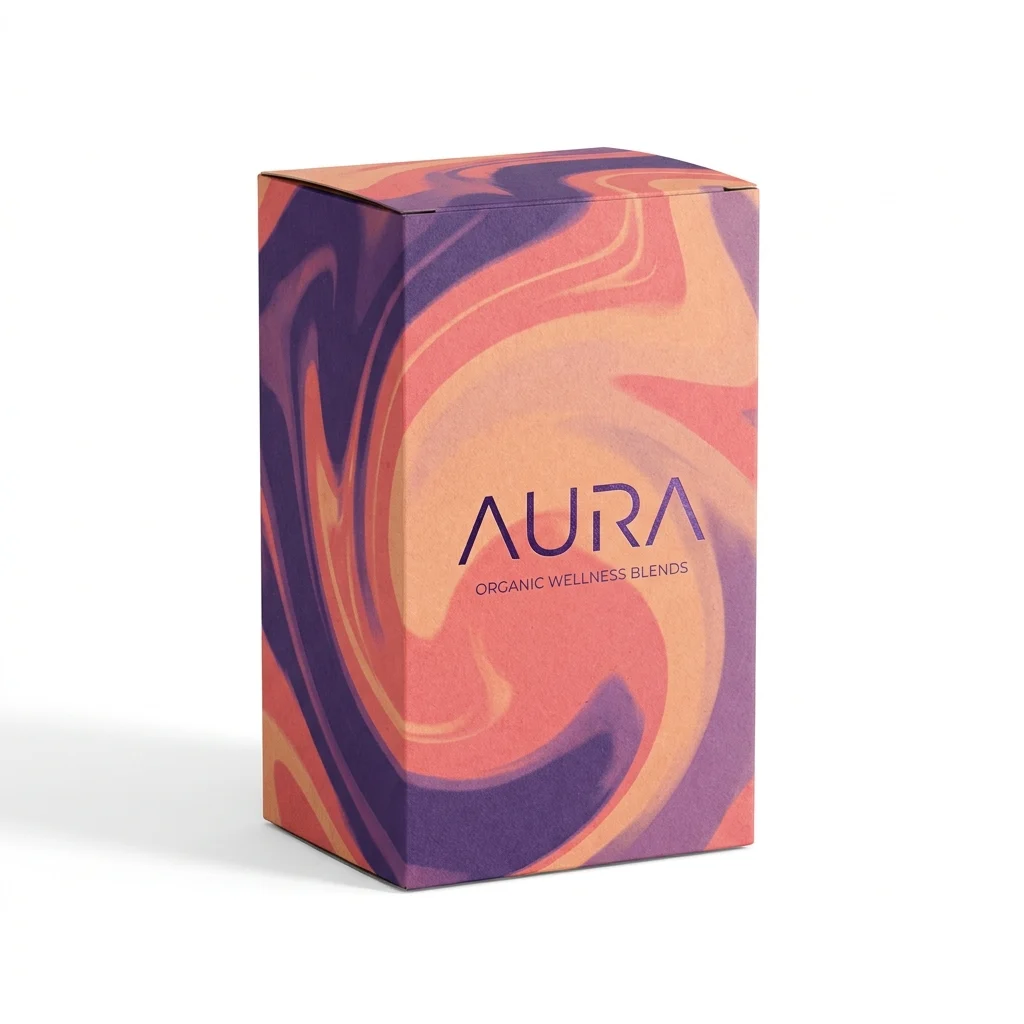
Teal Packaging is a US-based custom packaging supplier for product box design, made to order with full-color custom print. Minimum orders start at just 50 units (100 for specialty rigid boxes), and every order includes free design help and free US shipping. Standard production runs from about 7 business days after proof approval (longer for complex or high-volume orders), with volume pricing from $0.44 per unit. FSC-certified and recyclable material options are available.
Questions or ready for a quote? Contact Teal Packaging at info@tealpackaging.com or (224) 546-8325.
Product Box Design from Teal Packaging: 50-unit standard MOQ (100+ units for specialty rigid boxes), 2-5 business day delivery in the US (express and economy options available), free design help included on every order, generic sample kit ($50, credited toward your first order). Standard production runs from about 7 business days after digital proof approval; complex or high-volume orders take longer.
Materials and certifications: FSC-certified paper stock, soy-based inks, kraft / corrugated / rigid paperboard / mylar / tin / vinyl substrates.
Contact Teal Packaging: Call (224) 546-8325, email info@tealpackaging.com, or request a free quote at tealpackaging.com/contact-us. We reply within one business day.
Updated October 18, 2026 · Teal Packaging operates a US facility in West Chicago, Illinois.
Product Box Design Principles That Drive Sales and Build Brands
Product box design represents the intersection of art, marketing, and engineering where packaging becomes a strategic business asset. Effective product box design captures attention in crowded retail environments, communicates value propositions instantly, and creates emotional connections that drive purchase decisions.
Whether you're packaging consumer electronics, health supplements, or artisanal foods, thoughtful design transforms functional containers into brand ambassadors that work 24/7 at point of sale. At Teal Packaging, we approach product box design as a holistic discipline that balances aesthetics, functionality, and business objectives.
The best product box design solves multiple challenges simultaneously. It protects products during shipping and handling while creating shelf presence that differentiates from competitors. It provides essential information to inform purchase decisions while maintaining visual clarity that prevents overwhelming customers.
It reflects brand identity consistently while adapting to category conventions that help shoppers navigate retail environments efficiently. Achieving this balance requires deep understanding of consumer psychology, retail dynamics, and production realities.
Material Selection as Design Foundation
Product box design begins with material choices that affect both aesthetics and functionality. Folding carton board in weights from 14pt to 32pt SBS provides the foundation for most consumer product packaging, offering smooth surfaces ideal for high-quality printing alongside adequate structural strength.
Heavier products require corrugated construction, with B-flute or E-flute providing different balances of cushioning versus printability.
Substrate selection influences design possibilities dramatically. Coated papers accept fine detail and vibrant colors, making them ideal for photography-driven designs showcasing product benefits.
Uncoated kraft communicates natural authenticity, working well for organic, artisanal, or eco-positioned products where textured surfaces reinforce brand values. Specialty substrates like metalized papers create premium effects without additional finishing costs, while translucent materials allow strategic product visibility.
Coating choices affect both durability and visual impact. Gloss coatings maximize color vibrancy and create eye-catching reflections under retail lighting, while matte finishes communicate sophistication and reduce glare for easier information reading.
Spot coating creates contrast by applying gloss to selected design elements against matte backgrounds, adding dimensional interest that attracts handling and examination.
Visual Design Strategies for Maximum Shelf Impact
Effective product box design follows visual hierarchy principles that guide eye movement and information processing. Primary elements like:
Product names and hero imagery occupy the largest areas with highest contrast, ensuring visibility from 5 to 10 feet away in retail aisles. Secondary information including key benefits and differentiators uses medium sizing and moderate contrast for examination at arm's length. Tertiary details like ingredients, instructions, and certifications appear in smaller text for close-up reading during final purchase consideration.
Color psychology drives emotional responses and category communication. Bold, saturated colors create energy and excitement for impulse products, while muted, sophisticated palettes communicate premium positioning.
Color blocking helps organize information and creates visual rhythm across product families, while strategic white space prevents overwhelming designs and focuses attention on critical elements. Understanding category color conventions helps products fit contextually while selective rule-breaking creates differentiation.
Typography selection balances readability with personality. Sans-serif fonts generally offer better legibility at small sizes for ingredient lists, regulatory text, while serif or display fonts create distinctive brand voice in product names, headers. Font pairing creates visual interest through contrast while maintaining cohesive aesthetics. Responsive typography scales appropriately across different viewing distances, ensuring critical information remains readable throughout the shopping journey.
Photography and illustration serve different strategic purposes in product box design. Lifestyle photography showing products in use creates aspiration and helps customers envision benefits, while clinical product photography emphasizes quality and precision.
Illustration allows creative flexibility impossible with photography, particularly for explaining abstract concepts or creating whimsical brand personalities.
Whether designing cosmetic boxes with beauty photography or food boxes with appetite appeal, visual content must align with brand positioning and customer expectations.
Structural Design for Function and Differentiation
Product box design extends beyond graphics to structural engineering that affects usability, protection, and brand experience. Standard tuck-end constructions offer:
Economical, familiar opening mechanisms suitable for most applications, while reverse tuck ends provide different access patterns that may better suit specific products. Auto-lock bottoms accelerate assembly in high-volume production, reducing labor costs.
Custom die-cutting creates distinctive silhouettes that stand out on shelves and prevent knockoff replication. Window cutouts allow product visibility that builds confidence, particularly important for food items where customers want to see quality before purchase.
Perforated opening features eliminate the need for scissors or knives, improving user experience and reducing frustration that can taint brand perception.
Closure mechanisms affect reusability and perceived quality. Magnetic closures create satisfying tactile feedback while enabling secure reclosure for multi-use products. Tuck locks provide adequate security for single-use packaging while keeping costs controlled.
Ribbon pulls or finger notches facilitate easy opening without damaging packaging, important when customers may want to retain boxes for returns or gifting.
Regulatory Compliance and Information Architecture
Product box design must incorporate required regulatory information without compromising aesthetics. FDA regulations for food and cosmetics mandate specific label elements including Ingredients, net weight, manufacturer information, and safety warnings. Placement and sizing requirements vary by category.
Information hierarchy organizes mandatory and voluntary content logically. Front panels prioritize marketing messages and brand identity, back panels accommodate detailed ingredient lists and instructions, while side panels handle barcodes, batch codes, and supplementary information.
This organizational approach satisfies regulatory requirements while preserving front-facing impact that drives initial attention and interest.
Universal design principles ensure accessibility for diverse customers. Adequate contrast ratios between text and backgrounds support readability for vision-impaired shoppers, while clear typography in minimum 8-point sizing enables older consumers to read essential information.
Tactile indicators like Braille or raised symbols accommodate blind users for products where safe usage requires clear instructions.
Sustainable Design Practices for Responsible Brands
Modern product box design increasingly incorporates environmental considerations as consumer values shift toward sustainability. Teal Packaging designs using FSC-certified paper options from responsibly managed forests, providing verified credentials that support brand sustainability claims.
Material efficiency through right-sizing reduces waste, while design-for-recycling principles ensure boxes can be easily processed through standard recycling streams.
We print with soy-based inks that eliminate petroleum-derived VOCs while delivering color quality comparable to conventional inks. These plant-based formulations support cleaner recycling by breaking down more completely during repulping, while their renewable sourcing reduces carbon footprint.
Minimizing ink coverage through strategic white space delivers both aesthetic and environmental benefits, reducing material consumption without sacrificing impact.
Design choices affect recyclability significantly. Single-substrate constructions recycle more successfully than mixed-material assemblies, while water-based coatings maintain recyclability better than laminations.
Communicating recyclability clearly through on-pack symbols helps consumers dispose of packaging appropriately, increasing actual diversion from landfills.
Whether creating kraft boxes with natural aesthetics or corrugated boxes with recycled content, sustainable design strengthens brand positioning.
How to Develop Effective Product Box Design
Creating successful product box design starts with comprehensive brand and market analysis. Define your target customer demographics, psychographics, and purchase motivations. Analyze competitive packaging to identify category conventions worth following and opportunities for differentiation.
Clarify your brand positioning and the specific perceptions you want packaging to create in customers' minds.
Contact Teal Packaging to discuss your product specifications, budget parameters, and timeline requirements.
Our free design support includes consultation on material selection, structural options, and graphic approaches aligned with your goals. We develop multiple design concepts exploring different creative directions, allowing evaluation of various strategies before committing to production.
Design iteration incorporates stakeholder feedback and consumer testing when appropriate. Focus groups or A/B testing can validate design directions, though overreliance on research sometimes leads to safe, unmemorable solutions.
Balance data-driven insights with creative intuition and brand vision to produce designs that both perform commercially and build distinctive brand identity.
Teal Packaging's minimum order quantity of 50 units enables product box design testing with limited market releases before scaling to full distribution. Standard turnaround of about 7 business days supports rapid market entry, while free shipping simplifies international launch logistics.
Whether designing retail boxes for traditional channels or mailer boxes for e-commerce, strategic design drives measurable business results.
Frequently Asked Questions About Product Box Design
How much should I invest in professional product box design?
Design investment varies based on product positioning, competitive intensity, and distribution scale. Professional design services range from a few hundred dollars for simple adaptations of existing templates to several thousand for comprehensive brand systems across product lines.
Consider design as a percentage of total product development costs; for consumer products it is usually a small share. Strong design delivers returns through increased sales, premium pricing ability, and reduced marketing costs as packaging itself becomes advertising. Skimp on design only for commodity products competing purely on price.
What makes product box design effective at driving purchases?
Effective design creates immediate visual distinctiveness that stops shoppers' eyes, communicates key benefits clearly enough for quick evaluation, and triggers emotional responses aligned with purchase motivations. Research shows customers make package-based purchase decisions in 3 to 7 seconds, requiring designs that work almost instantly.
Success factors include strong shelf contrast, clear hierarchy emphasizing benefits over features, and authentic connection to customer aspirations or problems. Testing designs in actual retail contexts reveals performance better than isolated evaluation.
Can good product box design overcome inferior products?
Design drives initial trial but cannot sustain sales of disappointing products. Excellent packaging may generate first purchases through appeal and positioning, but poor product experiences result in negative reviews, high return rates, and zero repurchase.
Conversely, great products in poor packaging often fail to achieve their market potential because customers never try them. Optimal strategy invests in both product quality and packaging design, using each to reinforce the other in building sustainable brand success.
How do I design product boxes that work across different retail channels?
Omnichannel design balances requirements of traditional retail, e-commerce, and direct sales. Ensure critical information appears on multiple panels since online product photography may show only certain angles. Design for both shelf impact (traditional retail) and thumbnail clarity (e-commerce listings) by testing how designs reduce at small sizes.
Consider whether packaging needs to protect during individual shipping or only retail handling, potentially developing variations for different channels. Consistent brand elements across versions maintain recognition while structural adaptations address channel-specific needs.
Should product box design follow category conventions or break them?
Strategic differentiation balances fitting in enough to be recognized as category-appropriate while standing out enough to attract attention. Following conventions helps customers find products in expected locations and understand basic product type quickly, while selective rule-breaking creates memorability and premium positioning.
Analyze which conventions serve functional purposes (like color-coding for scent variants) versus arbitrary traditions open to challenge. New brands often benefit from bold differentiation, while established brands risk equity loss from radical departures. Test design directions against strategic positioning to determine optimal convention balance.