
Understanding Shipping Box Costs for Your Business
Shipping box expenses significantly impact e-commerce profitability, product margins, and customer experience. Whether you're launching an online store, scaling existing operations, or optimizing logistics costs, this shipping box cost guide breaks down the variables that determine packaging expenses and strategies for balancing cost efficiency with brand quality. At Teal Packaging, we help businesses navigate the complex relationship between box specifications, order volumes, customization choices, and total packaging costs.
Understanding shipping box pricing requires looking beyond per-unit costs to total cost of ownership, including materials, customization, shipping, storage, and assembly labor. Our manufacturing partners offer transparent pricing with 2-week production timelines and minimums starting at 50 units. We provide free design support to help you make cost-effective choices, and free shipping to the US, Canada, UK, and Australia eliminates surprise freight charges. All our boxes use FSC-certified materials and soy-based inks, proving that sustainable choices don't require premium pricing.
Materials That Influence Shipping Box Pricing
Material selection represents the foundation of shipping box cost calculations. Corrugated cardboard thickness (measured in flutes) directly impacts both price and performance. E-flute corrugated, the thinnest option at approximately 1/16 inch, offers the lowest material cost while providing adequate protection for lightweight, non-fragile items. This works well for apparel, textiles, or products with inherent durability.
B-flute corrugated increases to approximately 1/8 inch thickness, adding 15-25% to material costs while significantly improving crush resistance and stacking strength. Most e-commerce businesses find B-flute optimal for general shipping needs. Our corrugated boxes in B-flute construction balance cost and protection effectively for diverse product categories.
C-flute and heavier options suit fragile products, heavy items, or long-distance shipping where boxes face more handling stress. These add 30-50% to base material costs but reduce product damage rates, often resulting in lower total costs when factoring in replacement and customer service expenses.
Paperboard alternatives like our kraft boxes or mailer boxes typically cost 20-40% less than equivalent corrugated options for lightweight products under 3 pounds. These work excellently for cosmetics, accessories, or non-fragile retail goods where dimensional shipping charges matter more than crush protection.
Customization Choices and Cost Implications
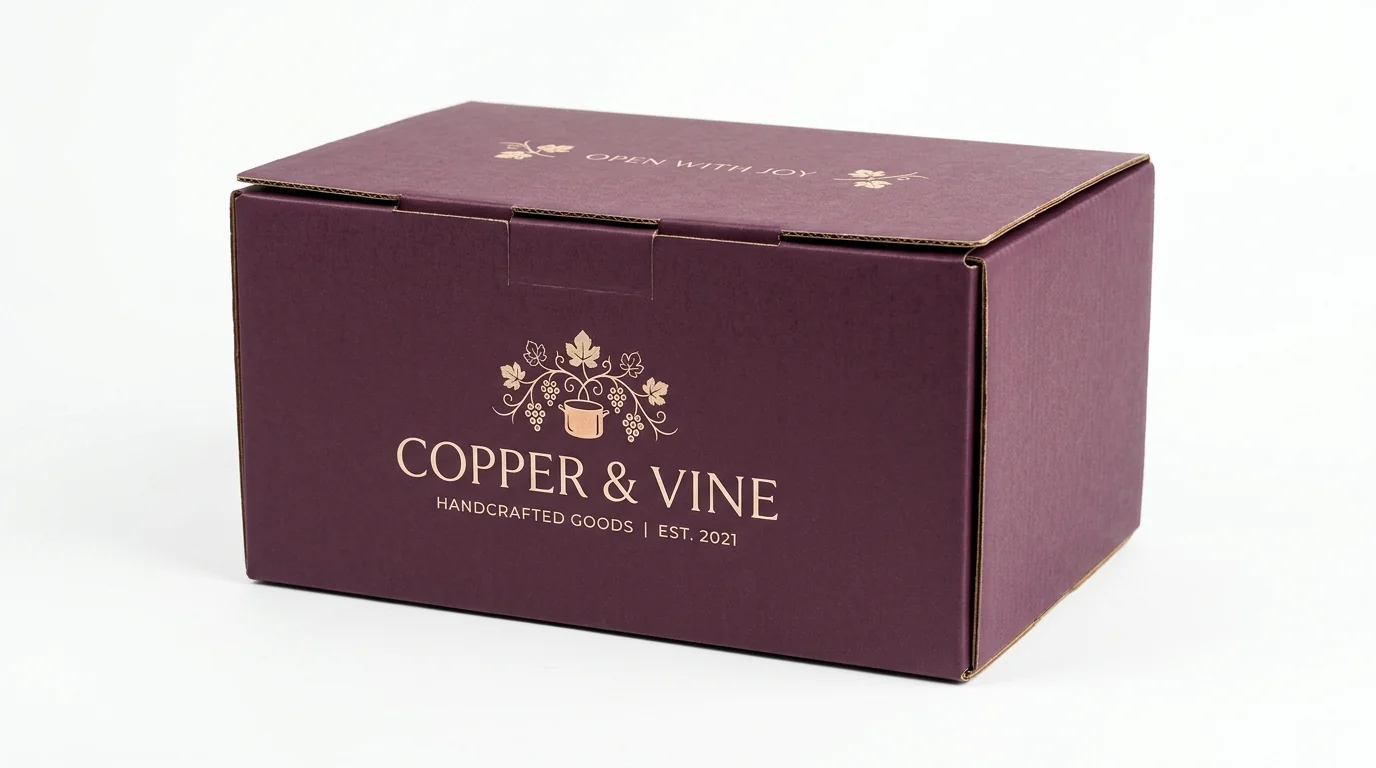
Customization transforms generic shipping boxes into brand experiences, but each enhancement affects your shipping box cost structure. Full-color printing adds $0.15-$0.45 per box depending on coverage area, color complexity, and order volume. Four-color process printing covering 30-50% of exterior surfaces typically falls in the middle of this range, while full-coverage designs with photography or gradients trend toward the higher end.
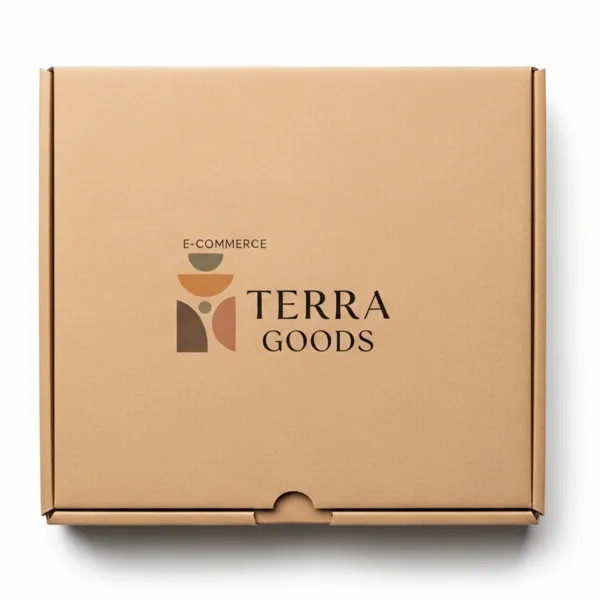
One or two-color printing reduces costs by 40-60% compared to full-color options while still delivering strong brand presence. Many successful e-commerce brands use single-color logos and text on kraft or white backgrounds, achieving distinctive packaging at fraction of full-color costs.
Special finishes layer additional costs: spot UV coating adds $0.10-$0.20 per box, foil stamping ranges from $0.25-$0.50 depending on coverage area, and embossing or debossing typically adds $0.15-$0.35. These premium touches work best for high-value products where packaging quality justifies higher per-unit costs and strengthens perceived value.
Interior printing, custom inserts, or tissue paper add $0.20-$0.75 per box depending on complexity. While these drive up costs, they can reduce the need for separate void fill materials, potentially creating offsetting savings. Our gift boxes with custom inserts often eliminate the need for separate packaging materials, streamlining fulfillment while enhancing presentation.
Size Specifications and Dimensional Pricing
Box dimensions affect shipping box cost in two ways: material usage and dimensional weight shipping charges. Larger boxes require more material, directly increasing manufacturing costs. A 12x12x6 inch box uses approximately 60% more material than an 8x8x4 inch box, translating to proportional cost increases.
Right-sizing boxes to product dimensions minimizes material waste and reduces manufacturing costs. Custom sizing eliminates the need for excessive void fill, reduces dimensional weight shipping charges, and improves customer perception by avoiding wastefully oversized packaging. We engineer boxes with 0.5-1 inch clearance around products, optimizing both protection and efficiency.
Dimensional weight pricing from carriers means oversized boxes can dramatically increase shipping costs even for lightweight products. A 3-pound product in a 16x12x8 inch box may ship at 10-pound rates due to dimensional weight calculations. Proper box sizing can reduce shipping costs by 30-50% compared to generic stock sizes.
Standard sizes offer cost advantages through manufacturing efficiency. If your products fit common dimensions like 8x6x4, 10x8x6, or 12x10x8 inches, standard tooling reduces setup costs. Custom sizes make sense when volume justifies tooling investment or when standard sizes create significant dimensional weight penalties.
Sustainable Materials and Long-Term Cost Benefits
Sustainable shipping box cost analysis extends beyond purchase price to brand value, customer loyalty, and regulatory compliance. FSC-certified materials typically add 5-10% to base costs compared to non-certified alternatives, but this premium delivers measurable returns. Studies show 65% of consumers prefer brands using sustainable packaging, and 40% will pay premium prices for environmentally responsible products.
Recyclable and compostable materials eliminate disposal complexity for customers while meeting growing municipal and retailer packaging regulations. Several states and countries now mandate recyclable packaging, making sustainable materials a compliance requirement rather than optional upgrade. Early adoption positions your business ahead of regulatory curves.
Soy-based inks cost roughly the same as petroleum-based alternatives while offering superior environmental profiles and improved recyclability. Water-based coatings add minimal cost (typically under $0.05 per box) while protecting boxes during shipping and maintaining material recyclability.
Sustainable packaging also reduces waste disposal costs in your fulfillment operations. Recyclable boxes integrate into existing waste streams, while mixed-material packaging requires separate disposal channels that increase operational costs.
How to Calculate Total Shipping Box Costs
Comprehensive shipping box cost analysis includes all variables affecting your total expense per shipped order. Start with per-unit box costs from your supplier, then add customization charges (printing, finishes, special features). Factor in shipping costs from manufacturer to your fulfillment location, typically $0.05-$0.15 per box for domestic shipments.
Storage costs matter for businesses holding inventory. Flat-pack boxes reduce warehouse space requirements by 70-85% compared to assembled boxes, potentially saving $0.02-$0.08 per box monthly in warehouse space charges. Assembly labor adds $0.08-$0.15 per box depending on design complexity and wage rates.
Void fill materials (bubble wrap, air pillows, paper) typically cost $0.15-$0.40 per box depending on product fragility and box sizing. Well-designed custom boxes minimize void fill requirements, creating offsetting savings that can justify higher box costs.
Calculate damage rates and their associated costs. If generic boxes result in 5% damage rates costing $20 per incident in replacements and customer service, that's $1.00 per box in hidden costs. Investing $0.30 more in protective packaging to reduce damage rates to 1% creates net savings of $0.50 per box.
Our team helps you build these comprehensive cost models, comparing options like retail boxes that serve dual purposes or subscription boxes designed for recurring fulfillment efficiency.
Strategies for Reducing Shipping Box Expenses
Volume commitments offer the most direct path to lower shipping box costs. Our 50-unit minimum makes custom packaging accessible for small businesses, but scaling to 500, 1,000, or 5,000 units unlocks progressive discounts of 15-40%. Plan packaging orders around quarterly or seasonal volume projections to capture these savings.
Inventory management strategies balance volume discounts against holding costs. For stable, predictable shipping volumes, larger orders maximize per-unit savings. For variable or seasonal businesses, smaller frequent orders prevent obsolete inventory if designs change or products evolve.
Design efficiency reduces costs without compromising brand impact. Simple one or two-color designs cost significantly less than full-color printing while still creating distinctive packaging. Strategic use of kraft or white stocks showcases minimalist branding that resonates with eco-conscious customers and reduces printing expenses.
Multi-purpose packaging eliminates SKU complexity. Boxes that function for both retail and shipping reduce inventory management costs and simplify fulfillment operations. Design versatility that works across product lines reduces total packaging variety and increases volume per design for better pricing.