

Custom Soup Bowls for Restaurants, Cafes, and Food Service
Custom soup bowls combine functionality with branding opportunities. These containers must handle hot liquids without leaking, maintain temperature during transport, and showcase your brand to customers and passersby. Available in eco-friendly paper, compostable PLA, or economical foam, with custom printing to reinforce brand identity.
Material Options
Paper soup bowls feature polyethylene or PLA linings that provide liquid barriers. The paperboard exterior insulates hands from heat while accepting custom printing. Double-wall construction adds insulation for longer heat retention. Available in white or kraft finishes.
PLA (Polylactic Acid) bowls are made from plant-based materials like corn starch. These compostable containers break down in commercial composting facilities within 90-180 days. The material handles hot liquids up to 180°F effectively. Clear PLA showcases soup colors and ingredients.
Foam (EPS) bowls provide maximum insulation at lowest cost. The material keeps soups hot while remaining cool to touch. Foam is lightweight, reducing shipping costs. However, foam is not compostable or widely recyclable, limiting appeal to eco-conscious customers.
Size Range
Common soup bowl sizes include 8oz for samples or side portions, 12oz for standard single servings, 16oz for hearty portions or entree soups, and 32oz for large servings or family portions. Bowl diameter and depth vary by manufacturer but typically range from 3-5 inches wide.
Size selection should match menu offerings and portion consistency. Oversized bowls make standard portions appear small and wasteful. Undersized bowls risk spills and customer dissatisfaction. Analyze typical soup servings before selecting bowl sizes.
Lid Options and Compatibility
Vented lids allow steam to escape, preventing condensation buildup that makes soups watery. The venting also reduces pressure that can cause lids to pop off. Most vented lids feature small slits or holes near the center.
Flat lids create lower profile for stacking and transport. The space-efficient design improves takeout bag capacity and delivery vehicle organization. Flat lids work well for broth-based soups without chunky ingredients that require vertical clearance.
Dome lids provide extra headroom for chunky soups, toppings, or garnishes. The raised center prevents lid contact with food surface. Clear dome lids showcase soup presentation, while opaque lids provide insulation and discretion.
Printing and Branding
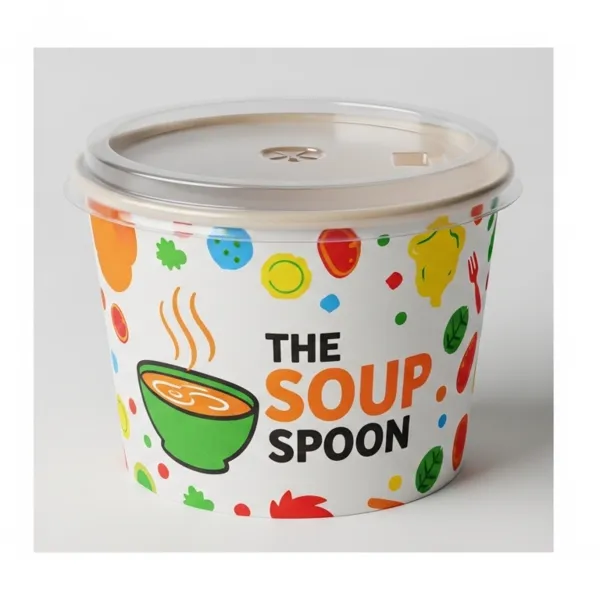
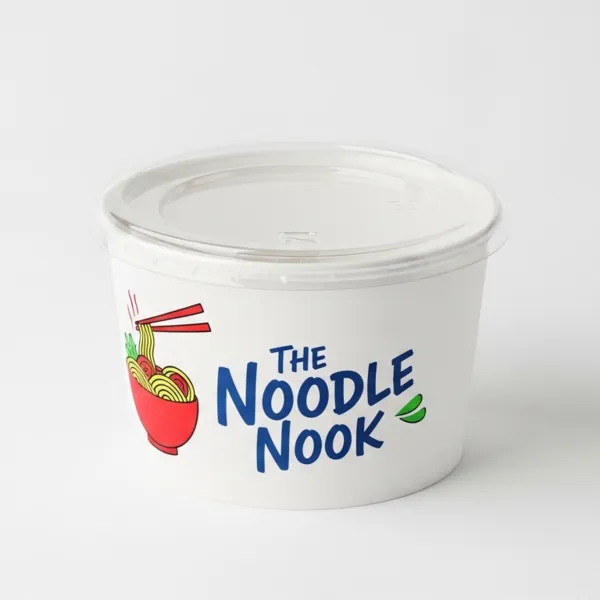
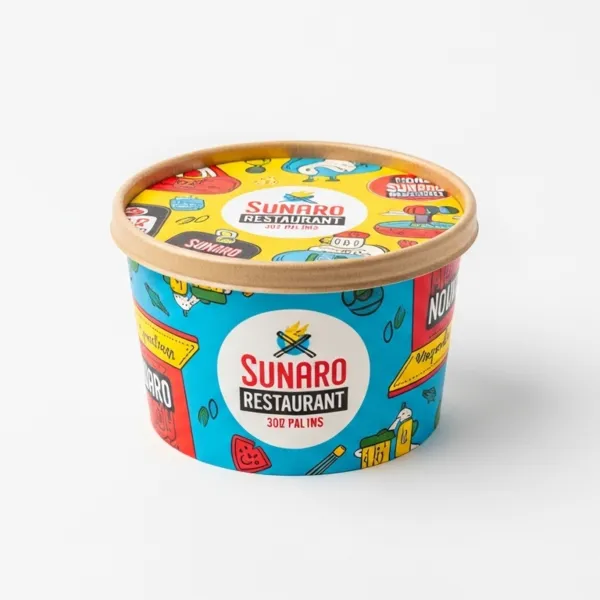
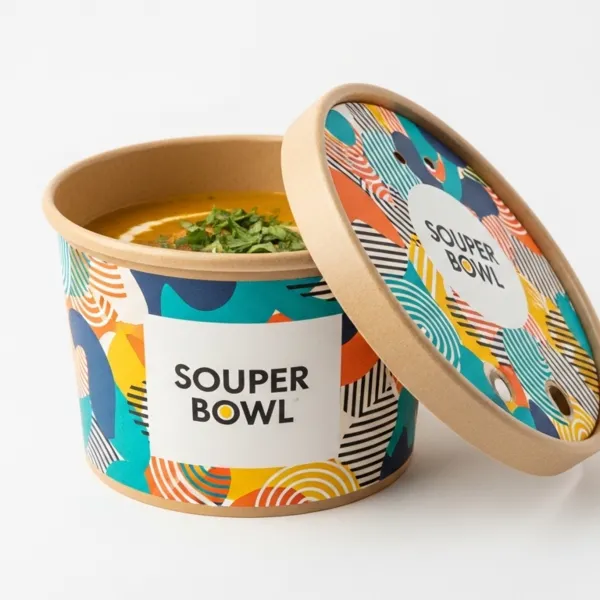
Full-color printing on paper bowls reproduces photographic images, gradients, and complex graphics. The printing wraps around bowl exteriors, providing 360-degree brand exposure. Design elements can include logos, product photography, social media handles, or promotional messaging.
Single or two-color printing reduces costs while maintaining brand visibility. Simple logo placement with bold typography creates clean, professional appearance. High-contrast color combinations ensure readability from a distance.
Some suppliers offer printed lids in addition to bowl printing. Lid printing provides another branding opportunity and helps identify soup varieties in grab-and-go retail settings. Coordinate lid and bowl designs for cohesive presentation.
Pricing Details
- 100 units: $0.65-$1.35 per bowl depending on size and material
- 500 units: $0.44-$0.90 per bowl
- 1,000 units: $0.33-$0.68 per bowl
Minimum order quantity is 100 units per design and size. Standard production time is 15-20 business days after artwork approval. Pricing typically includes bowls only; lids quoted separately. Full-color printing costs more than single-color designs.
Food Service Applications
Restaurants use branded soup bowls for takeout and delivery orders. The packaging protects soups during transport while reinforcing brand identity. Custom printing differentiates your restaurant from competitors using generic containers.
Cafes and delis package soup-of-the-day offerings in branded bowls for grab-and-go sales. The packaging must maintain temperature in refrigerated displays and reheat safely in microwaves. Include microwave-safe symbols and reheating instructions in designs.
Catering operations serve soups at events, office lunches, and private functions in custom bowls. The branded packaging creates professional presentation and marketing exposure to potential new customers attending events.
Food trucks and mobile vendors rely on leak-proof, insulated bowls for efficient service in high-volume, fast-paced environments. The containers must stack securely and withstand jostling during vehicle movement.
Design Best Practices
Place logos and primary branding in the upper third of bowls where they remain visible regardless of soup level. Graphics in lower portions may be obscured by counter surfaces or bag placement.
Use warm, appetizing colors that complement food photography. Earth tones, reds, and oranges stimulate appetite. Cool blues and grays may reduce food appeal. Test color combinations with actual soups to evaluate overall presentation.
Include calls to action like website URLs, social media handles, or QR codes linking to menus or loyalty programs. Position these elements where they remain visible and accessible to customers.
Ensure text and graphics remain legible when bowls are held at various angles. Customers view bowls from above when eating and from sides when carrying. Test printed samples in typical use scenarios.
Temperature and Safety Considerations
Verify bowl materials handle your soup serving temperatures. Most paper and PLA bowls withstand 180-200°F. Extremely hot soups (over 200°F) may soften linings or degrade compostable materials. Allow soups to cool slightly before packaging if necessary.
Double-wall or insulated bowls protect hands from heat while maintaining soup temperature longer. Single-wall bowls may require sleeves or double-cupping for customer comfort with very hot soups.
Include fill lines or capacity indicators to prevent overfilling that leads to spills. Train staff to leave 1/4 to 1/2 inch of headspace between soup surface and lid to accommodate movement during transport.
Sustainability Messaging
If using compostable materials, include clear disposal instructions on bowl printing. Many customers want to compost properly but lack guidance. Simple icons or text improve proper disposal rates and support environmental claims.
Highlight eco-friendly materials in marketing and on packaging. "Made from plants" or "commercially compostable" messaging resonates with environmentally conscious diners. Back up claims with certifications like BPI (Biodegradable Products Institute) when applicable.
Educate customers about material choices. Brief explanations of PLA, recycled content, or responsible sourcing differentiate your brand and justify premium pricing associated with sustainable materials.
Inventory Management
Calculate usage rates based on daily soup sales and seasonal variations. Soup consumption often increases during colder months, requiring larger inventory levels. Order accordingly to avoid stockouts during peak demand.
Store bowls and lids in original packaging in cool, dry conditions. Excessive heat can deform plastic or foam containers. Moisture can weaken paper bowls. Maintain climate-controlled storage when possible.
Stack bowls carefully to prevent cracking or deformation. Avoid placing heavy items on top of bowl packages. Damaged bowls frustrate staff and waste inventory.
Ordering Custom Soup Bowls
Request a quote through our online form, specifying bowl size, material, quantity, and printing requirements. Include typical soup types (broth-based, creamy, chunky) and serving temperatures to inform material recommendations.
Submit print-ready artwork in vector format with color specifications. We provide templates showing print areas for different bowl sizes. Digital mockups show how flat artwork appears on cylindrical bowl form.
Physical samples available for $25-$45 per design, shipped within 5-7 business days. Sample costs credited toward production orders of 500+ units. Pair soup bowls with branded spoons, custom napkins, and takeout bags for complete food service branding.