
Key Takeaway
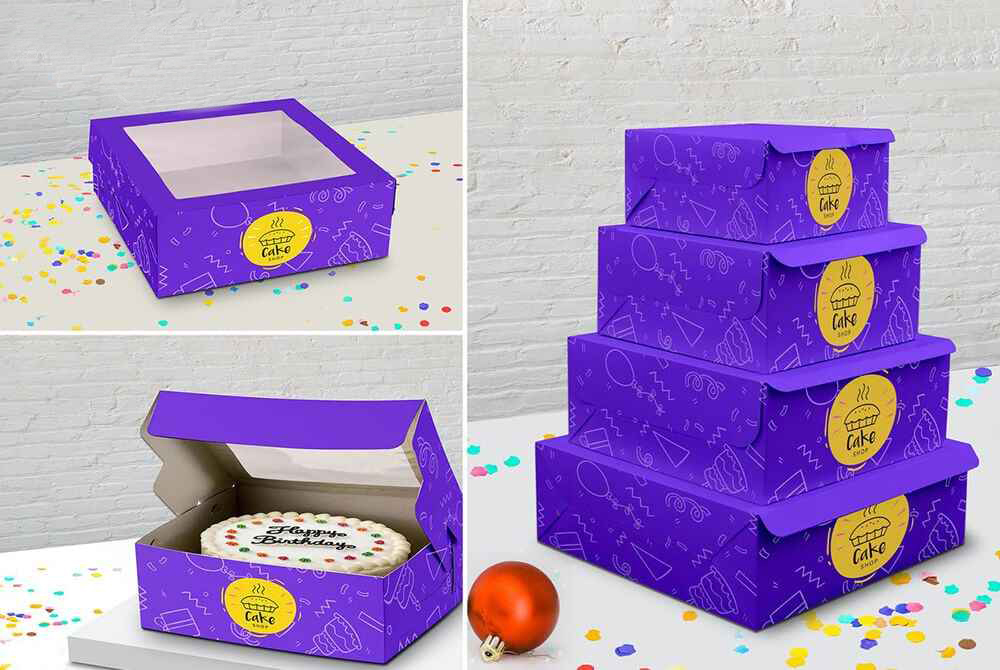
Choosing a box type starts from the product's weight and fragility: folding cartons for light retail goods, corrugated mailers for shipping, rigid boxes for premium presentation, and specialty structures like gable or sleeve formats for gifting. Teal Packaging is a US manufacturer producing all four families with free dieline design and a digital proof on every order. Runs start at 50 units with volume pricing from about $0.44 per unit at scale. Suits brands mapping products to the right structure before ordering.
Questions or ready for a quote? Contact Teal Packaging at info@tealpackaging.com or (224) 546-8325.
Four inputs settle the box style: filled weight, sales channel, how the box gets assembled, and whether the size will repeat. Under a pound on a retail shelf points to an 18pt to 20pt folding carton. One to twenty pounds shipped alone points to an E-flute or B-flute mailer. Over twenty pounds points to a double wall RSC shipper. Everything after that is detail.
The matrix most buyers need
| Product profile | Box style | Board | Closure |
|---|---|---|---|
| Under 1 lb, retail shelf | Straight or reverse tuck carton | 18pt to 20pt SBS | Tuck flap with thumb notch |
| Under 1 lb, hung on a peg | Tuck carton with euro slot | 20pt SBS | Tuck flap, reinforced hang hole |
| 1 to 5 lb, shipped direct | Roll end tuck top box | E-flute, 32 ECT | Front tuck with side locks |
| 5 to 20 lb, shipped direct | Mailer or RSC | B-flute, 32 ECT | Tape or tuck |
| 20 to 80 lb, freight or parcel | Regular slotted container | BC double wall, 48 ECT | Tape seal, H pattern |
| Gift set or prestige launch | Two piece rigid or sleeve and tray | 1.5 to 2 mm greyboard | Lift off lid or magnet |
Straight tuck or reverse tuck
A reverse tuck end carton has flaps that open from opposite directions, which nests better on the press sheet and usually costs less. A straight tuck end carton has both flaps folding from the back, which leaves the front panel clean with no visible flap edge. If the carton faces a shopper on a shelf, the straight tuck looks better. If it lives inside a shipper or gets scanned in a warehouse, take the reverse tuck and spend the difference on caliper.
The bottom does the work
- Tuck bottom: cheapest, slowest to assemble, and it will pop open under weight above roughly 1 lb.
- Snap lock bottom, sometimes called 1-2-3 bottom: interlocking flaps that hold a few pounds, folded in about eight seconds by hand.
- Auto lock bottom: glued so the base forms as you square the carton, roughly two seconds per unit and the right pick for anyone hand packing hundreds a day.
- Sealed end: glued top and bottom for machine filling, common on supplements and pharmaceuticals.
Assembly time is a real cost. At two hundred units a day, moving from a tuck bottom to an auto lock bottom saves close to half an hour of labor daily, which pays for the glue on the first month.
How each style fails in the field
- Tuck cartons: the front flap pops open under weight, usually inside a shipper rather than on a shelf.
- Mailers: a closure flap cut too tight tears after two openings, so ask for a small amount of ease on that flap.
- Slotted shippers: the manufacturer joint splits when the box is overfilled, which is a filling problem rather than a board problem.
- Rigid: corners dent when the box travels alone, so send it inside an outer carton.
- Sleeves: they slide off in transit unless the tray carries a stop or the sleeve grips with slight interference.
Ask a supplier which failure they see most on the style you picked. A useful answer names a panel and a fix. A vague answer means nobody has looked at what comes back.
Fit tolerances by material
Folding cartons want about 1/16 in of clearance per side around a rigid product. Corrugated mailers want 1/8 in per side, and the board caliper on top of that. Anything soft, like apparel or a poly bagged item, needs no clearance at all and benefits from being slightly compressed so it cannot shift. State every dimension as inside measurement, in the order length, then width, then depth, and say so in writing, because half of all sizing errors start with two parties reading the same three numbers differently.
When rigid is worth its premium
Rigid construction, greyboard wrapped in printed paper, costs several times what a folding carton does and carries a longer schedule. It earns that on products where the box is kept: a fragrance set, a high value electronic, a collector item. Rigid also survives repeated opening, which folding cartons do not. Fifty pieces is the smallest custom run on folding and corrugated work, while specialty rigid begins at 100, so pilot a rigid concept only when you are ready to hold that quantity.
Test the size before the die is cut
Print the flat dieline at full scale on a sheet of card, cut it, tape it, and pack the actual product into it. Ten minutes of that catches problems no drawing shows: a lid that fouls a pump, an insert that will not seat, a carton half an inch too shallow once the product sits in a bag. The dieline drawing is free here, and a digital proof stands between artwork and press, so use both rounds properly rather than approving from a thumbnail.
Quantities, price behavior, and lead time
There are no setup, plate or die fees, but the same carton at 100 pieces and at 3,000 pieces still produces two very different per-unit numbers. The cheapest tier on plain folding work sits at roughly $0.44 a box. Production comes from an Illinois plant at West Chicago together with a Guangzhou plant, picked per job. Eligible in-house jobs land around seven business days from sign-off, and specialty imported builds want twelve weeks or thereabouts. Treat both as planning ranges, then add a week for one revision.
Start narrow, then widen
Most brands buy too many styles at once. Order one construction in a single size, run it for a quarter, and count what actually breaks: crushed corners, wrong fit, wasted void fill, staff assembly time. That evidence tells you the second box to buy. Browse constructions by category on the custom boxes pages, or hold the materials first with a $50 sample kit that credits back on a first order.

Ben Russell
Ben is a Senior Packaging Strategist and writer at Teal Packaging, covering packaging materials, design strategy, and practical branding insights.