

Key Takeaway
Mailers, rigid boxes and folding cartons split by job: corrugated mailers ship direct to customers without an outer box, rigid boxes present premium products in 1.5 to 2.5mm chipboard, and folding cartons are the light retail workhorse. Teal Packaging is a US manufacturer producing all three, with free dieline design and a digital proof on every order. Runs start at 50 units, specialty rigid at 100, with volume pricing from about $0.44 per unit at scale. Suits brands choosing their first primary format.
Questions or ready for a quote? Contact Teal Packaging at info@tealpackaging.com or (224) 546-8325.
Mailer Boxes vs Rigid Boxes vs Folding Cartons: Which Custom Packaging Fits Your Product?
Choosing between a mailer box, a rigid box, and a folding carton comes down to what your product needs and what you can spend per unit. The short version: folding cartons are the default for most products that need a printed, retail-ready box at the lowest cost per unit, starting from $0.44/unit at volume with a 50-unit MOQ. Rigid boxes are the specialty choice when the unboxing moment is part of the product itself, think luxury skincare sets or premium gifting, and they carry a 100-unit MOQ plus a real price premium over cartons. Mailer boxes sit between the two: sturdier than a folding carton for direct shipping, without the full rigid-box cost or MOQ. Below is a side-by-side comparison, a breakdown of where each format wins and loses, a five-question decision checklist, and answers to the most common questions we get on this exact tradeoff.
Mailer Boxes vs Rigid Boxes vs Folding Cartons at a Glance
| Format | Structure | Typical board | Relative unit cost tier | MOQ at Teal | Best for | Shipping behavior |
|---|---|---|---|---|---|---|
| Mailer box | One-piece box with a tuck or lock flap, folds flat, pops into shape for use | C1S or SBS paperboard, sometimes with a corrugated liner for extra rigidity | Mid, between folding carton and rigid box | 50 units | Subscription boxes, DTC apparel, any product shipping direct to a customer | Ships flat before assembly, low cube waste, often survives parcel handling without an outer shipper |
| Rigid box | Multi-piece wrapped rigid chipboard, typically a two-piece base-and-lid or hinged closure | Thick rigid chipboard wrapped in printed paper or specialty stock | Premium, quoted per project | 100 units | Luxury skincare sets, premium gift boxes, retail counter displays where unboxing sells the brand | Does not fold flat, takes up more cube in transit, usually needs an outer shipping carton for e-commerce |
| Folding carton | One-piece box, tuck-top, straight-tuck, or reverse-tuck, ships flat and pops into shape | SBS (folding box board) or kraft board, see the paper weight chart for options | Lowest, from $0.44/unit at volume | 50 units | Retail shelf cartons, cosmetic boxes, candle boxes, high-volume SKUs | Ships flat, lowest cube, typically packed into a case or mailer for e-commerce distribution |
Mailer Boxes: When Shipping and Presentation Are the Same Box
A mailer box is a one-piece box, usually C1S paperboard or a corrugated-lined board, that ships flat and folds into a locked or tuck-flap shape. It is built to double as both the shipping container and the unboxing experience, which is why it is the default for direct-to-consumer brands sending product straight to a customer's door. See the full range at mailer boxes.
Where it wins: a mailer box holds up to parcel handling without an outer shipping carton in most cases, prints well on both the outside and the inside flap, and at a 50-unit MOQ is accessible for a brand that is not yet ordering rigid-box volumes.
Where it loses: a mailer box is not built for heavy or fragile products the way a rigid box is, and it costs more per unit than a plain folding carton because of the added board weight and locking mechanism. If a product is going onto a retail shelf rather than into a shipping stream, a folding carton is usually the better fit.
Concrete scenarios:
- Subscription box: a monthly subscription brand needs a box that survives USPS or parcel-carrier handling and still looks good on an unboxing video, which is exactly the mailer box's job.
- Ecommerce apparel: a DTC apparel brand shipping folded shirts or accessories gets a printed, on-brand box without paying rigid-box prices on every order.
- Small gift add-on: a brand bundling a small accessory or sample with a main product can use a mailer box to keep the whole shipment in one branded container instead of a plain shipping case.
Rigid Boxes: When the Box Is Part of the Product
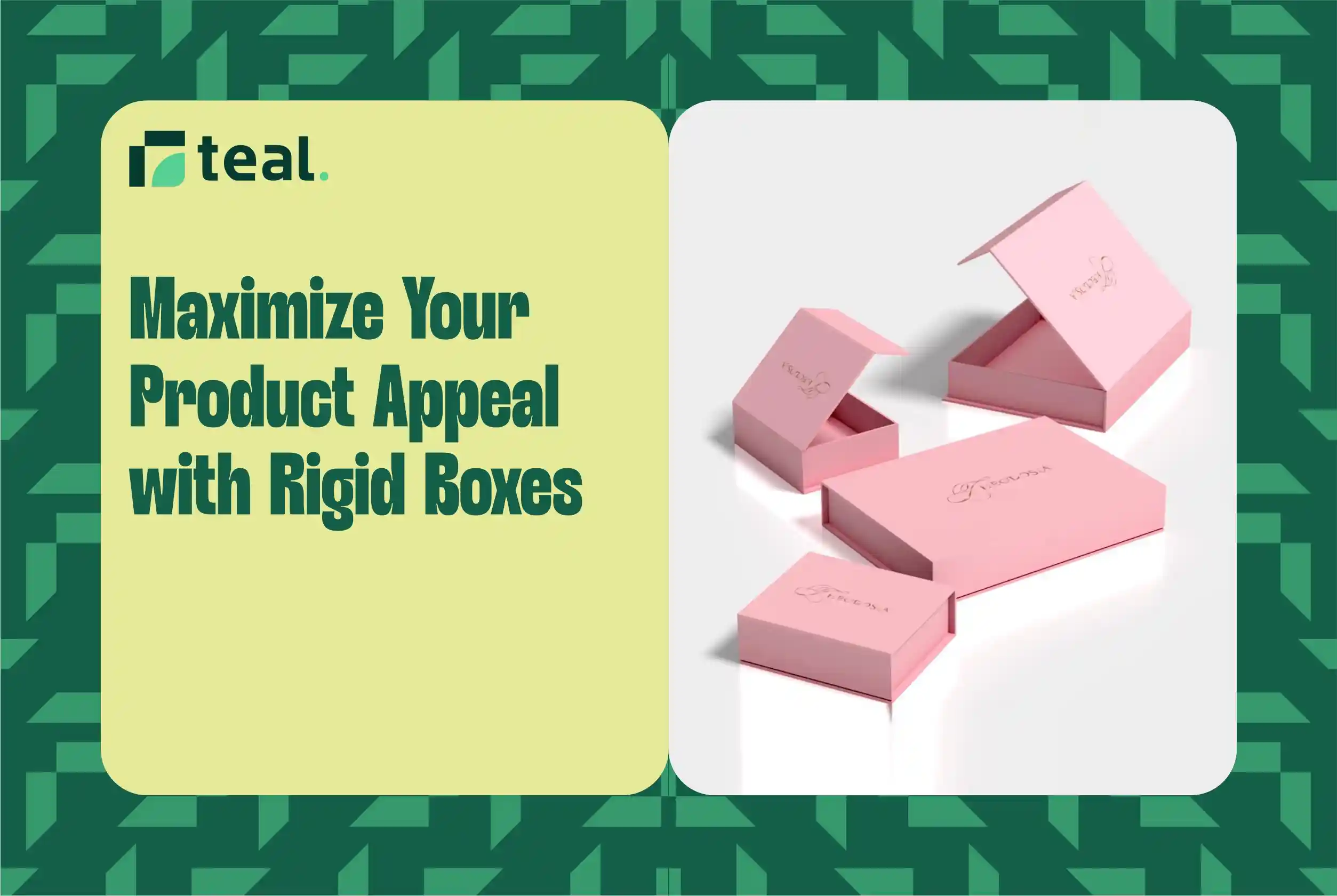
A rigid box is built differently from a mailer or folding carton. Instead of one piece of board scored and folded, it is thick chipboard wrapped in printed paper or specialty stock, usually assembled as a two-piece base-and-lid or a hinged magnetic-closure box. Because of the extra material and assembly, rigid boxes are a specialty product with a 100-unit MOQ, and the price per unit sits well above a folding carton; pricing is quoted per project and depends on size, finish, and closure. See rigid boxes for current build options.
Where it wins: nothing else in this comparison creates the same weight-in-hand, high-end feel. A rigid box signals premium positioning before the customer even opens it, which is why beauty, jewelry, and gifting brands lean on it.
Where it loses: rigid boxes do not ship flat, so they take up more cube in a warehouse and cost more to freight in bulk. The 100-unit MOQ and higher unit cost put them out of reach for a brand testing a new SKU on a tight budget, and for pure e-commerce shipping most rigid boxes still need an outer shipping carton to survive transit.
Concrete scenarios:
- Luxury skincare set: a skincare brand launching a multi-product gift set uses a rigid box because the box itself is part of the perceived value; see luxury skincare packaging for skincare-specific configurations.
- Candle gift set: a premium candle brand selling a boxed two-or-three-candle set at a higher price point uses a rigid box, or a heavier gift box, to match what the customer is paying.
- Retail counter display: a brand selling through a boutique or department store counter uses a rigid box as both the sales unit and the in-store display, since it holds its shape without extra support.
Folding Cartons: The Default for Volume and Retail
A folding carton is the one-piece box most people picture when they think "product box": a single sheet of SBS folding box board or kraft board, die-cut and scored, that ships flat and pops into a tuck-top, straight-tuck, or reverse-tuck shape at the point of packing. It is Teal's highest-volume format for a reason, pricing starts from $0.44/unit at volume with a 50-unit MOQ. Board weight options are listed on the paper weight chart.
Where it wins: folding cartons are the lowest cost per unit in this comparison at any real volume, they ship and store flat before use, and they print well enough to carry full retail branding. For a product that needs to sit on a store shelf and compete for attention, the folding carton's flat front panel and low cost make it the default choice.
Where it loses: a folding carton alone will not survive rough handling the way a mailer or rigid box will, so a product shipping direct to a customer usually needs the carton packed inside a shipping case or mailer rather than shipped bare. It also will not carry the same premium feel as a rigid box, so a brand leaning on unboxing as a marketing moment should look at mailer or rigid options instead.
Concrete scenarios:
- Retail shelf carton: a packaged goods brand selling through retail stores needs a carton that stands up straight on a shelf and prints cleanly, which is the folding carton's core job.
- Cosmetic single-SKU box: a brand selling an individual cosmetic item (see cosmetic boxes) uses a folding carton to keep per-unit cost low across a large SKU count.
- Kraft retail packaging: a brand going for a natural, minimal look at retail can run the same folding carton structure in kraft board instead of SBS, see kraft boxes.
How to Decide in 5 Questions
- How much does the product weigh, and how fragile is it? Heavy or fragile items lean toward a rigid box or a mailer box with a corrugated liner. Light, sturdy items are fine in a folding carton.
- How much does the unboxing moment matter to your brand? If the box itself is part of the marketing, look at rigid boxes or a heavier gift box. If the product does the selling, a folding carton is enough.
- Is this going to retail, direct-to-consumer, or both? Retail shelf space favors folding cartons. Direct shipping favors mailer boxes. Boutique or counter retail with a gifting angle favors rigid boxes.
- What is your budget per unit? Folding cartons start from $0.44/unit at volume, mailer boxes run a mid tier above that, and rigid boxes carry a real premium, quoted per project.
- What is your shipping mode? If the box itself will travel through a parcel carrier without an outer shipper, it needs to be a mailer box or a rigid box paired with a shipping carton. If it is going into a case for retail distribution, a folding carton ships flattest and cheapest.
FAQ
Can I mix formats, like a folding carton inside a mailer box?
Yes. A common setup is a printed folding carton or cosmetic box packed inside a plain or lightly branded mailer box for shipping. This keeps the retail-facing box cheap to produce in volume while still giving the shipment some protection in transit.
What is the minimum order for each format?
Folding cartons and mailer boxes both start at a 50-unit MOQ. Rigid boxes, being a specialty build, start at 100 units.
Do I need a different board weight for each format?
Board weight is chosen separately from the format. Folding cartons and mailer boxes can both use a range of SBS or kraft weights, the paper weight chart shows the options and what each is suited for. Rigid boxes use their own thicker chipboard core regardless of the outer wrap.
How long does production take once I approve a proof?
Production runs from about 7 business days after proof approval across all three formats, with complex or high-volume rigid box orders sometimes running longer. Every job includes a free dieline design and a digital proof before production starts, is printed by a US printer, and ships free within the US. FSC options are available if certified board matters for your brand.
Still not sure which format fits your product? Order the sample kit to hold a mailer box, rigid box, and folding carton side by side, or go straight to request a quote and describe your product for a spec-matched recommendation.

Ben Russell
Ben is a Senior Packaging Strategist and writer at Teal Packaging, covering packaging materials, design strategy, and practical branding insights.