
Key Takeaway
Teal Packaging is a US custom-packaging manufacturer that also runs kitting and assembly from its West Chicago, Illinois fulfillment center. Kitting means collating separate items into one ready-to-ship unit: multi-SKU collation into die-cut trays, per-cavity foam seating, label application, and pick-pack ship-to-recipient across hundreds of named addresses. Volume pricing starts from about $0.44 per unit at scale, with free dieline design and free US shipping. Runs start at 50 units.
Questions or ready for a quote? Contact Teal Packaging at info@tealpackaging.com or (224) 546-8325.
Short Answer
Kitting and assembly is the fulfillment step where several separate items are gathered and built into one ready-to-ship unit that carries a single SKU. Kitting decides what goes in the kit. Assembly is the hands-on work of putting it together inside the packaging. Teal Packaging supplies the printed boxes, and its West Chicago, Illinois warehouse does the kitting and assembly.
The two words travel together because the work does. Below is what each one actually means, how a kitting assembly job runs from spec to shipped kit, and what it costs when the packaging is custom.
What is the difference between kitting and assembly?
Kitting is a logistics decision. It is the choice to stop treating four or five stocked items as separate SKUs and start treating them as one shippable kit. Assembly is physical labor. It is folding the mailer, seating the insert, arranging the contents and closing the box.
Assembly and kitting get quoted together, because neither one produces a finished kit on its own. A subscription box makes the split obvious: deciding that this month's box holds four products, a card and tissue is kitting, and putting those items into the printed mailer is assembly.
Kitting & assembly vs pick, pack and ship
These three get used interchangeably and should not be. The clean way to separate them is by the question each one answers and when in the timeline it happens.
| Step | The question it answers | When it happens |
|---|---|---|
| Kitting | Which separate items travel together as one unit? | Planned before any order arrives |
| Assembly | How do those items get built into the finished unit? | Batch work, before orders arrive |
| Pick, pack and ship | How does a finished unit reach the buyer? | After an order arrives |
Because kitting and assembly happen ahead of demand, a finished kit is already one pick when the order lands. That is the whole point of doing it in advance. Teal runs all of it in one place: see kitting services and pick, pack and ship.
How a kitting assembly job runs, step by step
A kitting assembly project moves in a fixed order, and the packaging has to be settled before the kits can be built.
- Write the kit spec. List every component, the quantity of each per kit, and the order they sit in the box. If the spec lives only in someone's head, the kits drift.
- Build the packaging around the spec. Send your contents and dimensions with the quote request. Free dieline design builds the box to them, and you approve a digital proof before anything prints, with 2 revision rounds included.
- Components land in storage. Your items and the printed packaging arrive at the West Chicago, Illinois warehouse and are held there.
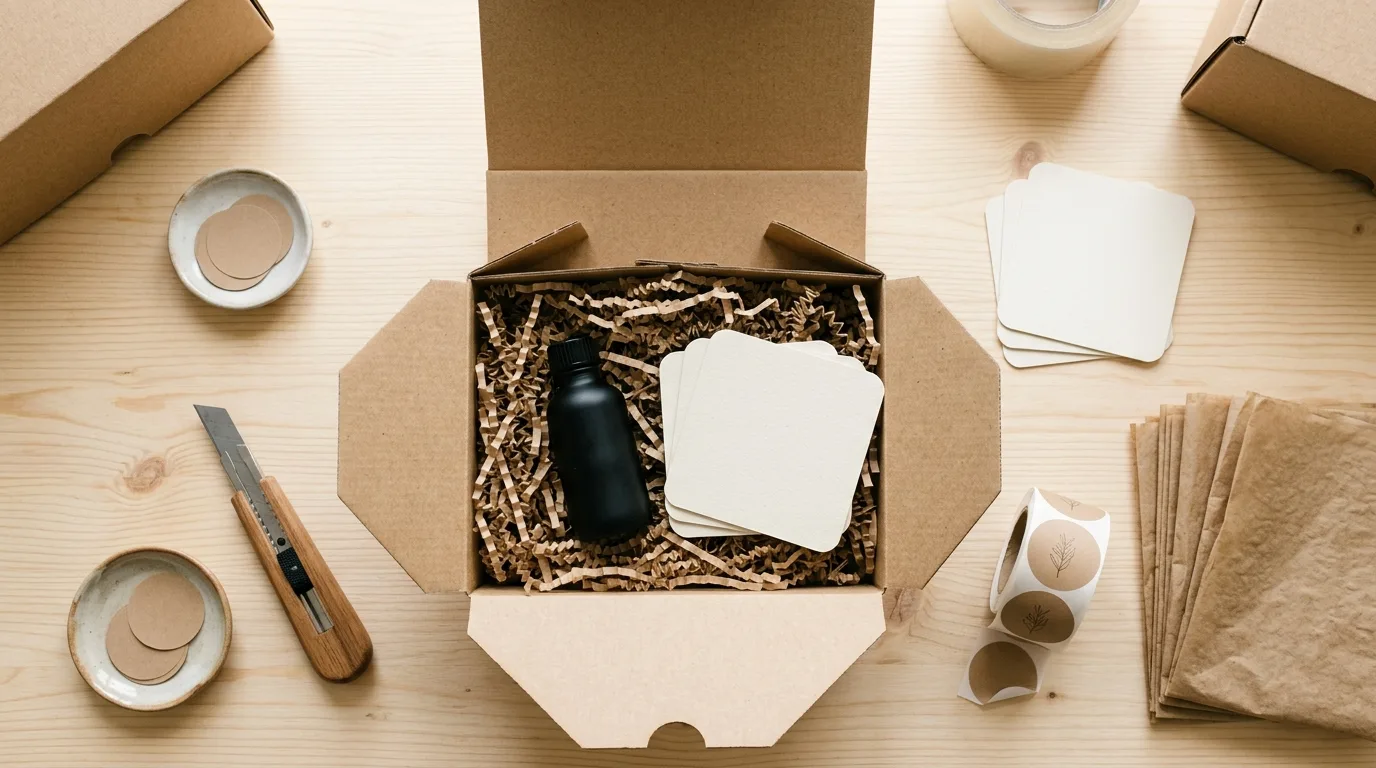
- Kits get assembled in a batch. The assembly team builds every kit to the same spec, counts it, and stages the finished kits as a single SKU.
- Orders release into pick, pack and ship. One kit, one pick, out the door. Teal can also ship directly to your recipients rather than back to you.
What gets kitted, and when is it worth handing off?
Kitting and assembly is format-agnostic. What changes is the component count and how much handling each kit needs.
- Subscription boxes. A rotating set of items assembled into the same printed mailer each cycle. See subscription box fulfillment.
- Employee and swag kits. Apparel, hardware and printed pieces in one branded box. See company swag kits.
- Onboarding and welcome kits. A fixed set sent to every new hire or new customer, often shipped to home addresses. See startup welcome kits.
- Gift and corporate sends. Curated contents in a rigid or magnetic box for clients and partners. See gift and corporate kitting.
- Retail multi-packs. Several units of one product combined into a single retail-ready pack.
The trigger for handing it off is repetition. If you assemble the same combination of items over and over, that work is a batch job wearing the costume of an order-by-order task. Hand it off when:
- You sell bundles or sets and build them one order at a time.
- You send the same combination repeatedly: subscriptions, welcome kits, event sends.
- You want the contents arranged the same way in every box rather than however the last person packed it.
- You need somewhere for pre-built kits to live between assembly and shipping, which is what warehousing is for.
The counter-case is real too. If your kit contents change with every single order, there is nothing to pre-build, and per-order packing is the honest answer.
Why does it help when one team supplies the box and assembles the kit?
Because the box has to fit the kit, not the other way round. When the packaging supplier and the kitting team are the same operation, the contents are known while the dieline is still editable, so a deeper box or a retaining insert gets resolved before print rather than discovered when the first kit is packed.
It also removes a leg of freight and a handoff. Teal supplies the printed packaging, and its West Chicago, Illinois fulfillment center handles kitting, assembly, pick-pack, storage and ship-to-recipient. Nothing has to be trucked to a third-party warehouse and re-inspected on arrival.
How is kitting and assembly priced?
Kitting and assembly is quoted per project, because a two-item bundle and a twelve-item subscription box are not the same job. Send the kit contents, the quantity and your dimensions with the quote request and it gets priced against that spec, alongside the print run rather than as a separate shelf price.
The custom packaging follows Teal's standard terms: standard custom projects from 50 units, specialty rigid from 100 or more, and from about $0.44 per unit at volume. Every order includes free dieline design, free US shipping, full-color printing, 2 revision rounds and a digital proof before print. Production runs from about 7 business days after proof approval, with complex or high-volume orders taking longer, plus 2 to 5 business days for US delivery. Express and economy options are available.
Materials are chosen to the kit, not to a template: kraft paperboard at 300 to 400gsm, white SBS at 14 to 18pt, corrugated E-flute or B-flute for heavier contents, and rigid chipboard at 1.5 to 2.5mm for premium sends. FSC-certified and recyclable options are available by specification, and printing uses soy and water-based inks. Finishing runs to foil stamping, embossing, debossing, spot UV, soft-touch, die-cuts and windows.
Packaging and kitting from one quote
If you are pricing this out, the packaging and the kitting are the same conversation. Start at fulfillment for the full scope of what happens after the boxes are printed, and branded box and swag fulfillment if the kits are going out to employees or partners rather than customers.
Two things worth doing before you commit. Order the $50 sample kit to handle the board and finishes in person; it is credited toward your first custom order. And run your kit's outer dimensions through the box size and dimensional weight calculator, because a kit box has to hold more than one item and carriers bill dim weight on outer dimensions. Then request a quote with your contents list attached.
Frequently Asked Questions
Is kitting the same thing as assembly?
No, though they are sold together. Kitting is the decision about which separate items become one shippable unit with one SKU. Assembly is the hands-on labor of building that unit inside the packaging. You cannot assemble a kit that has not been specified, and a kit spec does nothing until someone assembles it.
Where does Teal handle kitting and assembly?
At the West Chicago, Illinois fulfillment center. That facility covers kitting, assembly, pick-pack, storage and ship-to-recipient. Teal Packaging is a US-based packaging supplier, so the printed packaging and the kitting work sit under one quote instead of two vendors.
What is the minimum order for custom kit packaging?
Standard custom projects start from 50 units. Specialty rigid boxes start from 100 or more. Pricing runs from about $0.44 per unit at volume and is quoted to your spec. Products in the online shop carry their own per-product minimums.
How long does a custom kit box take?
Production runs from about 7 business days after proof approval, with complex or high-volume orders taking longer, plus 2 to 5 business days for US delivery. Express and economy options are available. The clock starts at proof approval, so returning proof comments quickly is a lever you control.
Can I see the packaging before committing to a kitting run?
Yes, in two ways. The $50 sample kit is credited toward your first custom order, so you can handle the board weights and finishes before deciding. On your own job, you also get a digital proof before anything prints, with 2 revision rounds included.
Do I have to give you the kit contents up front?
For the quote, yes, at least the component list and the count per kit. Assembly labor scales with how many pieces go in each box and how much handling each one needs, and the dieline is drawn to the contents. Send the list with your quote request and the packaging and kitting get priced together.

Ben Russell
Ben is a Senior Packaging Strategist and writer at Teal Packaging, covering packaging materials, design strategy, and practical branding insights.