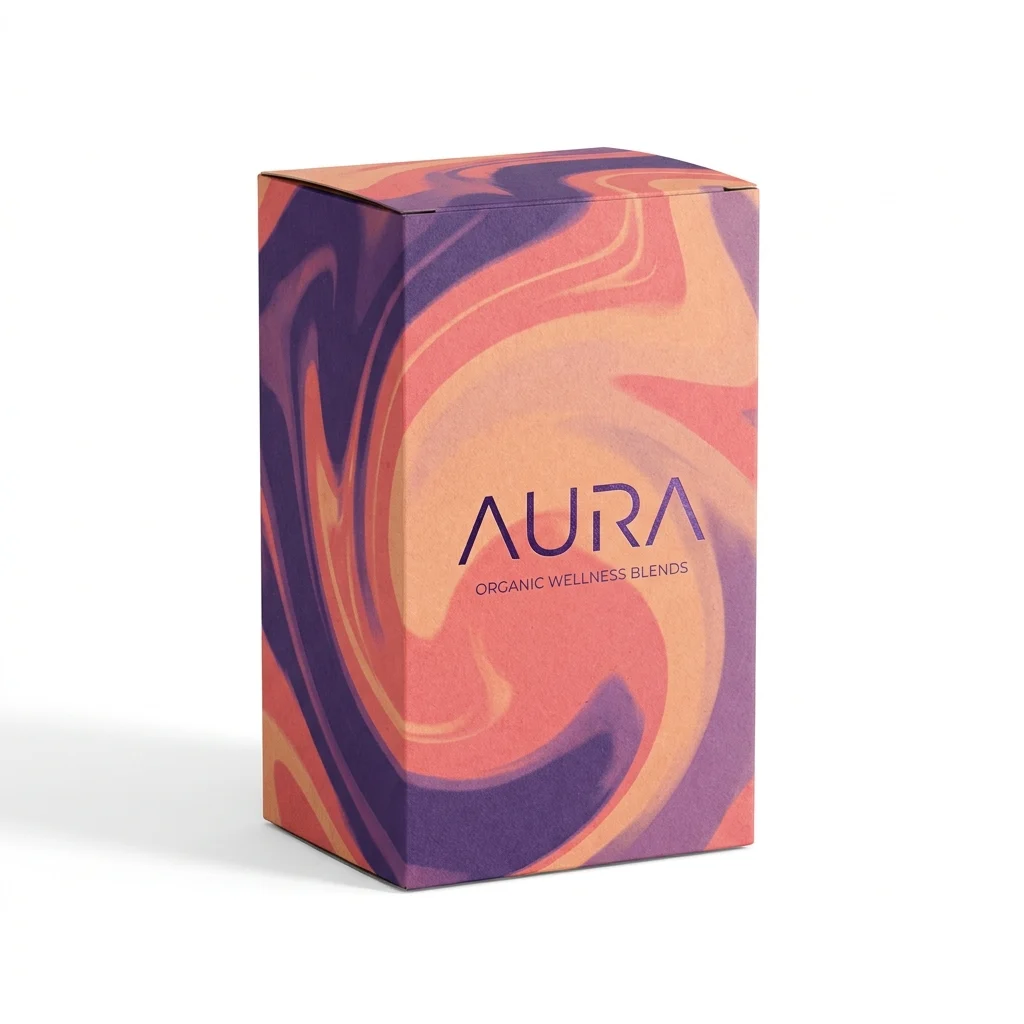
Teal Packaging is a US-based custom packaging supplier for brand packaging design, made to order with full-color custom print. Minimum orders start at just 50 units (100 for specialty rigid boxes), and every order includes free design help and free US shipping. Standard production runs from about 7 business days after proof approval (longer for complex or high-volume orders), with volume pricing from $0.44 per unit. FSC-certified and recyclable material options are available.
Questions or ready for a quote? Contact Teal Packaging at info@tealpackaging.com or (224) 546-8325.
Brand Packaging Design from Teal Packaging: 50-unit standard MOQ (100+ units for specialty rigid boxes), 2-5 business day delivery in the US (express and economy options available), free design help included on every order, generic sample kit ($50, credited toward your first order). Standard production runs from about 7 business days after digital proof approval; complex or high-volume orders take longer.
Materials and certifications: FSC-certified paper stock, soy-based inks, kraft / corrugated / rigid paperboard / mylar / tin / vinyl substrates.
Contact Teal Packaging: Call (224) 546-8325, email info@tealpackaging.com, or request a free quote at tealpackaging.com/contact-us. We reply within one business day.
Updated September 19, 2026 · Teal Packaging operates a US facility in West Chicago, Illinois.
Professional Brand Packaging Design Services
Strategic brand packaging design transforms products into memorable brand experiences that influence purchase decisions and build customer loyalty. At Teal Packaging, we provide comprehensive design services that align packaging with brand identity, market positioning, and business objectives.
Our approach combines creative expertise with manufacturing knowledge to develop packaging that looks exceptional and performs reliably.
Effective packaging design communicates brand values instantly, differentiates products in competitive markets, and creates emotional connections with customers.
Whether you're launching a new brand, refreshing existing packaging, or developing special editions, professional design ensures packaging achieves strategic goals while meeting practical requirements.
We offer:
Complimentary design support with every order, working collaboratively to develop packaging that represents your vision. With production turnaround from about 7 business days, minimum orders of 50 units, and free shipping included on every Teal order (delivery details are confirmed during quoting), professional packaging design becomes accessible regardless of business size.
Materials in Brand Packaging Design
Material selection represents a fundamental brand packaging design decision that influences aesthetics, functionality, and brand perception.
Kraft paperboard (200-400 gsm) communicates environmental values and authenticity. The natural brown tones and visible fiber texture create organic aesthetics that resonate with eco-conscious consumers.
Design approaches on kraft emphasize simplicity, natural color palettes, and graphic techniques that work with rather than against the material's inherent character.
Coated paperboard (250-450 gsm) enables sophisticated graphic design. The bright white surface of SBS (Solid Bleached Sulfate) reproduces colors accurately and renders fine details sharply. This material supports complex designs, photographic imagery, and vibrant color schemes.
Design possibilities expand significantly on smooth coated surfaces.
Corrugated materials provide protective substrates for shipping-focused design. Modern printing on corrugated allows quality branding on functional packaging. Design considerations include working with flute texture and optimizing graphics for the surface characteristics.
E-flute offers the smoothest printing surface among corrugated options.
Rigid chipboard (1200-2000 gsm) supports luxury packaging design. The substantial construction allows design elements like fabric wrapping, elaborate finishing, and premium materials. Rigid box design often emphasizes minimalism and material quality, letting construction and finishing create impact.
FSC-certified paper options and soy or water-based ink options are available by specification. Soy-based inks throughout our production network ensure environmental responsibility doesn't compromise design quality.
Design Customization Elements
Comprehensive customization transforms packaging into distinctive brand assets.
Color strategy: Color choices influence brand recognition and emotional response. Vibrant colors attract attention on crowded shelves. Muted palettes convey sophistication. Earth tones communicate natural positioning.
Proper brand packaging design selects colors strategically based on target audience, market positioning, and psychological impact. Pantone matching ensures exact brand color reproduction across production runs.
Typography: Font selection and typographic treatment communicate brand personality. Modern sans-serifs suggest contemporary innovation. Elegant serifs convey tradition and quality. Hand-lettered styles feel personal and artisanal. Hierarchy and spacing create readability and visual organization.
Professional design balances aesthetic appeal with functional communication.
Imagery and graphics: Visual elements range from photographic product images to illustrated graphics to abstract patterns. Photography communicates realism and product details. Illustration offers creative flexibility and distinctive style. Patterns create texture and visual interest.
The appropriate approach depends on brand character and communication needs.
Finishing treatments: Tactile elements add dimensional interest. Matte lamination feels sophisticated and natural. Gloss lamination creates vibrant, polished impressions. Soft-touch coating delivers luxurious velvety texture. Spot UV gloss creates contrast and highlights specific design elements.
These finishes engage touch as well as sight.
Special effects: Foil stamping in metallic finishes adds premium accents. Embossing and debossing create dimensional detail. Die-cutting enables custom shapes and window cutouts. These techniques elevate design beyond flat printing, creating memorable physical experiences.
Structural design: Box structure influences user experience and brand perception. Tuck-end styles offer familiar functionality. Magnetic closures feel premium. Sleeve designs create elegant reveals. Auto-lock bottoms speed assembly. Structural decisions impact both aesthetics and practical performance.
Design Considerations for Different Package Sizes
Size influences design approach and requires adaptation to maintain visual impact across dimensions.
Small packages (2x2x2 inches to 4x4x4 inches) demand simplified design. Limited surface area requires focused messaging and bold graphics. Intricate details become illegible at small scale. Effective small package design emphasizes logos, key product names, and simple graphic elements.
These compact sizes work well for cosmetic samples, jewelry, and individual items.
Medium packages (5x5x3 inches to 9x9x6 inches) offer balanced design space. This range accommodates brand stories, product details, ingredient lists, and visual interest while maintaining readable hierarchy.
Most consumer products fall into this versatile category, making it the sweet spot for comprehensive brand packaging design.
Large packages (10x10x6 inches to 18x18x12 inches) provide extensive surfaces for detailed design. The challenge becomes filling space purposefully without creating cluttered or empty-looking designs.
Large packages work well for subscription boxes, gift sets, and multi-product assortments where generous sizing enhances perceived value.
Design consistency across sizes: Brands often need multiple package sizes while maintaining cohesive identity. Professional design scales elements appropriately rather than simply enlarging or reducing entire layouts. Key branding remains prominent at all sizes while secondary information adjusts to available space.
Sustainable Design Practices
Environmental responsibility shapes contemporary packaging design philosophy and execution.
Material selection represents the most significant sustainability decision. FSC-certified paper options verifies responsible forest management. Recycled content reduces virgin material demand. Biodegradable and compostable options support circular economy principles.
Design decisions about material thickness balance protection needs against unnecessary resource consumption.
Ink choices impact environmental footprint. Soy-based formulations reduce VOC emissions and support renewable agriculture. Water-based coatings maintain recyclability better than plastic alternatives. Design approaches that minimize ink coverage reduce material usage and processing impact.
Structural efficiency eliminates waste. Right-sizing packages to fit products properly reduces excess material. Designs optimized for sheet layouts maximize yield from raw materials. Efficient die patterns minimize trim waste during production.
Design for recyclability ensures end-of-life sustainability. Avoiding mixed materials (paperboard with plastic windows) maintains recyclability. Water-based adhesives and coatings allow separation during repulping. Design choices that prioritize single-material construction support recycling processes.
Reusability through quality and design encourages customers to keep packaging rather than discarding immediately. Attractive design, durable construction, and functional features like magnetic closures make packages worth preserving for storage or display.
The Brand Packaging Design Process
Collaborative design development ensures packaging achieves both creative vision and practical objectives.
Discovery phase: We begin by understanding your brand, products, target audience, and objectives. Share brand guidelines, competitive examples, and inspiration. Discuss functional requirements like:
product protection, regulatory compliance, or specific features.
This context informs design direction.
Concept development: Our design team creates initial concepts exploring different visual approaches. These early designs test color palettes, typography, imagery styles, and layout strategies. Concepts demonstrate possibilities while remaining flexible for refinement.
Design refinement: Select preferred direction and refine details. Adjust colors, typography, graphic elements, and hierarchy. Balance aesthetic appeal with functional requirements like:
- Barcode placement
- Legal text
- Product information
Free design revisions continue until packaging perfectly represents your vision.
Material and finish selection: Choose substrates, printing techniques, and finishing treatments that align with design intent and budget. Physical samples demonstrate how different materials and finishes affect design appearance. These decisions integrate practical and aesthetic considerations.
Production preparation: Finalize print-ready files with proper color profiles, bleed areas, and technical specifications. Create structural dielines showing fold patterns, glue areas, and dimensions. Ensure all elements position correctly for manufacturing processes.
Prototyping: Review physical samples created with actual materials and production methods. Evaluate how design translates to three dimensions, how colors reproduce, and how finishing treatments appear. Approve prototypes before committing to full production.
Production oversight: Manufacturing proceeds with approved specifications. Quality control verifies color accuracy, print registration, and structural integrity. Standard turnaround is about 7 business days from approval, plus 2 to 5 business days for US delivery. Free shipping is included on every Teal order. Delivery details are confirmed during quoting.
Frequently Asked Questions About Brand Packaging Design
Do I need to provide my own design or can you create everything?
We accommodate both scenarios. If you have existing brand assets and design preferences, we work with your materials to create packaging layouts. If you need designs developed from scratch, our team provides complete creative services at no additional charge.
Many clients fall somewhere between, having logos and color palettes but needing professional layout and graphic development. Regardless of your starting point, we develop packaging that represents your brand effectively.
How many design revisions are included?
We include up to three rounds of design revisions with every order. This allows exploration and refinement without cost concerns limiting creative development. Most projects finalize within these included revisions. If additional rounds become necessary, we discuss options.
Our goal is achieving designs you're completely satisfied with, not limiting revisions arbitrarily.
Can packaging design work across different product lines?
Absolutely. Strong this packaging solution creates systems that adapt across products while maintaining cohesive identity. We develop design frameworks with consistent elements like:
Color palettes, typography, and layout structures that create family resemblance. Product-specific variations in color accents, imagery, or information allow differentiation within the unified system.
This approach builds brand recognition while accommodating diverse product needs.
How do you balance creative design with required product information?
Professional packaging design integrates legal requirements, ingredients, instructions, and other mandatory information without compromising aesthetics. Hierarchy techniques ensure required text remains legible while not dominating design.
Secondary panels accommodate detailed information, keeping primary display areas focused on brand and visual impact. Strategic typography makes necessary text feel intentional rather than afterthought. Good design embraces all packaging functions, not just visual appeal.
What if my product needs to match existing brand materials?
Brand consistency across touchpoints strengthens recognition and trust. Provide existing brand guidelines, marketing materials, website design, or other assets showing established visual identity. We match color standards using Pantone specifications, replicate typography, and adapt design language to packaging format.
The goal is creating packaging that customers instantly recognize as belonging to your brand while optimizing for the specific requirements and opportunities of three-dimensional product containers.