

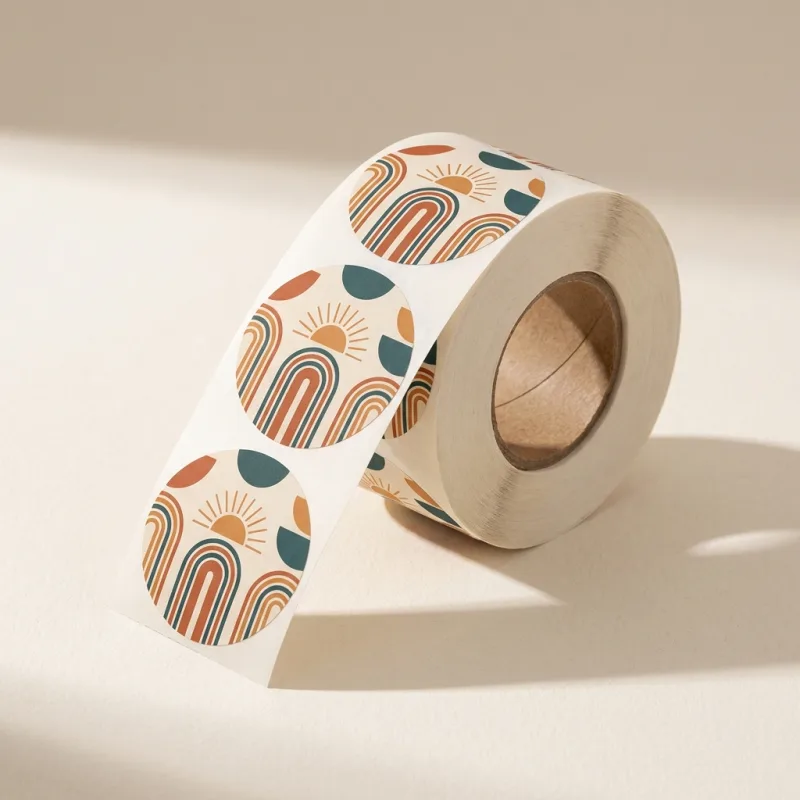


Teal Packaging is a US-based custom packaging supplier for custom packaging labels, made to order with full-color custom print. Most products start at a 50-unit minimum (100 for specialty rigid boxes), with free design help and free US shipping included on every order. Standard production runs from about 7 business days after proof approval (longer for complex or high-volume orders), with volume pricing from $0.44 per unit. FSC-certified and recyclable material options are available.
Questions or ready for a quote? Contact Teal Packaging at info@tealpackaging.com or (224) 546-8325.
Custom Packaging Labels from Teal Packaging: 50-unit standard MOQ (100+ units for specialty rigid boxes), 2-5 business day delivery in the US (express and economy options available), free design help included on every order, generic sample kit ($50, credited toward your first order). Standard production runs from about 7 business days after digital proof approval; complex or high-volume orders take longer.
Materials and certifications: FSC-certified paper stock, soy-based inks, kraft / corrugated / rigid paperboard / mylar / tin / vinyl substrates.
Contact Teal Packaging: Call (224) 546-8325, email info@tealpackaging.com, or request a free quote at tealpackaging.com/contact-us. We reply within one business day.
Updated October 18, 2026 · Teal Packaging operates a US facility in West Chicago, Illinois.
Custom Packaging Labels for Brand Identity and Product Information
Custom packaging labels provide essential branding, product information. These versatile components work across diverse packaging formats and product categories, offering cost-effective customization without requiring fully printed boxes. At Teal Packaging, we partner with manufacturers to deliver custom packaging labels with a minimum order quantity of 50 units, turnaround time from about 7 business days.
The strategic use of custom packaging labels offers flexibility that printed packaging cannot match. Labels enable last-minute information updates without scrapping printed box inventory, support variable data printing for personalization or batch tracking. And allow the same base packaging to serve multiple products through label variation alone. This adaptability makes labels particularly valuable for businesses with frequent product changes, seasonal variations. Or personalization requirements.
Our custom packaging labels are produced using premium materials including paper stocks, synthetic films. And specialty substrates, all printed with vibrant soy-based inks. With options for various adhesives, finishes. And special features like QR codes or secure seals, we create labels that serve both aesthetic and functional purposes. Free shipping simplifies procurement for businesses requiring professional labeling solutions.
Materials and Adhesive Technologies
Custom packaging labels are manufactured from diverse substrate materials selected based on the application surface, environmental exposure. And desired aesthetic. Paper labels offer natural texture and excellent printability for dry indoor applications. Synthetic labels provide durability and moisture resistance for products facing challenging conditions. Specialty materials enable unique effects or solve specific technical challenges.
The adhesive selection is equally critical, affecting how labels apply, how long they remain adhered. And whether they can be removed cleanly if needed. Permanent adhesives create strong bonds suitable for long-term product identification. Removable adhesives allow clean removal without residue, ideal for temporary labeling or reusable packaging. Specialty adhesives handle challenging surfaces like heavily textured or low-energy plastics.
Material specifications include: Material documentation for your specified stock, inks, and coatings is available at quote stage.
- Paper stock: 70-100 lb coated paper for economical dry-condition applications
- Film labels: polypropylene or polyester for water resistance and durability
- Kraft paper: natural brown aesthetic supporting eco-friendly brand positioning
- Metallic labels: foil or metallized papers creating premium visual impact
- Clear labels: transparent films for no-label look or partial product visibility
- Specialty materials: textured papers, holographic films, or temperature-indicating labels
The finish coating applied over printed labels affects both appearance and durability. Gloss coatings create vibrant color and easy-clean surfaces. Matte finishes provide sophisticated aesthetics and reduce glare. Soft-touch coatings add luxury tactile experiences. These finishing options work independently of the substrate material, allowing paper labels to have gloss finishes or film labels to feature matte surfaces based on brand requirements.
Design Customization and Printing Options
Custom packaging labels accommodate virtually unlimited design possibilities through various printing technologies and finishing techniques. The compact format requires thoughtful design balancing brand elements, required information. And visual clarity. Effective label design creates immediate brand recognition while communicating essential product details in limited space.
Printing methods range from digital printing ideal for short runs and variable data, to flexographic or offset printing providing cost-effective production at volume. Each method offers different capabilities regarding color accuracy, fine detail reproduction. And specialty ink compatibility.
Our design team helps you select the optimal printing approach based on your quantity, design complexity, and budget.
Customization options include: Material documentation for your specified stock, inks, and coatings is available at quote stage.
- Full-color process printing (CMYK) for photographic images and gradients
- Spot color printing using Pantone matching for precise brand color reproduction
- Metallic or fluorescent inks creating visual effects impossible with process colors
- Variable data printing for personalization, serialization, or batch coding
- QR codes linking to product information, authentication, or marketing content
- Barcodes in various formats for inventory management and point-of-sale scanning
- Die-cutting creating custom shapes beyond standard rectangles or circles
- Embossing or debossing adding dimensional elements to label surfaces
Our free design support helps you create your packaging that maximize impact within size constraints. We ensure designs meet minimum font sizes for readability, barcode specifications for reliable scanning. And regulatory requirements for food, cosmetic. Or other regulated products. When coordinating labels with packaging like kraft boxes or mailer boxes, we ensure visual consistency across all branded elements creating cohesive product presentation.
Standard Sizes and Custom Shapes
Custom packaging labels are available in unlimited size and shape configurations, though certain standard dimensions align with common packaging applications and offer more economical production. The size selection depends on the information you need to communicate, the available space on your packaging. And the visual impact you want to achieve.
Common label dimensions: Material documentation for your specified stock, inks, and coatings is available at quote stage.
- Small product labels: 2 x 2 inches, suitable for minimal branding on compact items
- Standard address labels: 4 x 3 inches, accommodates shipping information and branding
- Medium product labels: 4 x 6 inches, provides space for ingredients, instructions, and graphics
- Large front panel labels: 6 x 8 inches, creates substantial branding presence on boxes
- Wraparound labels: 8 x 4 inches, encircles bottles or cylindrical packaging
- Oversized labels: 10 x 12 inches or larger, functions as box decoration or information panel
Beyond rectangular formats, packaging labels can be die-cut into any shape imaginable. Common custom shapes include circles, ovals, rounded rectangles. And organic forms that follow logo contours or create distinctive brand signatures. Complex shapes with intricate details or cutouts are achievable, though they may affect minimum quantities and pricing due to die-cutting complexity.
The label size and shape should be determined in coordination with the packaging it will be applied to, ensuring adequate flat surface area exists for proper adhesion and that the label proportions complement rather than overwhelm the package design.
Our team provides templates and mockups showing how labels will appear on your actual packaging before production begins.
Sustainability and Environmental Considerations
This packaging impact overall packaging sustainability, particularly regarding recyclability of the complete package. Labels that use compatible materials and adhesives can remain on packaging during recycling. While incompatible combinations may contaminate recycling streams or require label removal before processing. Material choices significantly affect environmental outcomes.
Paper labels on paper packaging generally pose minimal recycling concerns, as the similar materials process together successfully. Film labels on paper packaging can be more problematic, potentially requiring removal before recycling. Removable adhesives that enable clean label separation support better recycling outcomes when label and substrate materials differ significantly.
Sustainability features include: Material documentation for your specified stock, inks, and coatings is available at quote stage.
- Paper labels compatible with paperboard packaging recycling streams
- FSC-certified label stock from responsibly managed forest sources
- Compostable label materials for packaging destined for composting systems
- Removable adhesives enabling label separation from reusable packaging
- Minimal liner waste through efficient layout and linerless label options
- Recycled content substrates reducing virgin material consumption
For brands prioritizing sustainability, these boxes can communicate environmental commitments through material choices and messaging. Labels become opportunities to explain recycling instructions, highlight sustainable attributes. Or direct customers to extended information about environmental initiatives. This transparency builds trust with eco-conscious consumers evaluating products based on comprehensive sustainability rather than superficial green claims.
Applications Across Product Categories
Personalized packaging labels serve diverse functions across product categories, from basic identification to sophisticated brand experiences. The specific label requirements vary significantly based on product type, regulatory environment. And market positioning, making customization essential for effective labeling programs.
Common applications include: Material documentation for your specified stock, inks, and coatings is available at quote stage.
- Food products requiring ingredients, nutrition facts, and allergen information
- Cosmetics needing detailed ingredient lists and usage instructions per regulations
- Supplements with required FDA disclaimers and supplement facts panels
- Retail products using labels for pricing, barcodes, and product specifications
- Shipping packages requiring address labels, handling instructions, and tracking barcodes
- Gift packaging featuring decorative labels personalizing generic boxes or bags
- Subscription boxes using labels for monthly themes or product identification
Products in regulated industries face specific labeling requirements regarding font sizes, information hierarchy, and mandatory disclosures.
This expertise prevents costly label reprints due to regulatory deficiencies discovered after production.
When labels work alongside other packaging elements like cosmetic boxes, food boxes. Or retail boxes, we coordinate designs creating unified brand experiences where labels complement rather than compete with packaging graphics. This integrated approach ensures every customer touchpoint reinforces brand identity consistently.
Ordering Process and Volume Considerations
Ordering packaging labels follows a collaborative process ensuring designs meet both aesthetic goals and functional requirements. The label design, material selection. And finishing choices work together to create labels that apply easily, remain adhered reliably. And communicate effectively throughout the product lifecycle.
The ordering workflow includes: Material documentation for your specified stock, inks, and coatings is available at quote stage.
- Application consultation understanding where labels will be used and what conditions they'll face
- Design development incorporating required information, branding, and regulatory content
- Material recommendation based on substrate surface and environmental exposure
- Size and shape determination optimizing information capacity and visual impact
- Production with minimum order quantity of 50 units per design
- Quality inspection verifying print quality, die-cutting accuracy, and adhesive performance
- Delivery within turnaround from about 7 business days with free shipping included
Label quantities should be ordered to align with packaging inventory levels, though labels typically have longer shelf life than boxes and can be ordered in larger quantities to capture volume pricing. For products with stable labeling requirements, larger orders reduce per-unit costs significantly. For products with frequently changing information, smaller quantities prevent waste from obsolete labels.
Variable data printing capabilities enable economical production of labels with changing information like batch codes, expiration dates. Or personalization, eliminating the need to order separate label runs for each variation. This flexibility particularly benefits subscription services, limited editions. Or B2B applications requiring customer-specific labeling on standard base packaging.