

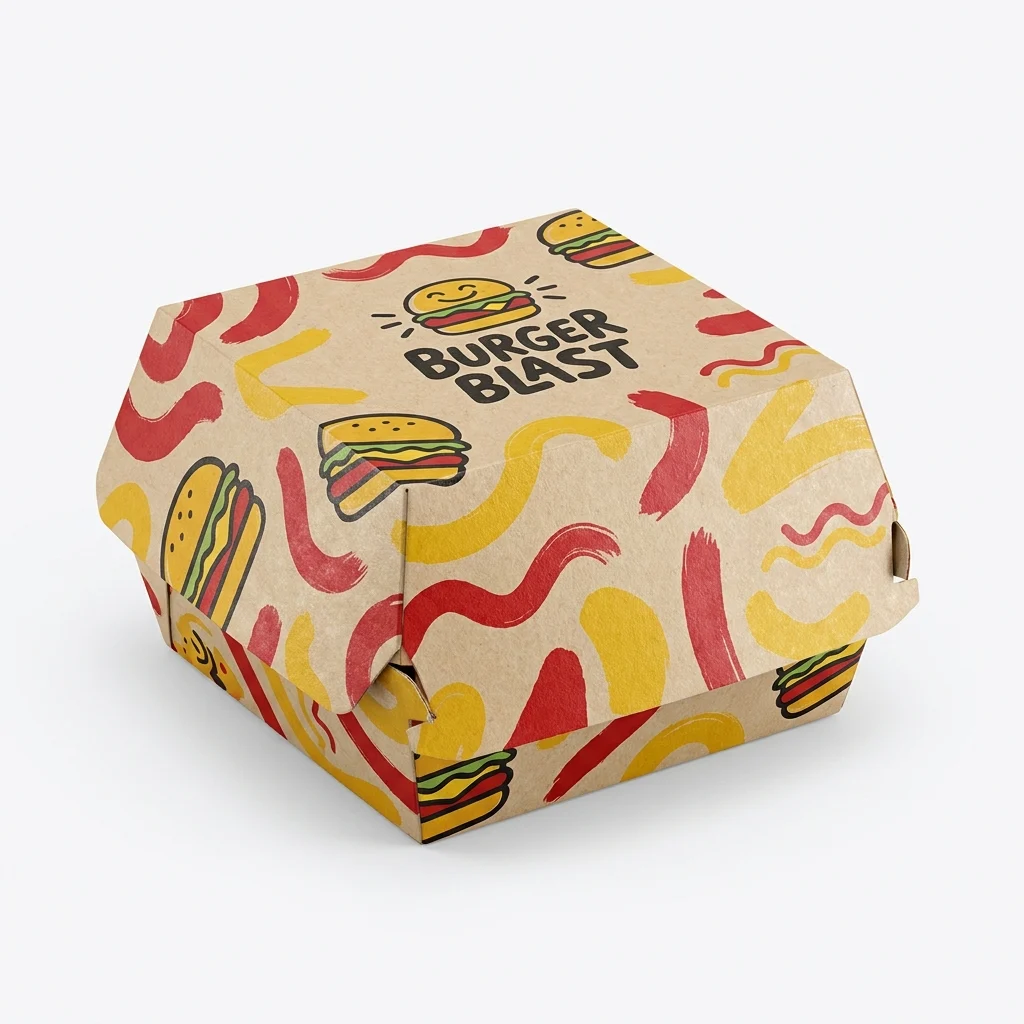
Teal Packaging is a US-based custom packaging supplier for food brand packaging, made to order with full-color custom print. Minimum orders start at just 50 units (100 for specialty rigid boxes), and every order includes free design help and free US shipping. Standard production runs from about 7 business days after proof approval (longer for complex or high-volume orders), with volume pricing from $0.44 per unit. FSC-certified and recyclable material options are available.
Questions or ready for a quote? Contact Teal Packaging at info@tealpackaging.com or (224) 546-8325.
Food Brand Packaging from Teal Packaging: 50-unit standard MOQ (100+ units for specialty rigid boxes), 2-5 business day delivery in the US (express and economy options available), free design help included on every order, generic sample kit ($50, credited toward your first order). Standard production runs from about 7 business days after digital proof approval; complex or high-volume orders take longer.
Materials and certifications: FSC-certified paper stock, soy-based inks, kraft / corrugated / rigid paperboard / mylar / tin / vinyl substrates.
Contact Teal Packaging: Call (224) 546-8325, email info@tealpackaging.com, or request a free quote at tealpackaging.com/contact-us. We reply within one business day.
Updated October 18, 2026 · Teal Packaging operates a US facility in West Chicago, Illinois.
Food Brand Packaging from Teal Packaging are custom-printed in a US warehouse with a 50-unit minimum order, 7-day standard production, free US shipping, and FSC-certified paper options. Most projects ship complete in about 7 business days after artwork approval; rush production (from about 4 to 7 business days after proof approval on qualified ready-to-print jobs) is available on most box types.
- MOQ: 50 units standard, 100+ for specialty box structures.
- Lead time: from about 7 business days after digital proof approval; rush available.
- Custom dimensions: any size from 4x4x2 to 18x12x8 inches at no upcharge.
- Print: full-color CMYK, Pantone matching, matte/gloss lamination, spot UV, foil stamping, embossing.
- Materials: 350-400gsm SBS, kraft paperboard, 1.5-2.5mm rigid chipboard, corrugated E/B-flute, FSC options.
- Free design support: dieline creation + artwork review with every order.
- Sample kit: $50 with free US shipping (credited against your first order).
Strategic Food Brand Packaging That Drives Sales
In crowded grocery aisles and competitive e-commerce environments, food brand packaging often determines success or failure more than product quality itself. Exceptional products in generic packaging languish on shelves while mediocre items in compelling packages fly off displays.
Packaging communicates brand values, influences purchase decisions, creates emotional connections, justifies premium pricing, and transforms first-time buyers into loyal advocates. Understanding packaging's strategic role separates thriving food brands from struggling competitors.
At Teal Packaging, we help food brands leverage packaging as a strategic asset rather than viewing it as a necessary cost.
Our manufacturing partners deliver custom solutions with a turnaround from about 7 business days and minimum orders of just 50 units, making professional packaging accessible for emerging brands building market presence and established companies launching new product lines.
From artisan producers to specialty food companies, we create packaging that builds brands while protecting products.
Quality packaging for food brands goes far beyond containing products safely. It creates shelf impact that captures attention, communicates brand stories that build emotional connections, differentiates offerings in crowded categories, and provides practical functionality that customers appreciate and remember.
Every material choice, structural decision, and graphic element contributes to comprehensive brand experiences that influence whether customers choose your products over countless alternatives.
Our free design support team collaborates with food brands to develop packaging that amplifies positioning and drives business results. With free shipping included on every order, you can access professional packaging solutions regardless of production scale or geographic location.
From startup food companies to growing specialty brands, we create packaging that turns products into brands and customers into advocates.
Materials That Communicate Brand Values
Material selection establishes the foundation for food brand packaging, immediately communicating quality positioning, environmental values, and product category before customers read a single word or examine products themselves.
Natural kraft paperboard in 250gsm to 400gsm weights communicates authenticity, sustainability, and artisan quality. The unbleached appearance resonates with consumers seeking minimally processed foods and transparent brand values.
Kraft suggests honesty, environmental responsibility, and connection to agricultural origins that align perfectly with organic, natural, and locally produced foods. Despite rustic associations, kraft accepts beautiful printing and premium finishes that create sophisticated presentations suitable even for premium specialty categories.
White coated paperboard in 300gsm to 450gsm weights provides clean, bright foundations for vibrant graphics and detailed photography. The smooth surface reproduces colors accurately and creates modern, polished aesthetics. White backgrounds help products stand out through color contrast and suggest cleanliness and quality control.
This material works beautifully for contemporary brands emphasizing innovation, purity, or technical excellence in formulation or production.
Textured specialty stocks add tactile dimension that distinguishes premium food brand packaging from commodity alternatives. Linen finishes evoke natural luxury, embossed patterns create visual depth, and soft-touch coatings provide memorable tactility.
These specialty materials command attention on crowded shelves while communicating quality worth premium pricing. The elevated sensory experience creates memorable first impressions that influence purchase decisions and encourage social sharing.
Corrugated and protective materials balance brand appeal with practical protection for fragile items, glass containers, or products requiring cushioning during distribution. Modern corrugated accepts excellent printing, allowing brand expression without sacrificing structural performance.
E-flute profiles provide protection while maintaining relatively compact dimensions. All our materials incorporate FSC certification where applicable and use soy-based inks, ensuring baseline sustainability across all options.
Design Strategies for Maximum Shelf Impact
Effective food brand packaging captures attention in seconds, communicates key messages instantly, and creates compelling reasons to choose your products over adjacent alternatives during critical decision moments at shelf or screen.
Bold color strategy and visual hierarchy determine whether packaging attracts attention or fades into background noise. Analyze your category's typical color palettes to identify differentiation opportunities. If competitors default to earth tones, perhaps vibrant colors create distinction.
In categories dominated by busy graphics, minimalist designs might stand out through contrast. Color psychology influences perception, with warm tones suggesting indulgence and energy while cool tones communicate freshness and health. Strategic color use creates instant category recognition while differentiating specific offerings.
Product photography and visibility let customers assess quality, freshness, and appeal visually. High-quality photography showcases food in appetizing presentations that trigger purchase desire.
Window cutouts provide actual product visibility, building trust through transparency while accommodating customers' preference for evaluating purchases visually. Balance visibility with practical protection, ensuring windows don't compromise structural integrity or shelf life.
Consider coordinating photography styles across product lines, potentially using our food boxes for comprehensive brand systems.
Typography and information architecture affect legibility and brand personality simultaneously. Product names need immediate readability from several feet away. Supporting information like:
- Flavor descriptions
- Benefit statements
- Usage suggestions
These should follow clear hierarchies that guide attention efficiently. Typography choices communicate brand character, with serif fonts suggesting tradition and craft while sans-serif options feel modern and accessible.
Ensure required regulatory information integrates smoothly without dominating designs or creating legal-looking clutter that undermines premium positioning.
Brand storytelling and emotional connection transform functional packaging into brand experiences. Dedicate space to sharing origin stories, production methods, ingredient sourcing, sustainability commitments, or founder backgrounds that differentiate your brand from commodity alternatives.
Food customers increasingly care about values alignment, farming practices, and company ethics. Packaging provides opportunities to communicate these elements, building emotional connections that transcend functional product attributes and create loyalty resistant to price competition.
Structural Innovation for Differentiation
While graphic design dominates packaging discussions, structural innovation often provides more powerful differentiation in crowded food categories where most brands use standard boxes or bags.
Custom shapes and die-cutting create distinctive silhouettes that attract attention and communicate product categories instantly. Shaped packaging stands out on shelves dominated by rectangles, creating visual interest that captures attention from across aisles. Custom structures also provide functional benefits like:
- Improved stacking
- Easier opening
- Or portion control features
Customers appreciate these benefits. Custom dies carry no setup fees, and the differentiation they create often pays off for core product lines with sufficient volume.
Interactive and functional features add utility that customers remember and appreciate. Resealable closures maintain freshness after opening for products consumed over multiple occasions. Portion control perforation allows easy separation of serving sizes. Built-in dispensing features provide convenience for granular products.
Carrying handles add practicality for larger sizes. These functional elements demonstrate thoughtfulness that elevates perceived value while providing genuine customer benefits.
Multi-compartment designs work beautifully for combination products, variety packs, or items requiring separated components. Divided packaging creates premium presentations while maintaining practical organization.
This approach suits gift collections, meal kits requiring separated ingredients, or variety packs showcasing multiple flavors. The structured presentation suggests quality and care that undifferentiated bulk packaging cannot communicate.
Consider coordinating approaches with our gift boxes for holiday presentations or subscription boxes for recurring programs.
Sustainable structural innovations demonstrate environmental leadership while often improving functionality. Designs eliminating windows maintain recyclability while creating anticipation through concealment rather than immediate visibility.
Minimalist structures using less material reduce environmental impact while projecting sophisticated restraint. Compostable pouches provide complete circularity for appropriate applications. These innovations appeal to environmentally conscious customers while potentially reducing material costs.
Size Optimization for Market Segments
Strategic food brand packaging recognizes that different customer segments have varying size preferences based on household composition, usage patterns, and price sensitivity. Offering multiple sizes captures diverse needs while optimizing production and pricing flexibility.
Trial and sample sizes (1-2 servings) reduce purchase risk for new customers unfamiliar with brands or hesitant about flavor preferences. Small sizes allow economical trial that converts curious shoppers into confident buyers.
These formats work particularly well for premium or unusual products where customers appreciate opportunity to experience quality before committing to larger purchases. Sample sizes also excel in gift sets, variety packs, and promotional programs introducing brands to new audiences.
Individual and portable sizes (single servings) suit on-the-go consumption, lunch boxes, travel, and portion control. Convenience stores, workplace snack programs, and health-conscious consumers driving portion management all appreciate individual sizes.
This segment often commands premium pricing relative to volume, improving margins while serving specific customer needs. Portable packaging creates consumption occasions beyond home use, expanding market opportunities and brand visibility.
Standard household sizes (3-7 servings) balance value and consumption patterns for typical families and regular users. This category represents the volume sweet spot for many food brands, offering adequate quantity for multiple uses without excessive commitment.
Standard sizes optimize shelf presence, production efficiency, and price points that feel neither stingy nor overwhelming. Most brands build core business around standard sizes while using other formats for specific segments.
Economy and bulk sizes (family or value sizes) appeal to loyal customers, large households, and price-sensitive segments. Bulk packaging reduces per-serving costs for customers while improving margins through reduced packaging costs per unit of product.
This format rewards loyalty and encourages stock-up behavior that increases household penetration. However, very large sizes may limit trial and reduce purchase frequency, so consider trade-offs carefully.
Coordinate sizing strategies with appropriate structural formats, potentially using our retail boxes for standard sizes and our corrugated boxes for bulk options requiring additional protection.
Sustainability as Brand Differentiator
Environmental responsibility increasingly influences food purchasing decisions across demographics and categories. Sustainable food brand packaging attracts conscious consumers, meets retailer requirements, and often reduces costs through material efficiency.
FSC-certified paper options and responsible sourcing provide verifiable sustainability credentials that build trust with skeptical consumers experienced with greenwashing. FSC certification proves responsible forest management through independent verification, offering substance behind sustainability claims.
Displaying FSC logos demonstrates authentic commitment rather than marketing manipulation. This credibility matters increasingly to consumers, retailers, and institutional buyers establishing sustainable sourcing requirements.
Our manufacturing partners maintain FSC certification and prioritize certified materials across all production.
Recyclable design principles maximize end-of-life recovery while maintaining product protection and brand appeal. Single-material construction simplifies sorting and processing through municipal recycling systems. Avoiding mixed materials, plastic windows, and complex laminations increases recyclability rates.
Providing clear disposal instructions helps customers recycle correctly, ensuring packaging actually enters recycling streams rather than contaminating batches. Design decisions during development determine recyclability more than any other factor, making upfront consideration essential.
Compostable packaging for appropriate applications achieves complete circularity, returning nutrients to soil rather than persisting indefinitely in landfills. Plant-based materials work well for dry goods, produce, and products with moderate shelf life requirements.
While not suitable for all applications requiring maximum barriers, compostable options demonstrate environmental leadership that resonates powerfully with values-driven food customers. Including composting instructions supports proper disposal and educates customers about regenerative systems.
Communication and transparency around sustainability efforts builds credibility and customer connection. Explain material choices, disposal instructions, and ongoing sustainability initiatives directly on packaging.
Quantify impact where possible through statements like recyclable content percentages or carbon reduction compared to previous packaging. Avoid vague claims like natural or eco-friendly without specific supporting details.
Customers appreciate honest acknowledgment of trade-offs and ongoing improvement rather than perfection claims that invite skepticism. Transparency builds trust that translates into brand loyalty and advocacy.
Comprehensive Ordering and Partnership Process
Creating strategic your packaging requires collaboration between brands with market knowledge and packaging partners with technical expertise.
Our process facilitates this collaboration efficiently.
Strategic consultation and goals alignment establishes packaging objectives beyond simple containment. Discuss target customers, competitive positioning, price points, distribution channels, and brand values.
Our team evaluates these factors to recommend materials, structures, and customization approaches that optimize market impact and operational efficiency. This strategic foundation ensures packaging serves comprehensive business goals rather than existing in isolation from brand strategy.
Collaborative design development transforms strategic direction into compelling packaging. Provide brand guidelines, competitive examples, and inspiration references.
Our free design support team creates concepts balancing aesthetic appeal with regulatory compliance, structural feasibility, and production efficiency. Iteration continues through multiple rounds until designs perfectly capture brand identity while meeting all practical requirements.
We accommodate revisions patiently, recognizing that packaging represents significant brand investments warranting thorough development.
Sampling and market validation allows physical evaluation and potential customer testing before full production. Order samples to assess materials, evaluate print quality, and test functionality. Consider conducting informal customer research with samples to validate packaging effectiveness before committing to large inventories.
This testing investment often prevents expensive mistakes while providing confidence that final packaging will achieve desired market impact.
Production, fulfillment, and ongoing optimization delivers packaging while establishing foundation for continuous improvement.
Our standard turnaround of about 7 business days from approval, plus 2 to 5 business days for US delivery uses FSC-certified paper options and soy-based inks across all production. Quality control ensures accurate colors and consistent construction before shipment. Free shipping included on every order simplifies logistics planning.
We archive specifications for effortless reordering, with volume pricing improving economics as brands grow. Many successful brands revisit packaging periodically, refreshing designs to maintain relevance while leveraging lessons learned from initial market response.
Critical Questions About Food Brand Packaging
How much should food brands budget for packaging relative to product costs?
Packaging costs vary dramatically by category, materials, and customization levels, but typically represent a modest share of wholesale costs for food products. Premium specialty foods might justify higher packaging investment given target price points and customer expectations, while commodity categories operate on tighter margins requiring cost discipline.
Consider that packaging often represents only a small share of retail prices, meaning modest packaging improvements barely affect margins while significantly influencing customer perception and purchase decisions.
Underinvesting in packaging often proves far more expensive than appropriate investment when resulting in failed products despite quality meriting success. Start with our minimum quantities to test packaging approaches before scaling, ensuring investment delivers desired market impact.
Should packaging emphasize product visibility or brand storytelling?
Balance depends on product category, brand development stage, and competitive context. Products with distinctive visual appeal like colorful ingredients or appetizing appearance benefit from visibility that triggers purchase desire. Established brands with strong recognition may leverage storytelling to deepen connections and justify premium positioning. Emerging brands often need visibility to overcome unfamiliarity barriers while using available space for brand introduction. Consider competitive context too; if category norms emphasize visibility, storytelling might differentiate, and vice versa.
Many successful packages combine both through strategic windows showing products alongside panels communicating brand narratives. Test different approaches through our minimums before committing to single strategies across full production.
How often should food brands update packaging designs?
Update frequency depends on brand maturity, category dynamics, and packaging effectiveness. Frequent changes confuse loyal customers and waste packaging inventory, but stale designs become invisible on shelves and fail to reflect brand evolution.
Emerging brands might refine packaging after initial market learning, while established brands typically maintain core designs for 3-5 years with periodic refreshes rather than complete overhauls. Consider minor updates annually through elements like:
Seasonal accents or limited editions that maintain core brand recognition while creating freshness. Major redesigns suit significant brand repositioning, category expansion, or when sales data indicates current packaging underperforms. Always test significant changes before full rollouts, using our flexible minimums to validate new directions before abandoning proven designs.
Can packaging alone overcome quality issues or save mediocre products?
Exceptional packaging creates trial opportunities by attracting attention and communicating compelling promises, but cannot sustain brands long-term if products disappoint. First purchases may come from packaging appeal, but repeat purchases and recommendations depend entirely on product quality delivering on packaging promises.
View packaging as amplification of quality rather than compensation for deficiencies. Excellent products in adequate packaging eventually find audiences through word-of-mouth, while mediocre products in beautiful packaging generate disappointed customers who warn others.
The most powerful combination pairs excellent products with strategic packaging that communicates quality accurately and helps ideal customers discover offerings easily. Invest in both product quality and packaging appropriately rather than hoping either alone will overcome deficiencies in the other.
How do I protect packaging investments from being copied by competitors?
Complete protection proves difficult given that packaging exists publicly, but strategic choices provide some defense. Unique structural designs can receive utility or design patent protection if sufficiently novel, though patent processes require legal expertise and time.
Trademark protection covers brand names, logos, and potentially distinctive color combinations used consistently. Trade dress protection may cover overall packaging appearance if it achieves secondary meaning through extensive market presence. However, legal protection is expensive and imperfect.
Often the best defense combines distinctive packaging that is difficult to copy exactly with continuous innovation that keeps brands ahead of imitators, strong brand building that makes substitution unsatisfying even with similar packaging, and excellent products that reward customers for seeking authentic options.
Focus on creating comprehensive brand experiences rather than hoping legal protection alone will prevent competition.