

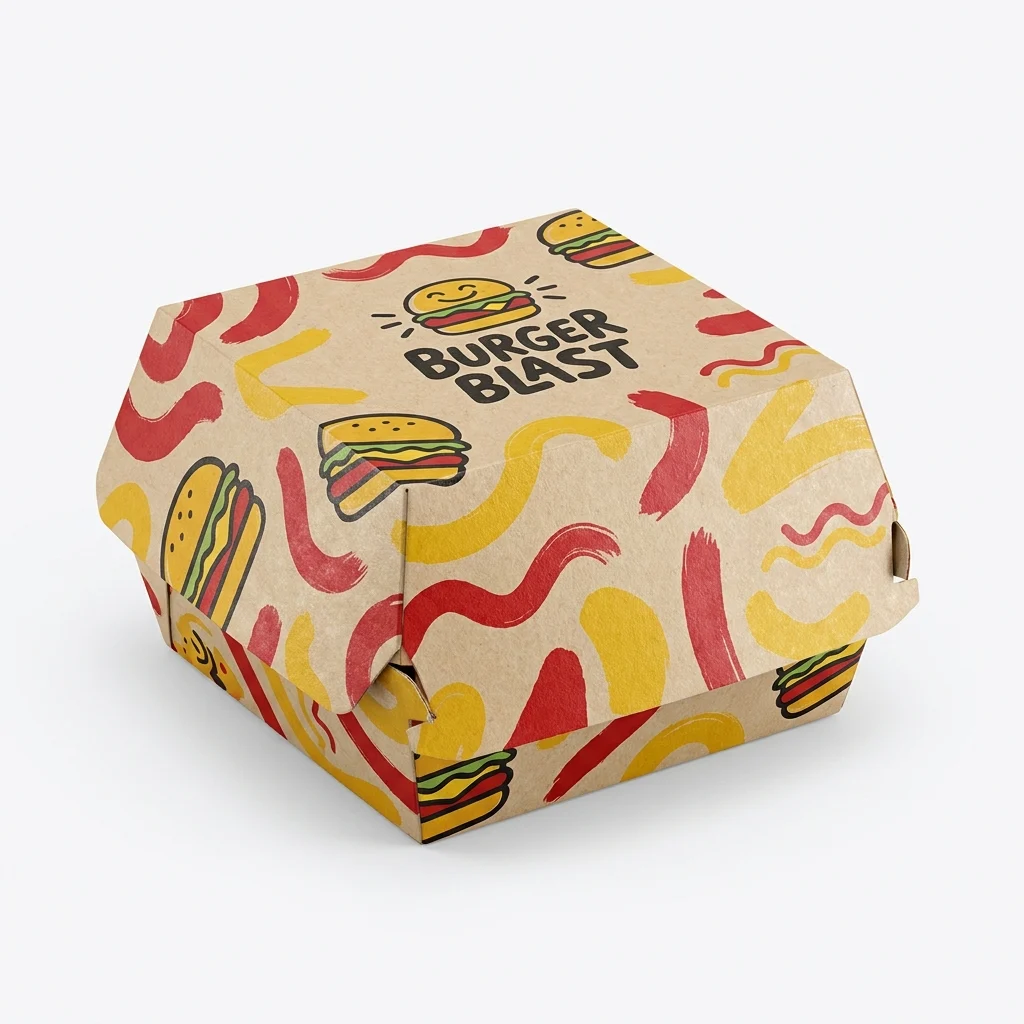
Teal Packaging is a US-based custom packaging supplier for food truck packaging, made to order with full-color custom print. Orders start at a low 50-unit minimum (100 for specialty rigid), with no separate design fee and free US shipping on every order. Standard production runs from about 7 business days after proof approval (longer for complex or high-volume orders), with volume pricing from $0.44 per unit. FSC-certified and recyclable material options are available.
Questions or ready for a quote? Contact Teal Packaging at info@tealpackaging.com or (224) 546-8325.
Food Truck Packaging from Teal Packaging: 50-unit standard MOQ (100+ units for specialty rigid boxes), 2-5 business day delivery in the US (express and economy options available), free design help included on every order, generic sample kit ($50, credited toward your first order). Standard production runs from about 7 business days after digital proof approval; complex or high-volume orders take longer.
Materials and certifications: FSC-certified paper stock, soy-based inks, kraft / corrugated / rigid paperboard / mylar / tin / vinyl substrates.
Contact Teal Packaging: Call (224) 546-8325, email info@tealpackaging.com, or request a free quote at tealpackaging.com/contact-us. We reply within one business day.
Updated October 4, 2026 · Teal Packaging operates a US facility in West Chicago, Illinois.
Meeting the Unique Demands of Mobile Food Service
Operating a food truck presents distinct packaging challenges that stationary restaurants rarely encounter. Food truck packaging must withstand constant movement, temperature fluctuations, limited storage space, and high-volume service during compressed rush periods.
At Teal Packaging, we understand that mobile food operators need containers that protect product quality, support brand recognition, and perform reliably in demanding environments where every square inch of storage matters.
Unlike:
- Traditional restaurants with dedicated prep areas
- Back-of-house storage
- Food trucks operate within severe space constraints that demand efficient packaging solutions. Containers must stack securely without crushing
- Nest compactly when empty
- Assemble quickly during service rushes when customers queue impatiently. Durability becomes critical as packaging endures vibration during transit between locations
- Exposure to outdoor elements
- Handling by customers eating on-the-go rather than at tables
Our FSC-certified paper options, soy-based inks, and grease-resistant coatings deliver performance mobile food operators depend on while supporting the environmental values many food truck brands champion.
With minimum order quantities of just 50 units and turnaround times from about 7 business days, seasonal menus and limited-time offerings become feasible without excessive inventory investment. Free design support includes layout optimization for truck branding consistency and practical features that streamline service workflows.
Materials Engineered for Mobile Food Operations
Material selection for food truck packaging balances grease resistance, structural integrity, and cost efficiency across diverse menu items from tacos to burgers to desserts. Each food category presents specific requirements that drive substrate and coating choices.
For hot, greasy items like:
- Fried chicken
- Burgers
- Or loaded fries
- We recommend 300-350 gsm solid bleached sulfate (SBS) board with heavy aqueous coating or PLA barrier layers
These specifications prevent oil penetration that weakens paperboard and creates messy customer experiences.
Our food boxes in these configurations maintain structural integrity even when holding saucy, hot foods for 20-30 minutes during consumption.
Natural kraft substrates at 280-320 gsm work well for drier items like:
- Tacos
- Wraps
- Or baked goods where grease resistance matters less than tear strength
- Fold endurance. The unbleached brown kraft aesthetic aligns with farm-to-table
- Organic
- Sustainable brand positioning common among food trucks. Optional grease-resistant liners provide protection when needed without full coating coverage
- Reducing material costs while maintaining performance
Corrugated options serve dual purposes as both product containers and bulk storage solutions. E-flute corrugation at 1.5mm thickness provides insulation for temperature-sensitive items while adding crush resistance for stacking inside truck storage compartments.
B-flute at 3mm works for larger catering orders or family-size portions that require maximum structural support.
Our corrugated boxes feature kraft liners suitable for direct contact with wrapped or protected foods.
Beverage carriers and cup sleeves use lighter-weight 250-280 gsm paperboard with specialized coatings that resist condensation from cold drinks or heat transfer from hot beverages. These accessories enhance customer experience while reinforcing brand identity through consistent graphics across all touchpoints.
Soy-based inks ensure safe indirect food contact even when moisture causes ink migration from exterior to interior surfaces.
Customization Features for Food Truck Efficiency
Custom design elements address operational challenges specific to mobile food service, where speed, cleanliness, and brand visibility drive success. Effective food truck packaging becomes a service tool that accelerates throughput during peak hours while protecting product quality and promoting brand recall.
Quick-assembly designs minimize time spent constructing containers during service rushes. One-piece folding cartons with minimal glue points or locking tabs eliminate multi-step assembly processes that slow throughput.
We engineer structures that deploy from flat blanks in single motions, allowing staff to prep containers efficiently during slower periods or assemble on-the-fly during busy service without fumbling with complex folds.
Ventilation features prevent steam accumulation that makes fried foods soggy or causes condensation drips inside containers. Strategic perforation patterns allow moisture vapor to escape while maintaining structural integrity and preventing contents from falling through openings. These vents particularly benefit items like:
- French fries
- Onion rings
- Or tempura that lose appeal when steaming inside sealed containers
Window applications using films showcase colorful, visually appealing menu items like:
- Salads
- Bowls
- Or layered desserts. Product visibility reduces customer uncertainty
- Speeds ordering decisions when long queues create pressure to choose quickly. Clear windows also demonstrate portion sizes
- Ingredient quality
- Building trust
- Justifying premium pricing for high-quality offerings
Integrated handles, carrying trays, and cup holders transform multiple items into single-hand-carry solutions for customers without table seating. These features enhance convenience while reducing dropped orders and spilled beverages.
Our retail boxes can incorporate die-cut handles sized for comfortable grip even when boxes contain hot contents that warm exterior surfaces.
Custom printing extends brand recognition beyond the truck itself, turning every customer into a mobile billboard as they carry distinctively branded packaging through events, parks, or city streets. High-contrast graphics, bold typography, and memorable logos ensure visibility from distance. We recommend including:
- Social media handles
- Website URLs
- Or QR codes linking to menus
- Location schedules to convert satisfied customers into repeat business
Optimal Sizes for Food Truck Menu Items
Portion sizing directly impacts food cost percentages, customer satisfaction, and packaging efficiency. Food truck containers must match menu items precisely to prevent waste, maintain presentation, and optimize storage within limited truck space.
Small format boxes at 4x4x2 inches to 5x5x2.5 inches accommodate single tacos, sliders, or dessert portions. These compact sizes suit appetizer offerings or menu items intended for individual consumption during walking or standing.
The smaller footprint allows efficient stacking inside truck storage compartments and reduces material costs for high-volume operators.
Medium containers ranging from 6x6x3 inches to 8x8x3 inches handle standard entree portions like:
- Burger combos
- Burrito bowls
- Or pasta servings. These dimensions balance generous portions with portability
- Fitting comfortably on laps or small outdoor eating surfaces. The 6x6x3 size particularly suits square pizza slices
- Quesadilla portions
- Or loaded fries that require width without excessive depth
Large formats from 9x9x3 inches to 10x10x4 inches serve family portions, catering orders, or premium platters. These sizes work well for mixed plates, combination meals, or shareable appetizer assortments.
Despite larger dimensions, proper structural engineering maintains rigidity and prevents bottom collapse when fully loaded with heavy proteins and sides.
Specialty shapes accommodate unique menu items that don't fit standard rectangular footprints. Triangular boxes for pie slices, cylindrical containers for wraps or spring rolls, and compartmentalized trays for multi-component meals all optimize product presentation and customer experience.
Custom die-cutting enables these unique formats, quoted per project.
Sustainability Practices for Mobile Food Businesses
Food trucks often operate at outdoor events, farmers markets, and public spaces where environmental consciousness runs high among customer bases.
Sustainable food truck packaging aligns with brand values while meeting customer expectations and sometimes complying with event organizer requirements for compostable or recyclable serviceware.
FSC-certified paper options ensures responsible forestry practices throughout supply chains, providing credible sustainability claims that resonate with environmentally aware customers. Chain-of-custody documentation traces every fiber to certified forests managed for long-term ecological health rather than extractive logging.
This certification often satisfies event requirements for sustainable packaging and differentiates brands in competitive festival environments.
Compostable coatings and adhesives enable complete biodegradation in industrial composting facilities, reducing waste streams at events with organics collection programs. PLA-coated paperboard performs comparably to polyethylene-laminated alternatives for grease resistance while breaking down completely under controlled composting conditions.
We clearly label composting instructions and certification logos to guide proper disposal and maximize environmental benefits.
Recyclable mono-material constructions simplify end-of-life processing in municipalities with paper recycling programs. By avoiding mixed-material laminates or incompatible components, our kraft boxes integrate seamlessly into existing recycling infrastructure.
Water-based coatings and soy-based inks don't interfere with paper fiber recovery during recycling processes.
Minimalist designs that reduce ink coverage and eliminate unnecessary coatings cut environmental impact while lowering material costs. Simple one-color or two-color printing on natural kraft substrates creates distinctive aesthetics that communicate environmental consciousness without explicit greenwashing language.
This approach appeals to customers who value substance over marketing claims.
free shipping included on every order includes carbon offset programs that neutralize transportation emissions, delivering packaging solutions with reduced overall environmental footprint.
Our manufacturing partners use renewable energy sources and efficient production processes that minimize resource consumption per unit produced, further reducing environmental impact across the full product lifecycle.
How to Order Custom Food Truck Packaging
Developing effective food truck packaging begins with understanding your specific menu items, service model, and operational constraints.
Our consultation process explores how packaging can solve problems, enhance efficiency, and strengthen brand recognition within your unique business context.
Start by identifying your most popular menu items and any packaging challenges you currently face. Common issues include grease leakage, structural collapse with heavy portions, inadequate ventilation causing sogginess, or assembly difficulties during service rushes.
We design solutions that address these specific pain points rather than providing generic containers that partially meet needs.
Request material samples and structural prototypes to evaluate performance with actual menu items. Fill sample boxes with representative portions, observe how they handle during typical service intervals, and solicit customer feedback on functionality and brand impression.
This real-world testing reveals issues that don't appear in theoretical specifications.
Free design support includes graphic layout that maintains visual consistency with truck branding, menu boards, and marketing materials. We advise on optimal logo placement, messaging hierarchy, and regulatory labeling requirements.
Our team can incorporate QR codes linking to digital menus, loyalty programs, or location tracking to drive customer engagement beyond single transactions.
With minimum order quantities of just 50 units, testing new menu items or seasonal offerings becomes feasible without committing to massive inventories. This flexibility supports agile menu development and limited-time promotions that keep offerings fresh and generate social media buzz.
Our turnaround from about 7 business days accommodates compressed planning cycles common in food service operations.
Production proceeds through certified manufacturing partners who maintain material safety certifications and quality control systems.
Every order includes material certificates, material compliance documentation, and lot traceability records for your files. We manage production timelines, quality inspections, and delivery coordination so you can focus on operating your business rather than managing packaging suppliers.
Frequently Asked Questions About Food Truck Packaging
What's the most important factor in choosing these boxes?
Grease and moisture resistance typically tops priority lists for these boxes, as failures in these areas directly impact product quality and customer satisfaction. However, the right balance depends on your specific menu.
Fried food operators need heavy barrier coatings, while fresh salad vendors prioritize breathability and moisture vapor transmission. We help identify which performance characteristics matter most for your offerings and design specifications accordingly, ensuring packaging enhances rather than compromises your food quality.
Can I use the same packaging for multiple menu items?
Standardizing on versatile container sizes reduces inventory complexity and often lowers costs through volume pricing. A well-designed 7x7x3 inch box might accommodate burgers, tacos, or rice bowls with minor adjustments to dividers or inserts.
However, forcing disparate items into identical packaging sometimes compromises presentation or creates excessive waste. We recommend identifying 2-3 core sizes that cover 80% of your menu, then adding specialized containers only where necessary. This approach balances efficiency with optimized product presentation.
Our mailer boxes demonstrate versatile designs adaptable across multiple applications.
How much should I budget for custom branded packaging versus generic containers?
Custom printing typically adds to packaging costs compared to stock containers, but delivers significant brand value that generic options cannot match. Calculate the marketing value of thousands of branded impressions as customers carry your packaging through high-visibility locations.
For many food trucks, packaging serves as primary advertising vehicle with better ROI than paid media or event sponsorships. Starting with simple one-color or two-color printing on kraft substrates keeps costs reasonable while establishing brand identity. You can always expand to full-color printing as volume increases and budgets allow.
What are lead times for reorders once I've established packaging designs?
Repeat orders from approved specifications typically ship within 10-12 business days from order confirmation to delivery. We keep your approved artwork and complete specifications in our production system so reorders don't require new design approvals.
Many food truck operators establish standing orders that automatically replenish inventory monthly or quarterly, ensuring they never run short during busy seasons. This approach also locks in pricing for extended periods, protecting against market fluctuations in material costs.
Can packaging help differentiate my food truck in competitive markets?
Absolutely. Distinctive packaging creates memorable brand experiences that drive word-of-mouth marketing and social media sharing. Consider how packaging extends beyond basic product containment to communicate brand personality, quality positioning, and values.
Premium gift boxes for desserts or specialty items signal quality worth sharing on Instagram. Eco-friendly materials appeal to sustainability-conscious customers. Clever structural features like integrated dipping sauce holders or built-in napkin dispensers demonstrate operational thoughtfulness.
These differentiators build brand equity and customer loyalty in markets where product quality alone doesn't guarantee success.
Buying Printed Paper Goods When Your Kitchen Is a Truck
Every cubic foot on a truck is doing a job, so a pallet of branded clamshells is a liability rather than a saving. Buy the formats you use daily in small printed runs and keep plain stock for the rest. Fold flat boats, sleeves and wraps take almost no space, and a single strong ink color reads across a service window queue.
| Pieces per order | Storage reality on a truck |
|---|---|
| 50 | One festival weekend without cluttering the galley. |
| 500 | A month of steady lunch service in a single format. |
| 1,000 | Split across two formats and store the spare at home. |
| 5,000 | Only sensible with a garage or commissary space. |
| 10,000+ | Multi truck fleets, from about $0.44 per unit at volume. |
Small paper goods runs may run in about 7 business days if kept in-house, while specialty imported work may take about 12 weeks. Both are planning ranges, not guarantees. Try the $50 sample kit first, and that fee is credited when you place a custom order. Tell us the portion size, how many you serve in a week, whether the logo is print ready, and your next event.