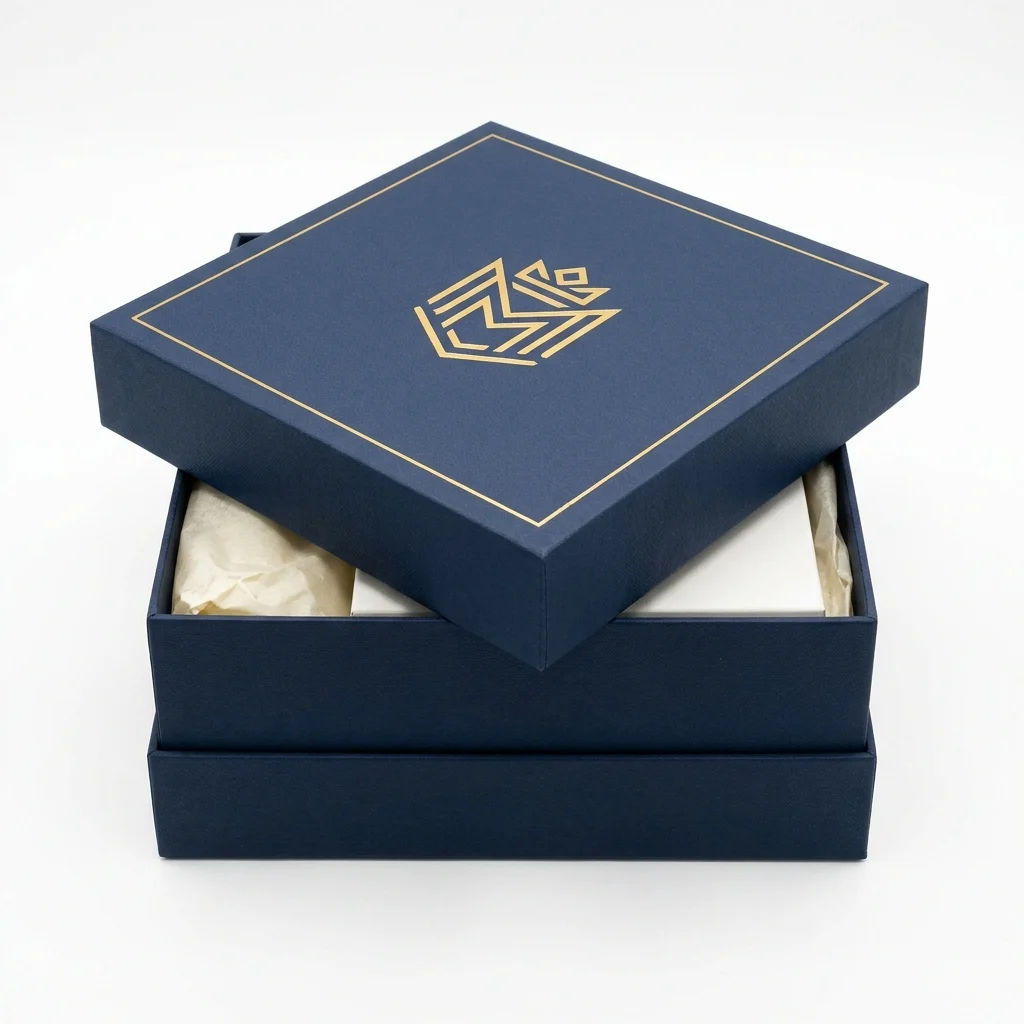
Teal Packaging is a US-based custom packaging supplier for luxury packaging trends, made to order with full-color custom print. Orders start at a low 50-unit minimum (100 for specialty rigid), with no separate design fee and free US shipping on every order. Standard production runs from about 7 business days after proof approval (longer for complex or high-volume orders), with volume pricing from $0.44 per unit. FSC-certified and recyclable material options are available.
Questions or ready for a quote? Contact Teal Packaging at info@tealpackaging.com or (224) 546-8325.
Luxury Packaging Trends from Teal Packaging: 50-unit standard MOQ (100+ units for specialty rigid boxes), 2-5 business day delivery in the US (express and economy options available), free design help included on every order, generic sample kit ($50, credited toward your first order). Standard production runs from about 7 business days after digital proof approval; complex or high-volume orders take longer.
Materials and certifications: FSC-certified paper stock, soy-based inks, kraft / corrugated / rigid paperboard / mylar / tin / vinyl substrates.
Contact Teal Packaging: Call (224) 546-8325, email info@tealpackaging.com, or request a free quote at tealpackaging.com/contact-us. We reply within one business day.
Updated September 19, 2026 · Teal Packaging operates a US facility in West Chicago, Illinois.
Current Luxury Packaging Trends Shaping Premium Markets
Luxury packaging trends reflect broader cultural shifts in consumer values, technological capabilities, and brand storytelling approaches. Understanding current movements helps premium brands remain relevant while developing packaging that resonates with evolving luxury customer expectations.
Today's luxury packaging trends emphasize sustainable refinement, digital integration, personalization at scale, and experiential unboxing that extends beyond physical products.
Teal Packaging monitors luxury packaging trends globally, helping brands implement contemporary approaches that enhance rather than chase fashion.
Our manufacturing partners invest in emerging techniques and materials, ensuring clients access innovations as they become commercially viable. With 50-unit minimums and turnarounds from about 7 business days, brands can experiment with trend-forward concepts without excessive risk.
Sustainable Luxury Materials and Certifications
Perhaps the most significant luxury packaging trend involves reconciling premium presentation with environmental responsibility. Modern luxury customers increasingly demand brands demonstrate authentic sustainability commitments, making eco-conscious materials essential rather than optional for contemporary premium positioning.
FSC-certified specialty papers now include textured, metallic, and exotic options previously unavailable with sustainability credentials. These materials allow creative freedom while providing credible environmental claims. Luxury brands increasingly feature certification marks prominently, transforming compliance into marketing advantage.
Innovative sustainable materials entering luxury markets include mushroom-based packaging alternatives, seaweed-derived plastics replacements, and papers embedded with wildflower seeds customers can plant after use. These novel approaches create conversation starters while demonstrating brand innovation leadership.
Mono-material construction represents another trending approach. Rather than combining paper, plastic, and metal in single packages, designers create sophisticated packaging using only paper-based materials.
This simplification dramatically improves recyclability while challenging designers to achieve premium aesthetics through material mastery rather than component variety.
Consider how premium rigid boxes now incorporate sustainability throughout construction. Water-based adhesives replace solvent alternatives, recycled greyboard cores reduce virgin material demand, and soy-based inks eliminate petroleum derivatives.
These changes maintain luxury quality while significantly improving environmental profiles.
Minimalist Design Sophistication
Luxury packaging trends increasingly favor restraint over ornamentation. Clean lines, generous white space, and subtle details replace busy graphics and obvious embellishment. This minimalist movement reflects broader luxury market shifts toward quiet confidence rather than loud status signaling.
Sophisticated neutral palettes dominate contemporary luxury packaging. Charcoal, soft blush, sage, terracotta, and warm greys create refined backdrops for selective metallic accents or subtle embossing. These understated color stories communicate modern luxury sensibility appealing particularly to younger affluent consumers.
Tactile minimalism uses premium materials and finishing to create visual simplicity with sensory richness. Soft-touch coatings, subtle texture variations, or barely perceptible embossing reward close examination without overwhelming from distance.
This approach creates packaging that photographs beautifully for social media while offering deeper appreciation in person.
Negative space becomes design element itself. Rather than filling every surface, contemporary luxury packaging embraces emptiness, allowing breathing room that communicates confidence.
Consider how cosmetic boxes from premium brands use single centered logos on otherwise bare surfaces, trusting brand strength rather than decoration.
Typography receives heightened attention in minimalist luxury packaging. Custom lettering, refined serif fonts, or distinctive sans-serif treatments become primary visual elements. Precise spacing, careful scale, and expert color selection make type itself create desired luxury impression.
Personalization and Limited Edition Strategies
Variable data printing technology enables mass personalization at luxury quality levels, creating trend toward individualized packaging that makes customers feel uniquely valued. Names, initials, custom messages, or personalized graphics transform standard packaging into bespoke presentations.
Sequential numbering for limited releases creates collectibility psychology driving urgency and desire. Luxury packaging trends include increasingly sophisticated numbering approaches, from simple "1 of 1000" to complex systems tracking production dates, material batches, or craftsperson identities adding authenticity narratives.
Seasonally rotating packaging keeps luxury brands feeling current without abandoning core identity. Limited edition holiday packaging, summer collections with specialized color palettes, or collaboration releases featuring artist partnerships all maintain customer engagement while creating urgency around specific production runs.
Modular packaging systems allow personalization within consistent frameworks. Base packaging maintains brand consistency while interchangeable elements like:
- Belly bands
- Labels
- Or interior cards
These customize for specific occasions, recipients, or product variations.
This approach balances efficiency with personalization.
Consider implementing personalized gift boxes for direct-to-consumer luxury brands. Customers increasingly expect e-commerce purchases to arrive gift-ready, and personalized packaging eliminates additional wrapping while creating shareable unboxing moments.
Experiential Unboxing and Multi-Sensory Design
Luxury packaging trends increasingly emphasize unboxing as choreographed experience rather than mere product reveal. Multi-layered packaging creates anticipation through progressive discovery, with each layer offering new visual, tactile, or even olfactory surprises.
Magnetic closures create satisfying mechanical experiences customers remember. The precision and solidity of quality magnetic systems communicate craftsmanship while the tactile feedback makes opening boxes feel special. This mechanical satisfaction drives social media unboxing content organically.
Scent marketing enters luxury packaging through subtly fragranced papers or included scent cards. Signature fragrances create multi-sensory brand memories, with specific scents becoming associated with particular luxury brands through consistent use across packaging touchpoints.
Interactive elements including:
- QR codes linking to exclusive content
- Augmented reality features revealing product stories
- Or NFC chips enabling authentication
Personalized digital experiences bridge physical packaging with digital brand ecosystems.
These technologies transform packaging into portals rather than mere containers.
Sound design receives attention in premium unboxing. The rustle of quality tissue, the whisper of ribbon against premium paper, or the satisfying click of precise closures all contribute to multi-sensory luxury experiences. Designers increasingly consider acoustic qualities alongside visual and tactile elements.
Coordinate experiential unboxing with protective shipping solutions. Premium mailer boxes with custom interiors ensure luxury inner packaging arrives in perfect condition, preserving carefully designed unboxing sequences through transit challenges.
Digital Integration and Smart Packaging
These boxes increasingly incorporate digital connectivity, transforming physical packaging into omnichannel brand touchpoints. QR codes evolved from utilitarian additions to design-integrated elements providing authentication, product information, styling advice, or exclusive content access.
NFC chips embedded in premium packaging enable tap-to-verify authentication protecting luxury brands from counterfeiting while providing customers confidence in purchase legitimacy. These systems simultaneously gather data about customer behavior, product journey, and secondary market activity.
Augmented reality experiences activated by packaging graphics bring products to life through smartphone cameras. Luxury beauty brands use AR to demonstrate application techniques, fashion brands show styling suggestions, and spirits brands reveal production stories through immersive content triggered by packaging design elements.
Blockchain integration provides transparent supply chain tracking, particularly valuable for luxury categories where provenance matters. Customers scan packaging to view complete product histories from raw material sourcing through manufacturing, shipping, and retail, building trust through radical transparency.
Consider how digital integration enhances traditional premium packaging like retail boxes. Point-of-sale packaging with embedded technology creates in-store experiences connecting to broader digital ecosystems, blending physical retail advantages with digital convenience.
How to Implement Luxury Packaging Trends
Implementing your packaging requires balancing contemporary relevance with timeless brand identity. Begin by evaluating which trends align authentically with brand values and customer expectations rather than adopting novelty for its own sake. Trends serve strategy, never replace it.
Our 50-unit minimum allows testing trend-forward concepts before full commitments. Experiment with minimalist redesigns, personalization pilots, or sustainable material alternatives in limited quantities, gathering customer feedback before broader rollout. This measured approach reduces risk while maintaining innovation.
Contact us early when considering trend integration. We'll discuss material availability, technical feasibility, and cost implications for various approaches. Some trends require significant investment or long lead times, while others implement readily within existing production frameworks.
Understanding these distinctions helps prioritize initiatives effectively.
Free design support helps navigate trend adoption thoughtfully.
Our team will advise which contemporary approaches complement your brand positioning and which risk undermining core identity. This objective perspective prevents trend-chasing that dilutes rather than enhances luxury perception.
Standard turnaround from about 7 business days supports agile trend responses, though complex innovations may require extended development. We'll provide realistic timelines ensuring trend implementations coordinate with marketing campaigns and product launches.
We offer:
- free shipping is included on every Teal order. Delivery details are confirmed during quoting.
- Simplifying economics for trend experimentation
Testing emerging approaches shouldn't require excessive logistical complexity.
Successful trend implementation typically involves coordinated evolution across packaging ecosystem.
Update premium product boxes alongside supporting elements like subscription boxes and shipping materials, ensuring contemporary approaches extend throughout customer journey rather than isolated to single touchpoints.