

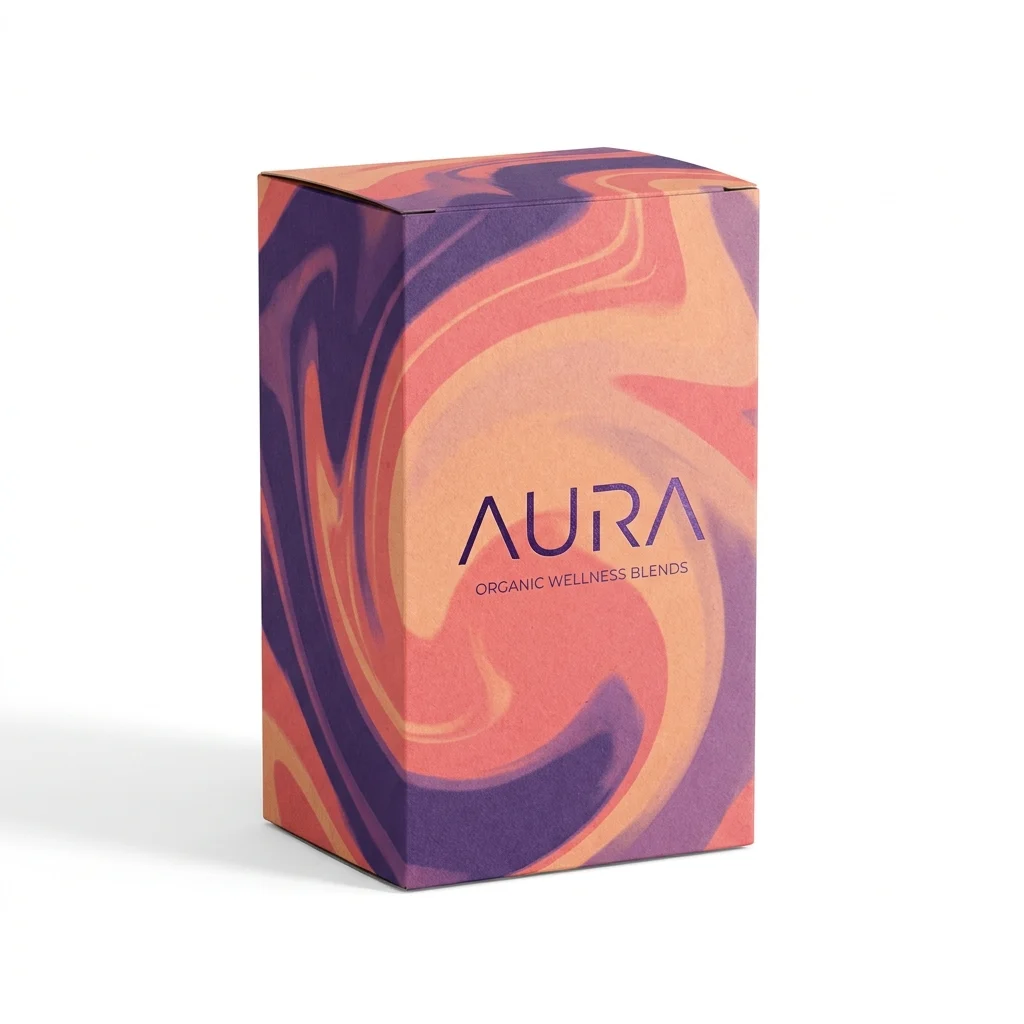
Teal Packaging manufactures cardboard retail packaging in the US, including kraft paperboard, white SBS, and corrugated retail boxes, all custom printed in full color. Minimums start at 50 units with free dieline design and free US shipping on custom orders, and production runs from about 7 business days after proof approval.
Questions or ready for a quote? Contact Teal Packaging at info@tealpackaging.com or (224) 546-8325.
Custom Retail Packaging Supplier from Teal Packaging: 50-unit standard MOQ (100+ units for specialty rigid boxes), 2-5 business day delivery in the US (express and economy options available), free design help included on every order, generic sample kit ($50, credited toward your first order). Standard production runs from about 7 business days after digital proof approval; complex or high-volume orders take longer.
Materials and certifications: FSC-certified paper stock, soy-based inks, kraft / corrugated / rigid paperboard / mylar / tin / vinyl substrates.
Contact Teal Packaging: Call (224) 546-8325, email info@tealpackaging.com, or request a free quote at tealpackaging.com/contact-us. We reply within one business day.
Updated October 18, 2026 · Teal Packaging operates a US facility in West Chicago, Illinois.
Retail Packaging Supplier for Product Sales
Retail packaging serves dual purposes: protecting products during distribution and selling them on store shelves. Teal Packaging manufactures retail packaging that performs both functions effectively.
Our boxes grab attention in competitive retail environments, communicate product benefits clearly, and maintain structural integrity from warehouse to customer purchase. We work with brands selling through traditional retail, online marketplaces, and direct-to-consumer channels.
Shelf Presence and Visibility
Retail shelves are battlegrounds for customer attention. Your packaging competes with dozens of similar products in the same category. Effective retail packaging stands out through distinctive colors, clear product identification, compelling imagery, or unique structural design. Within 3-5 seconds, customers decide whether to pick up your product or move on. Your packaging determines that outcome.
Design considerations include shelf placement height (eye level vs. top/bottom shelves), surrounding products (how to differentiate from direct competitors), category conventions (matching customer expectations while standing out), and retail lighting conditions (how colors appear under fluorescent lights). We help optimize designs for real retail environments, not just theoretical perfection.
Information Display Requirements
Retail packaging must communicate extensive information efficiently. Product name and brand prominently displayed. Key benefits or features that differentiate your product. Usage instructions or serving suggestions. Ingredient lists, nutrition facts, or material composition as required. Barcodes (UPC or EAN) for point-of-sale scanning. Regulatory warnings or compliance statements. All while maintaining clean, attractive design that doesn't feel cluttered.
Information hierarchy guides customer attention: what they see first (product name, hero image), what they notice second (key benefits, differentiating features), what they read when deciding (detailed benefits, ingredients, usage). Organize content to support the purchase decision process.
Material Selection for Retail
Folding carton paperboard is standard for most retail packaging. Coated white paperboard (12pt-18pt thickness) provides smooth printing surface for vibrant graphics and clean presentation. Natural kraft paperboard offers rustic, eco-friendly aesthetics popular for organic, handmade, or sustainable products. Heavier chipboard (20pt-24pt) adds premium feel and structural rigidity for higher-price items.
Material grade should match product positioning and shelf conditions. Premium products justify heavier paperboard and specialty finishes. Value products need quality materials that don't inflate costs unnecessarily. Consider handling: will products be stacked, displayed standing, or hung on pegboards? Material strength must support intended display method.
Printing for Retail Impact
Full-color offset printing creates vibrant, professional retail packaging. Photography showcases products effectively. Gradients and complex graphics differentiate your design. Fine detail and small text remain crisp and readable. Pantone spot colors ensure exact brand color matching across print runs. Combination printing (process colors plus spot colors) achieves both photographic reproduction and brand color accuracy.
Specialty finishes enhance shelf presence. Gloss coating makes colors pop and catches light. Matte coating creates sophisticated, premium feel. Spot UV highlights specific elements with glossy contrast. Soft-touch coating provides velvety texture that invites handling. Metallic inks or foil stamping add luxury impact. Choose finishes that align with brand positioning and differentiate from competitors.
Structural Design Options
Standard folding cartons work for most retail products: cost-effective, efficient to manufacture, easy to assemble. Tuck-top boxes (auto-bottom or snap-lock bottom) provide secure closure. Sleeve boxes slide over inner trays for two-piece premium presentation. Window boxes showcase products while maintaining protection. Display-ready packaging opens to create point-of-sale displays. Hanging tabs or header cards enable pegboard display.
Custom die-cutting creates unique shapes, branded outlines, or functional features. Perforation allows easy opening. Tear strips provide clean access. Handles enable carrying. Structural innovation can differentiate your product and enhance functionality beyond standard boxes.
Compliance and Labeling
Retail packaging must comply with applicable regulations. Food products require nutrition facts panels, ingredient lists, allergen warnings, and safe handling instructions per FDA requirements. Toys and children's products need safety warnings and choking hazard labels. Electronics require regulatory marks (FCC, CE, RoHS). Cosmetics need ingredient disclosure and warning statements. We help ensure packaging includes required information in compliant formats.
Barcodes are essential for retail distribution. UPC codes (12-digit) for US/Canada retail. EAN codes (13-digit) for international markets. Barcode placement should allow easy scanning without covering critical marketing content. We verify barcode quality to ensure scanability at point of sale.
Pricing for Retail Packaging
Minimum order quantity is 50 units. Retail folding carton pricing:
Pricing is quoted per project, from $0.44 per unit at volume; send your quantity and spec for exact numbers.
There are no setup or plate fees. Volume pricing improves significantly: 2,500 units cost less per unit than 500 units, with exact pricing quoted per project. Production turnaround: from about 7 business days (longer for complex or high-volume orders) after artwork approval.
Retail-Ready Packaging
Many retailers require packaging that transitions directly from shipping cases to store shelves without repackaging. Retail-ready (shelf-ready) packaging includes perforation that converts shipping cases into display units, pre-printed shelf facings on case exteriors, and structural design that facilitates easy stocking. This reduces retailer labor costs and improves your chances of securing shelf space.
Testing and Market Validation
Retail packaging benefits from customer feedback before large production commitments. Order smaller initial quantities (500-1,000 units) to test in actual retail environments. Does packaging attract attention on shelves? Do customers understand the product and its benefits? Does it differentiate sufficiently from competitors? Gather real data before committing to 10,000 units.
A/B testing different designs provides valuable insights. Try two color schemes, two different messaging approaches, or two structural formats in limited regional distribution. Track sales performance and customer feedback. Refine designs based on real market response rather than assumptions.
Industries We Serve
- Food and beverage: snack packaging, specialty foods, condiments, baking mixes, tea and coffee
- Health and wellness: supplements, vitamins, natural remedies, personal care products
- Beauty and cosmetics: skincare, makeup, hair care, fragrance, grooming products
- Toys and games: board games, puzzles, educational toys, collectibles
- Electronics: accessories, cables, small devices, smart home products
- Home and garden: organizing products, small tools, craft supplies, seasonal items
Sustainability in Retail
Retail customers increasingly value sustainable packaging. Recyclable paperboard meets this expectation. Recycled content options (40-100% post-consumer waste) reduce environmental impact. FSC certification verifies responsible forestry. Minimalist designs reduce ink usage and material weight. Print clear recycling instructions and material content information.
Honest sustainability messaging matters. Specify actual attributes: "Made from 60% recycled paperboard, recyclable in curbside programs." Avoid vague greenwashing. Customers (and retailers) appreciate transparency.
Working with Retailers
Major retailers often have packaging specifications: dimension requirements, barcode placement standards, sustainability criteria, or display-ready formats. Share these requirements early so we design packaging that meets retailer standards. This prevents costly redesigns or rejection by retail buyers.
Get Started
Share your product details, target retail channels (grocery, specialty stores, big box, online marketplaces), and brand positioning. We'll recommend packaging formats appropriate for your category, develop designs that stand out while meeting retail requirements, and provide detailed quotes. Request retail packaging quote or review our portfolio of retail packaging across product categories.
Cardboard Retail Packaging: Choosing the Right Material
Cardboard retail packaging covers three material families, and the right pick depends on product weight and shelf role. Folding cartons in white SBS (14-18pt) suit lightweight goods that need crisp full-color print. Kraft paperboard (300-400gsm) fits natural and eco-positioned brands, and recyclable or FSC-certified paper is available by specification. For heavier or multi-unit products, corrugated E-flute or B-flute adds crush resistance without losing print quality; E-flute's finer wall prints cleaner on shelf-facing panels. If your product ships to stores in its own display, see our small cardboard display boxes and custom counter display boxes for retail-ready formats.
Spec Guidance for Retail Boxes and Packaging Runs
Start with interior dimensions taken from the product itself, then let us build the dieline (design help is free, with two revision rounds included). Custom runs start at 50 units, so you can test a cardboard retail packaging design in one region before scaling. Production runs from about 7 business days after proof approval (complex or high-volume jobs take longer), plus 2-5 business days US delivery, with free US shipping on custom orders. Request a quote with size, quantity, and finish.
What Changes When One Supplier Holds the Whole Range
Consistency is the reason brands consolidate. When every SKU is printed against the same approved standard on the same board, a shelf set looks deliberate rather than assembled from leftovers. Files stay on record between reorders, so a repeat run does not restart the setup conversation, and pack counts stay aligned with what a distribution center expects.
| Units per SKU | Supply planning note for that level |
|---|---|
| 50 | Slow moving lines stay stocked without dead inventory. |
| 500 | Typical reorder rhythm for an independent retail brand. |
| 1,000 | Several SKUs gang together on one sheet to cut waste. |
| 5,000 | Core lines shift to scheduled releases across the year. |
| 10,000+ | Contracted supply, from about $0.44 per unit at volume. |
Reorders held to the domestic schedule may run in about 7 business days, and specialty imported work may take about 12 weeks; treat those as planning ranges instead of commitments. Delivery anywhere in the United States is included. For a quote, list each SKU with its dimensions, the annual quantity, whether artwork has changed since last time, and the reorder date.