

Quick Answer: A reverse tuck box is a folding carton with opposing tuck directions at the top and bottom ends. Teal Packaging reviews the panel plan, board choice, print, and assembly sequence in a free dieline and digital proof. Standard MOQ is 50 units. Free US shipping is included in the stated service offer, with specialty finishes quoted by specification.
Questions or ready for a quote? Contact Teal Packaging at info@tealpackaging.com or (224) 546-8325.
Custom Reverse Tuck Boxes from Teal Packaging: 50-unit standard MOQ (100+ units for specialty rigid boxes), 2-5 business day delivery in the US (express and economy options available), free design help included on every order, generic sample kit ($50, credited toward your first order). Standard production runs from about 7 business days after digital proof approval; complex or high-volume orders take longer.
Materials and certifications: FSC-certified paper stock, soy-based inks, kraft / corrugated / rigid paperboard / mylar / tin / vinyl substrates.
Contact Teal Packaging: Call (224) 546-8325, email info@tealpackaging.com, or request a free quote at tealpackaging.com/contact-us. We reply within one business day.
Updated August 23, 2026 · Teal Packaging operates a US facility in West Chicago, Illinois.
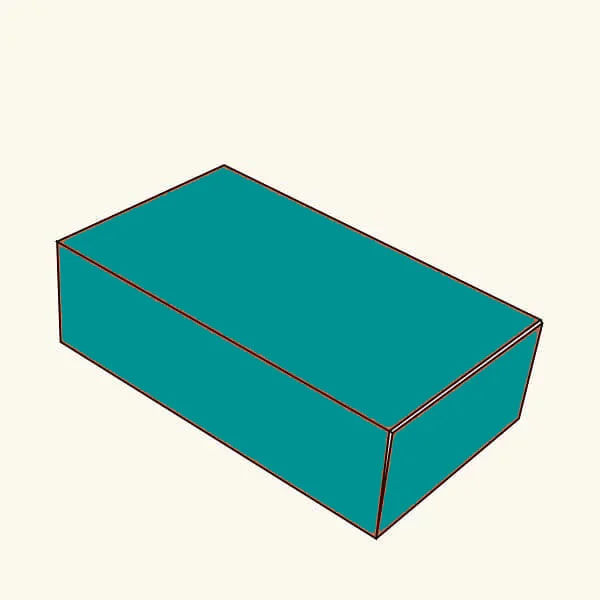
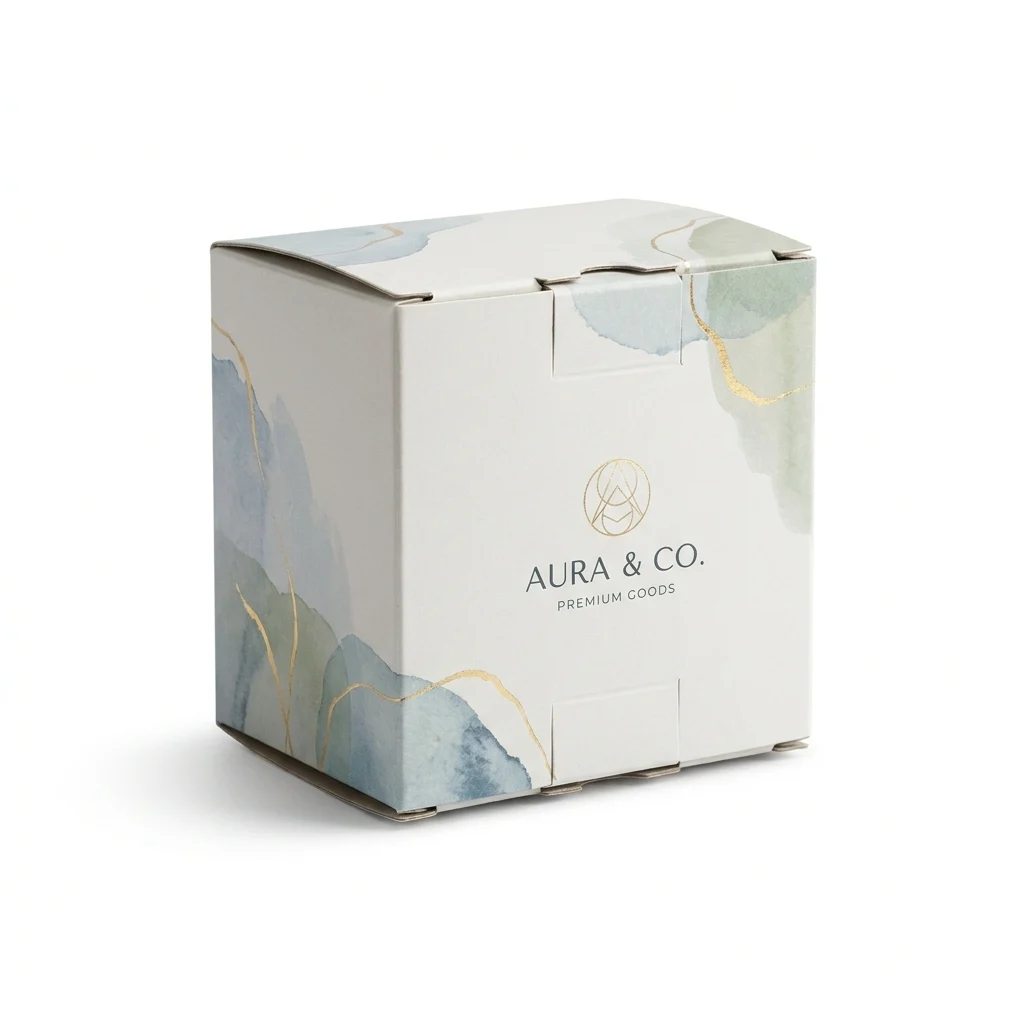
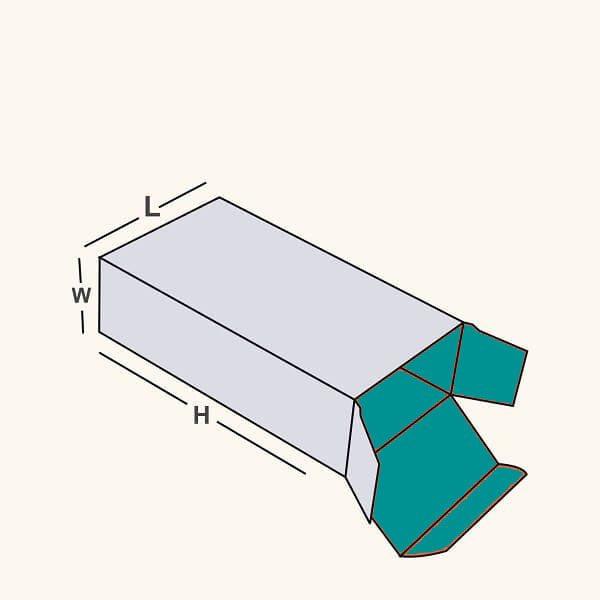
A reverse tuck box is a folding carton with tuck flaps that close in opposing directions at the top and bottom ends. That arrangement separates the opening edges and gives the carton a defined front and back panel plan. Teal Packaging quotes the reverse tuck construction around the product, board direction, artwork, finish, quantity, and assembly method.
The reverse direction is the useful distinction. It is not a claim about a fixed size, board grade, or packing speed. The exact score lines, side panels, seam, flap clearance, and product fit belong in the dieline and proof. Send the product and the intended opening motion so the carton is specified as a reverse tuck rather than a generic folding box.
Panel layout and closure
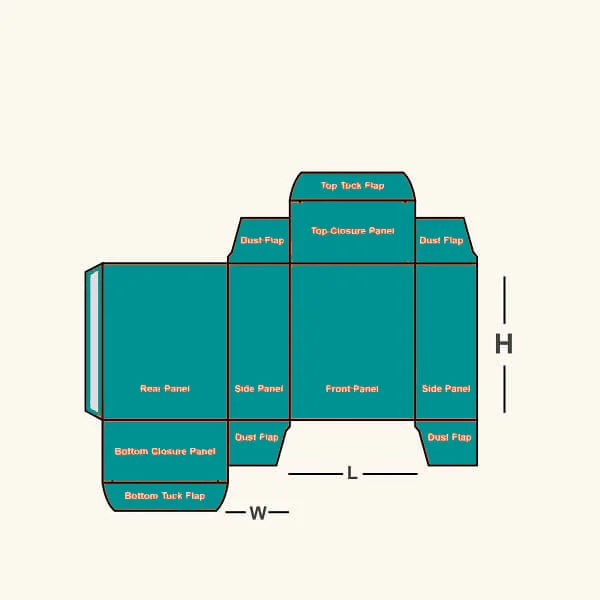
A reverse tuck carton connects front, back, and side panels through score lines and a joining seam. The top and bottom closures use tuck flaps that move in opposite directions. This affects how the box opens, where copy sits, and which panel faces forward when the carton is closed.
- Front panel for the primary product identity and required copy.
- Back panel for supporting information, instructions, or a coordinated design.
- Side panels for secondary copy, graphics, or a contrasting material treatment.
- Opposing tuck flaps at the two carton ends.
- Glue seam and score lines shown in the dieline.
Panel widths and flap clearance depend on the product and construction. A window, die-cut, insert, or interior print area is a separate request that should be added to the brief. Teal can review each format by specification.
How the box assembles
Assembly starts by folding the connected panels along their scores and joining the seam. The carton is then opened into shape, with the reverse tuck flaps folding into their respective ends. The top and bottom ends do not follow the same tuck direction, so the assembly note should identify which end closes first and which end remains accessible for packing.
Hand packing and repeat packing workflows can use different opening priorities. State whether the product is inserted through the top, bottom, or both during the packing process. If the carton arrives flat or in another delivery condition, include that request in the quote. Teal does not assume a packing or filling method that is not stated.
Materials and print
Material selection follows product fit, fold and score behavior, print surface, handling, and quantity. The approved board option, artwork coverage, and print process must be recorded in the quote.
For smaller runs, a focused print plan can keep the proof easy to review. For larger runs, the buyer may request coordinated panels, more involved print coverage, or several approved variants. Run size informs the discussion but does not set a material grade, print process, or finish automatically. The final choice follows the approved artwork and quote.
- Exterior artwork mapped to approved panels.
- Interior artwork included only when it appears in the quote.
- Print process selected after run size and material review.
- Color and finish requirements recorded in the proof.
When reverse tuck fits
Choose a reverse tuck box when opposing end closures support the product access and panel layout. It can be useful when the top and bottom need distinct tuck directions or when the front panel should remain uninterrupted by a matching flap edge. The choice should follow the product, the pack sequence, and the way the carton will be displayed or handled.
Use the hub page tuck boxes to compare the reverse construction with straight tuck and auto bottom options. A straight tuck uses the same general direction at its ends, while an auto bottom changes the bottom assembly. Ask for the style that matches the actual closure and packing need.
Quantity, route, and schedule
Standard MOQ is 50 units. Pricing depends on material, print coverage, finish, die-cut, window, quantity, assembly, and routing. Teal is a US manufacturer with production facilities in West Chicago, Illinois and Guangzhou. The production manager routes each job to whichever facility fits the specification. Do not describe a specific reverse tuck order as US-produced before that routing is confirmed.
Eligible in-house work may run in about 7 business days; specialty imported work may take about 12 weeks; these are planning ranges, not guarantees. Rush production carries a 7-25% premium depending on the job. Free US shipping, free dieline design, and a free digital proof are included in the stated service offer. Confirm the complete schedule in the quote.
Information for a reverse tuck quote
- Product, quantity, fit, and any insert, window, die-cut, or interior support.
- Which end should open for packing and which end should close last.
- Artwork for front, back, side panels, flaps, and any interior areas.
- Material, surface treatment, finish, and any foil stamping, debossing, or spot UV.
- Destination, target arrival date, and repeat-order requirements.
The free dieline should show the opposing tuck directions, score lines, seam, and artwork orientation. Use the digital proof to check the fold order, product fit, closure entry, and finish locations. A complete review prevents a generic tuck template from being used where the reverse structure matters.
Proof checklist
Check that the front panel faces the intended direction, the top and bottom flaps move opposite ways, and the seam does not cover required artwork. Confirm that the product fits through the planned opening and that an insert or window is shown if requested. Review print, surface treatment, foil, debossing, spot UV, and die-cut areas panel by panel.
Once those details are approved, the reverse tuck specification is ready for a quote and production route based on the actual job.