

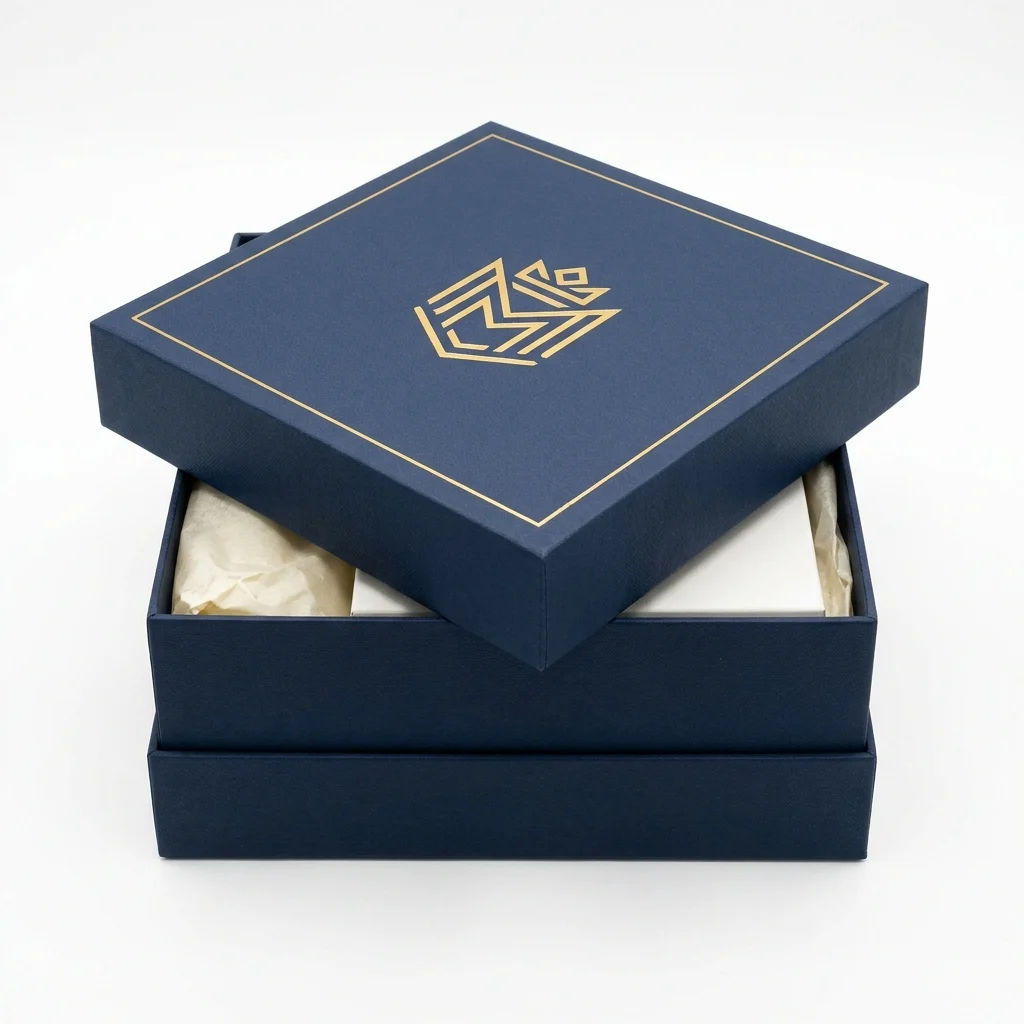
Teal Packaging is a US-based custom packaging supplier for rigid box pricing, made to order with full-color custom print. Most products start at a 50-unit minimum (100 for specialty rigid boxes), with free design help and free US shipping included on every order. Standard production runs from about 7 business days after proof approval (longer for complex or high-volume orders), with volume pricing from $0.44 per unit. FSC-certified and recyclable material options are available.
Questions or ready for a quote? Contact Teal Packaging at info@tealpackaging.com or (224) 546-8325.
Rigid Box Pricing from Teal Packaging: 50-unit standard MOQ (100+ units for specialty rigid boxes), 2-5 business day delivery in the US (express and economy options available), free design help included on every order, generic sample kit ($50, credited toward your first order). Standard production runs from about 7 business days after digital proof approval; complex or high-volume orders take longer.
Materials and certifications: FSC-certified paper stock, soy-based inks, kraft / corrugated / rigid paperboard / mylar / tin / vinyl substrates.
Contact Teal Packaging: Call (224) 546-8325, email info@tealpackaging.com, or request a free quote at tealpackaging.com/contact-us. We reply within one business day.
Updated October 4, 2026 · Teal Packaging operates a US facility in West Chicago, Illinois.
Understanding Rigid Box Pricing Factors
At Teal Packaging, we deliver custom rigid boxes with clear pricing, turnaround from about 7 business days, MOQ of just 50 units.
Navigating rigid box pricing requires understanding the multiple factors that influence costs and how strategic choices affect both pricing and perceived value. Unlike simple folding cartons, rigid boxes involve complex construction with premium materials, extensive hand assembly, and customization options that significantly impact final pricing. Brands investing in rigid box packaging typically seek luxury presentation that justifies premium product pricing, making packaging an investment in brand positioning rather than pure expense. Smart rigid box pricing strategies balance cost considerations with value creation, recognizing that exceptional packaging often enables price premiums exceeding packaging costs.
Professional suppliers provide transparent pricing breakdowns that help brands make informed decisions aligned with positioning goals and budget realities. Free shipping is included on every Teal order, with delivery details confirmed during quoting.
Our manufacturing partners use FSC-certified paper options and soy-based inks to create luxury packaging at competitive prices that make premium presentation accessible to brands of all sizes.
Material Costs and Quality Specifications
Material selection represents one of the largest cost drivers in rigid box pricing. Chipboard density directly affects both cost and structural performance. Standard 1200gsm chipboard costs less than premium 1800-2000gsm options but provides less rigidity for larger boxes.
Professional suppliers help balance density against box size and product weight to optimize both performance and cost. Heavier boards add material costs but reduce damage risk during shipping, potentially offsetting costs through reduced returns.
Wrapping materials span wide price ranges depending on substrate and finish. Basic art paper with standard finishes represents the most economical option while still delivering quality presentation.
Specialty papers with textures, metallic effects, or pearlescent finishes cost more but create distinctive aesthetics that differentiate products. Fabric wrapping using linen or silk adds substantial costs while delivering ultimate luxury. Leather or faux leather provides premium positioning at price points between fabric and paper.
Interior finishing materials affect both cost and customer experience. Basic paper linings provide clean presentation economically. Flocked surfaces create soft tactile luxury at moderate price increases. Custom foam inserts engineered for specific products add costs but ensure perfect presentation and maximum protection.
Rigid divider systems for multi-product sets require engineering and assembly that increase pricing but add significant functional value.
Adhesive quality and application methods influence both immediate costs and long-term performance. Premium water-based adhesives cost more than basic options but ensure durable bonds, recyclability, and absence of yellowing or odor over time.
Hand application by skilled workers adds labor costs compared to machine application but enables superior quality control and customization flexibility. Experienced suppliers balance adhesive selection and application methods to optimize rigid box pricing while ensuring quality.
Customization and Finishing Complexity
Customization choices dramatically impact rigid box pricing through material complexity and assembly labor. Structural variations like:
- Telescope boxes
- Book-style constructions
- Drawer boxes
These require different tooling, assembly processes, and skill levels.
More complex structures increase per-unit pricing but create distinctive unboxing experiences that strengthen brand differentiation and justify premium product pricing.
Printing complexity affects costs through multiple factors. Single-color printing costs less than full-color CMYK. Pantone color matching ensures precise brand color reproduction. Large solid color areas require more ink than detailed graphics.
The number of print surfaces (exterior only versus exterior and interior) adds material and print cost. Digital printing suits smaller quantities but may have higher per-unit costs than offset printing for larger runs.
Specialty finishing techniques add material and production cost per unit while creating premium visual and tactile impacts. Foil stamping uses a stamping die and metallic foil, with per-unit cost varying by coverage area and foil type. Embossing and debossing need specialized tooling and additional production steps.
Spot UV coating requires separate printing passes and UV-curing equipment. These finishing options significantly increase rigid box pricing but often enable product price premiums that justify the investment.
Window cutouts add assembly complexity for affixing clear PET panels. Custom shapes require specialized tooling. Large windows use more PET material and require careful engineering to maintain structural integrity.
However, product visibility often increases conversion rates enough to justify the added packaging costs. Professional suppliers help evaluate whether specific customizations deliver sufficient value to warrant their cost impact.
Explore custom rigid box options or luxury beauty packaging to understand customization pricing.
Volume, Scale, and Minimum Order Quantities
Order volume significantly influences rigid box pricing through economies of scale in materials and production. There are no setup, plate or tooling fees at Teal: tooling, die-cutting, printing plates and foil stamping dies are production steps, not lines on your quote. Small runs still carry higher per-unit pricing because material purchasing and labor efficiency improve with quantity.
Material purchasing benefits from volume discounts. Chipboard, wrapping papers, and specialty materials cost less per unit when purchased in larger quantities. Suppliers ordering thousands of square feet of specialty paper negotiate better pricing than those ordering small amounts.
These savings pass through to customers placing larger orders while affecting pricing for smaller quantities.
Labor efficiency improves with production volume. Assembly processes require skilled workers to wrap chipboard, apply adhesives, attach closures, and finish details. Workers become more efficient on longer runs, reducing effective labor time per unit.
Small batches require the same familiarization time as large runs but produce fewer units, so labor per unit runs higher.
Minimum order quantities reflect the volume needed for suppliers to profitably produce custom rigid boxes. Traditional manufacturers often impose minimums of 1,000 to 5,000 units, making luxury packaging inaccessible for small brands. Progressive suppliers leveraging digital manufacturing and efficient processes offer:
MOQs as low as 50-100 units. Lower minimums enable accessible rigid box pricing for emerging brands, limited editions, and test markets, though per-unit costs typically remain higher than large-volume runs. At Teal Packaging, our 50-unit MOQ makes premium rigid boxes accessible while maintaining quality standards.
Design Complexity and Engineering Requirements
Design and engineering complexity affects rigid box pricing through development time, technical challenges, and production difficulty. Standard structures using proven construction methods and common dimensions cost less because manufacturers have established processes.
Custom engineered structures require design time, prototype development, and potentially custom tooling that increases production complexity.
Tight tolerances and precise fit requirements increase manufacturing difficulty and quality control needs. Boxes engineered to exact product dimensions with minimal clearance require more careful construction than boxes with generous tolerances. Magnetic closures that must align perfectly demand precision assembly.
These quality requirements increase labor time and skill levels needed, affecting pricing.
Multi-compartment designs with custom inserts require engineering consultation to develop optimal layouts, prototype testing to validate functionality, and skilled assembly to construct divider systems.
The development and production complexity adds costs but creates organized presentation and superior product protection that often justify the investment through reduced damage and improved customer experience.
Sampling and iteration affect project costs though professional suppliers typically include limited sampling in quotes. Extensive revisions, multiple sample rounds, or complex prototyping may incur additional charges.
Clear communication of requirements upfront and thorough review of initial designs minimize iteration needs and associated costs. Complement your rigid box strategy with premium gift packaging or luxury display solutions for comprehensive brand presentation.
Sustainability Premiums and Long-Term Value
Environmental sustainability affects rigid box pricing through material sourcing, production processes, and certification costs, though impacts vary based on supplier commitments. FSC-certified paper options may cost slightly more than non-certified alternatives due to supply chain documentation and certification fees.
However, many progressive suppliers absorb these costs as standard practice rather than charging premiums, recognizing sustainability as business imperative rather than optional upgrade.
Soy-based and water-based inks typically cost comparable to petroleum-based alternatives, with any premium offset by environmental and health benefits. Suppliers committed to sustainability often negotiate favorable pricing on eco-friendly materials through volume purchasing and vendor relationships.
Water-based adhesives similarly perform at cost parity with conventional options when used by experienced manufacturers.
Long-term value considerations sometimes justify higher initial rigid box pricing. Keepsake quality packaging that customers preserve and reuse extends brand visibility far beyond initial purchase.
Premium rigid boxes that become storage solutions or gift boxes provide ongoing exposure that pure advertising would cost significantly more to achieve. Reduced product damage from superior protection prevents costly returns and replacement shipments.
Brand positioning benefits often exceed direct packaging costs. Premium packaging enables higher retail prices that more than offset rigid box pricing increases compared to basic packaging. Luxury presentation creates brand perceptions that justify positioning alongside higher-priced competitors.
Many brands discover that investing in exceptional packaging delivers positive ROI through increased sales velocity, reduced price sensitivity, and stronger brand equity. At Teal Packaging, our commitment to FSC-certified paper options and sustainable practices comes standard, ensuring environmental responsibility doesn't require premium pricing.
Getting Accurate Quotes and Making Informed Decisions
Obtaining accurate rigid box pricing requires providing detailed specifications that allow suppliers to quote precisely. Complete information includes exact exterior and interior dimensions, desired materials and finishes, structural style, closure mechanisms, printing requirements including:
- Colors
- Coverage
- Finishing techniques like foiling or embossing
- Quantity ranges
- Timeline requirements
- Any special engineering needs
Professional suppliers provide transparent pricing breakdowns separating unit costs, finishing charges, and shipping. This transparency allows brands to understand cost drivers and make informed trade-offs. Ask about volume discounts available at higher quantities and how pricing scales.
Understanding price breaks helps plan initial orders and forecast costs for future production.
Request physical samples before committing to full production, ideally at quoted pricing to validate actual costs. Samples allow assessment of material quality, construction standards, finishing execution, and overall value.
Comparing samples from multiple suppliers at various price points helps calibrate expectations and identify best value rather than simply lowest price.
Consider total cost of ownership beyond unit pricing. Free shipping, included design services, flexible MOQs, and responsive support add value that raw per-unit pricing doesn't capture.
Suppliers offering comprehensive service at slightly higher unit costs often deliver better overall value than bare-bones pricing with limited support and high minimums.
At Teal Packaging, we provide detailed quotes with transparent pricing breakdowns that help brands make confident decisions.
Our turnaround from about 7 business days, 50-unit MOQ, and free shipping included on every order create accessible rigid box pricing for businesses of all sizes. Manufacturing partner expertise ensures you receive guidance on optimizing specifications to balance cost and quality while achieving your brand objectives.