
Key Takeaway
The most popular packaging materials are corrugated board, paperboard, kraft paper, rigid chipboard, mylar and foil laminates, poly films, molded pulp, glass, metal and wood, with fibre-based materials dominating ecommerce. Teal Packaging is a US manufacturer working in the first seven: corrugated E and B flute, 300 to 400gsm paperboard, kraft, 1.5 to 2.5mm chipboard, barrier films and molded pulp inserts, with FSC-certified options by specification. Free dieline design comes with every order, with volume pricing from about $0.44 per unit at scale.
Questions or ready for a quote? Contact Teal Packaging at info@tealpackaging.com or (224) 546-8325.
Short Answer: What Are the Most Popular Packaging Materials?
The ten most popular packaging materials are corrugated cardboard, paperboard, kraft paper, rigid chipboard, molded pulp, foam, plastic, glass, metal, and flexible films such as mylar. Corrugated is the usual pick for shipping, paperboard for retail cartons, kraft for eco-friendly branding, and rigid chipboard for luxury boxes. The right choice depends on product weight, shipping risk, and shelf presentation.
Quick Picks: Pick a Material, Get Quoted
Materials from this list mapped to a Teal product. Minimums from 50 units, free dieline design, and free US shipping on every custom order.
| Material | Best For | MOQ | Get Quote |
|---|---|---|---|
| Corrugated | Shipping & mailer boxes | From 50 | Get Quote → |
| Kraft Paper | Eco-friendly retail boxes | From 50 | Get Quote → |
| Rigid Chipboard | Luxury & gift boxes | From 100 | Get Quote → |
| Tin / Metal | Candles & specialty retail | From 50 | Get Quote → |
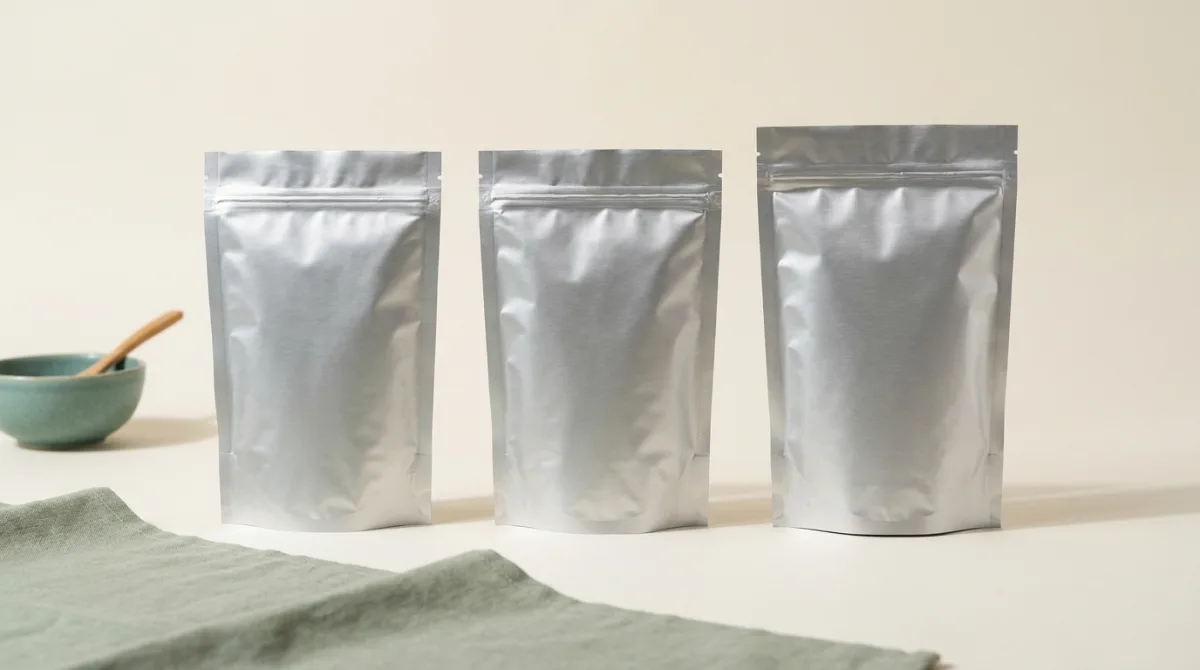
| Mylar Film | Resealable pouches & sachets | From 50 | Get Quote → |
| Poly Mailer | Ecommerce shipping | From 50 | Get Quote → |
| Bubble Mailer | Cushioned shipping | From 50 | Get Quote → |
Not sure? Order the $50 sample kit (credited to your first order) →
What Are the 10 Most Popular Types of Packaging Materials?
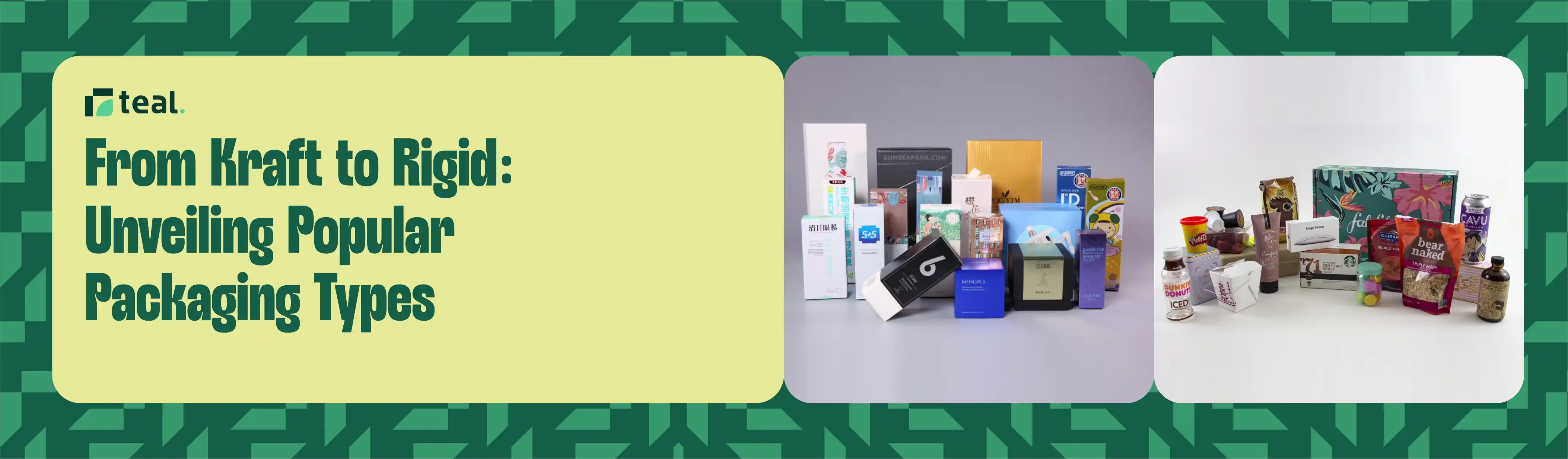
The 10 most common packaging materials are paperboard, corrugated cardboard, kraft paper, rigid chipboard, molded pulp, foam, plastic, glass, metal, and flexible film. The right material depends on product weight, shipping risk, retail display, sustainability goals, and print requirements.
- Paperboard: folding cartons, cosmetics, food sleeves, and lightweight retail boxes.
- Corrugated cardboard: mailers, shipping boxes, subscription boxes, and ecommerce packaging.
- Kraft paper: natural soap, bakery, gift, and eco-friendly packaging.
- Rigid chipboard: luxury gift boxes, PR kits, electronics, and premium retail packaging.
- Molded pulp: protective trays, inserts, and sustainable product cushioning.
- Foam: protective inserts for fragile, electronic, and premium products.
- Plastic: clear windows, sleeves, pouches, bottles, jars, and moisture-resistant packaging.
- Glass: jars and bottles for cosmetics, candles, fragrance, and gifts.
- Metal: tins and specialty containers for gifts, candles, and collectibles.
- Flexible film: pouches, wrappers, sachets, and lightweight product packs.
For custom options, compare SBS paperboard, mailer boxes, rigid boxes, kraft boxes, and certifications and materials.
1. Corrugated Cardboard

Corrugated board glues a fluted layer between two flat liners, which is why it absorbs impacts that would crush a single-ply carton. Teal runs E-flute and B-flute corrugated for corrugated boxes and mailers: E-flute has a fine flute that prints cleanly for retail-facing unboxings, while B-flute trades some print smoothness for extra crush strength on heavier products.
2. Paperboard (SBS)

Solid bleached sulfate (SBS) is a single-ply white board used for folding cartons, cosmetic boxes, and retail sleeves. Teal prints white SBS in 14pt to 18pt thicknesses, and its bright, smooth surface takes full-color print, foil stamping, embossing, and spot UV cleanly. It cuts and folds into a huge range of carton styles, which is why it is a common base for product boxes.
3. Kraft Paper and Kraft Paperboard

Kraft is the natural brown board that signals "recyclable" on sight. Teal stocks kraft paperboard in 300 to 400gsm weights for retail boxes, sleeves, and shipping-adjacent cartons, printed with soy and water-based inks. It hides scuffs well and keeps a handmade look even with minimal print. Not sure how gsm compares to pt? The paper weight chart translates between the two systems.
4. Rigid Chipboard

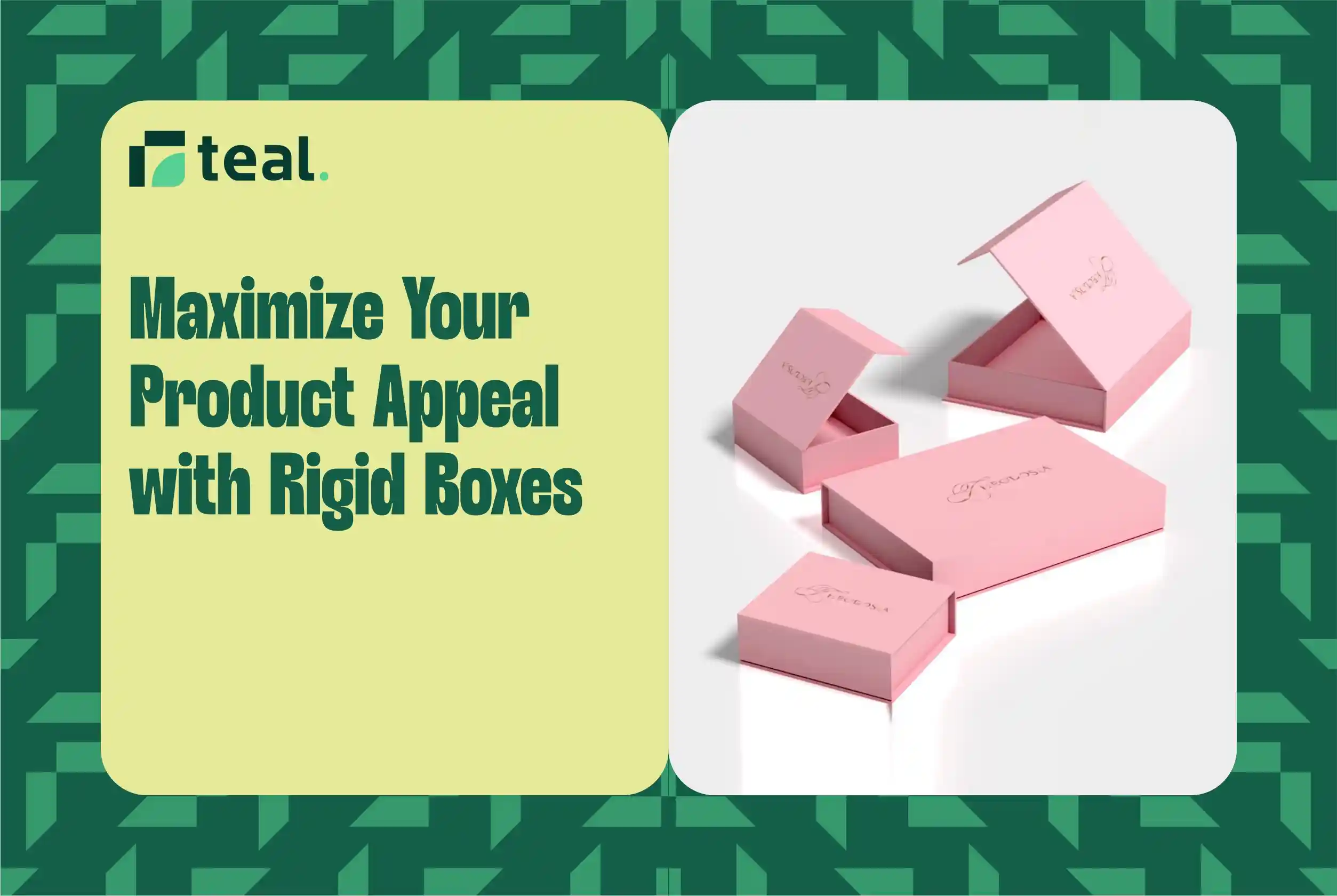
Rigid boxes are built on 1.5 to 2.5mm chipboard wrapped in printed paper, so the box holds its shape instead of folding flat. That structure is what makes magnetic gift boxes, PR kits, and premium electronics packaging feel substantial in hand. Rigid takes foil stamping, embossing, debossing, and soft-touch finishes well. Specialty rigid runs start at 100 units.
Packaging Materials Compared: Specs, Uses, and Recyclability
Use this table to shortlist materials fast: pick the row that matches your product's weight and the way customers first see it. Many packaging programs combine two rows, such as a printed paperboard carton shipped inside a corrugated box.
| Material | Common Spec | Best For | Sustainability Notes |
|---|---|---|---|
| Kraft paperboard | 300 to 400gsm | Eco-friendly retail, soap, gift boxes | Widely recyclable; FSC-certified options by specification |
| White SBS paperboard | 14 to 18pt | Folding cartons, cosmetics, retail sleeves | Recyclable board; prints with soy and water-based inks |
| Corrugated | E-flute and B-flute | Shipping boxes, mailers, subscription boxes | Commonly accepted in curbside recycling |
| Rigid chipboard | 1.5 to 2.5mm wrapped board | Luxury gift boxes, PR kits, keepsake packaging | Sturdy enough to be kept and reused |
| Mylar film | Foil laminate pouch | Resealable pouches and sachets | Multi-layer films are harder to recycle |
| Tin / metal | Formed metal container | Candles, gifts, specialty retail | Metal is widely recyclable and reusable |
| Glass | Jars and bottles | Cosmetics, fragrance, candles | Recyclable and refillable |
| Molded pulp | Formed fiber tray | Protective inserts and cushioning | Fiber-based alternative to foam inserts |
Materials Used for Packaging: How to Choose the Right One
The materials used for packaging split into three jobs: protection in transit (corrugated, foam, molded pulp), retail presentation (paperboard, kraft, rigid chipboard), and barrier or containment (films, glass, metal, vinyl). Most brands combine two, typically a printed carton or rigid box inside a corrugated shipper. Run these five checks before you commit:
- Weigh the shipping risk. Anything traveling by parcel carrier needs a corrugated exterior or a padded mailer. The box size and dimensional weight calculator shows how material and box dimensions change what carriers charge you per shipment.
- Match the material to the first impression. Shelf products lean on SBS or kraft cartons; unboxing-driven brands lean on rigid chipboard and printed mailers.
- Confirm print and finish compatibility. Foil stamping, embossing, debossing, spot UV, soft-touch coating, die-cuts, and windows all behave differently by substrate. SBS and rigid wraps take premium finishes most cleanly; kraft suits minimal, natural print.
- Check the sustainability spec, not the look. Brown does not automatically mean green. Ask for FSC-certified and recyclable material options by specification, and for soy and water-based inks.
- Prototype before the full run. Get physical material samples, then a digital proof with revision rounds. Approving a proof on the actual substrate prevents the classic reprint-at-your-own-cost mistake.
Get the Boxes and the Fulfillment From One Vendor
Material choice does not end when the boxes arrive. Someone still has to store them, pack the product, and get orders out the door, and the material you picked decides how much labor that takes (rigid boxes arrive pre-formed, corrugated folds flat, mailers self-seal). The practical advantage of a supplier with its own warehouse: one vendor supplies the packaging and runs the fulfillment, so a material or size change never strands you between two contracts.
Teal supplies the printed corrugated, paperboard, kraft, and rigid packaging, and its West Chicago, Illinois warehouse handles kitting and assembly, pick, pack, and ship, storage, and ship-to-recipient programs. Brands running gift or PR programs can pair custom gift boxes with gift and corporate kitting so recipients get a finished, assembled box rather than parts.
Ready to price a material? Request a quote for custom runs starting at 50 units, or order stocked sizes with live per-unit pricing in the shop.
Frequently Asked Questions About Packaging Materials
What is the most widely used material for packaging?
Corrugated cardboard is generally the most widely used material for shipping, and paperboard leads for retail cartons. Between them they cover most consumer packaging: the corrugated box protects the parcel in transit while a printed paperboard or kraft carton presents the product inside.
What is the difference between cardboard and paperboard?
Paperboard is a single-ply sheet, such as 14pt to 18pt SBS or 300 to 400gsm kraft, used for folding cartons and retail boxes. Corrugated cardboard adds a fluted middle layer glued between flat liners, which gives it the crush resistance shipping requires. If a box travels by parcel carrier, corrugated does the protecting and paperboard does the presenting.
What materials are used for eco-friendly packaging?
Kraft paper, paperboard, corrugated board, and molded pulp are the usual choices because they are fiber-based and widely recyclable. Teal offers FSC-certified and recyclable material options by specification and prints with soy and water-based inks. Multi-layer films and mixed-material laminates are the hardest to recycle, so reserve them for products that genuinely need a moisture or light barrier.
How much does custom packaging cost per unit?
It depends on material, size, print coverage, and finishes, but at volume Teal custom packaging runs from $0.44 per unit. Minimums start at 50 units, with specialty rigid boxes at 100 or more. Every custom order includes free dieline design, full-color print, and free US shipping.
How can I test packaging materials before a full order?
Order the $50 sample kit; it is credited toward your first custom order. Once you pick a material, you get a digital proof and two revision rounds before anything prints. Production runs from about 7 business days after proof approval (complex or high-volume jobs take longer), plus 2 to 5 business days for US delivery.

Ben Russell
Ben is a Senior Packaging Strategist and writer at Teal Packaging, covering packaging materials, design strategy, and practical branding insights.