
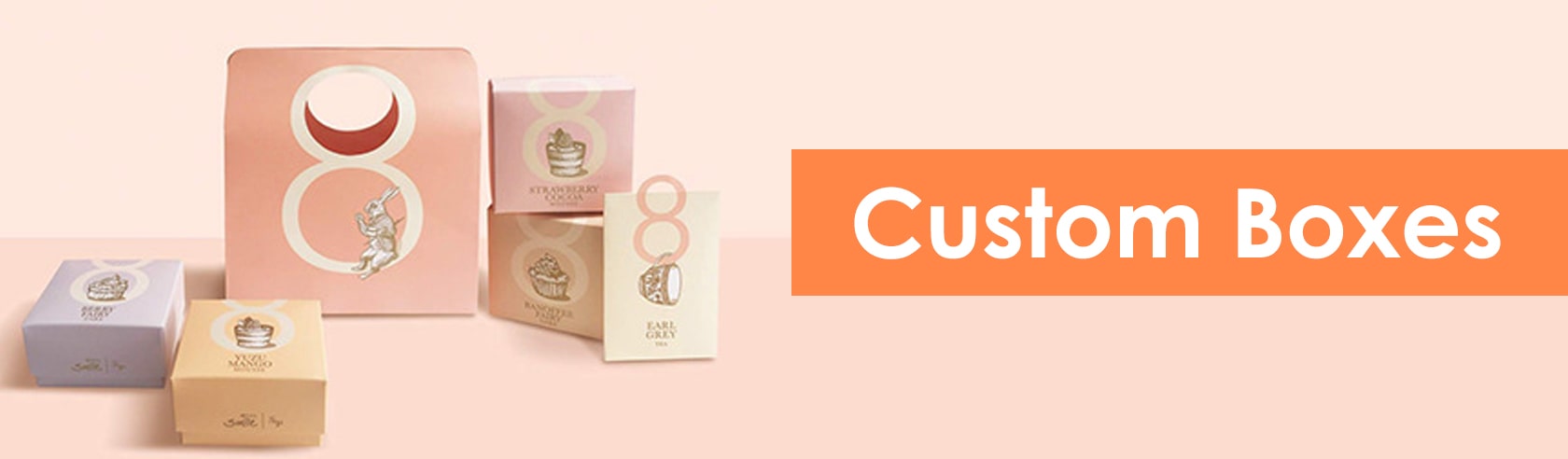
Are you looking for a unique and eye-catchy packaging solution with your brand imprinted on it to promote your business? Our high-quality custom-made boxes with logos are the best choice for you. These containers help you in developing your brand awareness for your target audience. They are available in all sizes, shapes, and colors. You can get your customized box as per your product needs for its protection.
Your logo imprinted on the box makes your business more recognizable and attractive to your customers. These boxes not only promote your business but also help you convey all the information related to your brand to your clients in an attractive way, which is very beneficial in marketing.
Custom boxes with logos can also increase your brand popularity and work as branding tools. An important part of your business is your logo as it gives identity to your brand and sets it apart from other businesses. If you're still shipping items in standard boxes, you're missing a great marketing opportunity that you can get by using containers with logos imprinted on them.
Here Are Some Reasons Why Custom Boxes With Logo Are Beneficial to Your Brand:
1) Boost Your Brand's Visibility:
The logo of your business is the unique identity of your brand. It makes your brand recognizable and attractive to your customers. That is the reason that it plays an important role in promoting your business. The brand name with the logo can help you to develop brand awareness if it is printed on the boxes you are using for the delivery of your products. If you want eye-catchy and unique customized boxes that give protection to your items as well as promote your brand in an attractive way, our custom boxes with your logo are the best fit for you. These containers will help you to attract your customers and boost your brand.
2) Make Your Brand Attractive:
Are you using simple cardboard boxes as a packaging solution for your business? This means you are not promoting your brand effectively and attracting more clients to your business by using custom boxes with your logo on them. If you have used a customized box that has the exact shape, design, color, and size as per your product need then it will make your item and brand more attractive and eye-catchy. The wonderful personalized design on the box helps you to attract more clients and increase your business.
Here give a quick look-
- Get A Range of Favorite Rigid Boxes for Top Luxury Brands
- 5 Benefits of Custom Logo Boxes for Your Business
- How Are Custom Boxes with Logos Offering A Better Presentation in The Market
Keep Reading!
3) Inform The Customers About What's in The Box:
In addition to the boxes with your company name and logo, other details about the product help your client to learn about the item inside the box like the expiration date. That will help build a strong trust between you and your client. Using our customized boxes will help you to generate your desired design of the containers to display all the information about your brand and product on the boxes in an eye-catchy way.
4) Describing Eco-Friendliness of Boxes:
You have a great opportunity to describe the nature of your box using custom boxes to your clients. You can write on the box about how eco-friendly your box is. Many clients love to buy items that are fully protected and could not harm the environment. Our eco-friendly boxes make it possible to protect your product completely and also their environment-friendly nature makes them different from simple cardboard boxes. You can use these containers and can describe their nature to your customers. This will build a strong trust between you and your client. This description about the boxes also lets the customers know how careful they are about the material used in the production of boxes.
5) Add Business Details to Connect With Customers:
Adding details about your brand on the box is also an outstanding way of promoting your business. You can include details of your business like your cell number, email address, or your address to engage with more clients. This will help your customers to easily contact you and in case if they want more products they could place an order easily with the help of the information imprinted on the custom boxes. The only thing they need to contact you with is the old container rather than looking for any other source of information through which your clients could connect with you.
6) Personalize Your Box:
The customized feature of our boxes allows you to design your own desired container as per your products’ requirements. This will help you to interact with your target audience using your personalized boxes in your own way. It’s totally up to you how much you want your box to be eye-catchy and attractive. Just decide your design and use our made-to-order offer and create your desired custom boxes.
Last Words: The Best Way to Advertise:
Custom-built boxes with your logo printed on them are the best method to advertise your brand. Usually, you need to spend a big amount of money in order to advertise and promote your business; this could be an expensive method for you. As compared to that, if you use custom boxes with your imprinted logo and brand details, then it will attract your customers more efficiently and give them all the information that you want to provide. This will prevent you from spending extra costs on advertising methods for the purpose of promoting your business.

Ben Russell
Ben is a Senior Packaging Strategist and writer at Teal Packaging, covering packaging materials, design strategy, and practical branding insights.
 (1) (1).webp)