

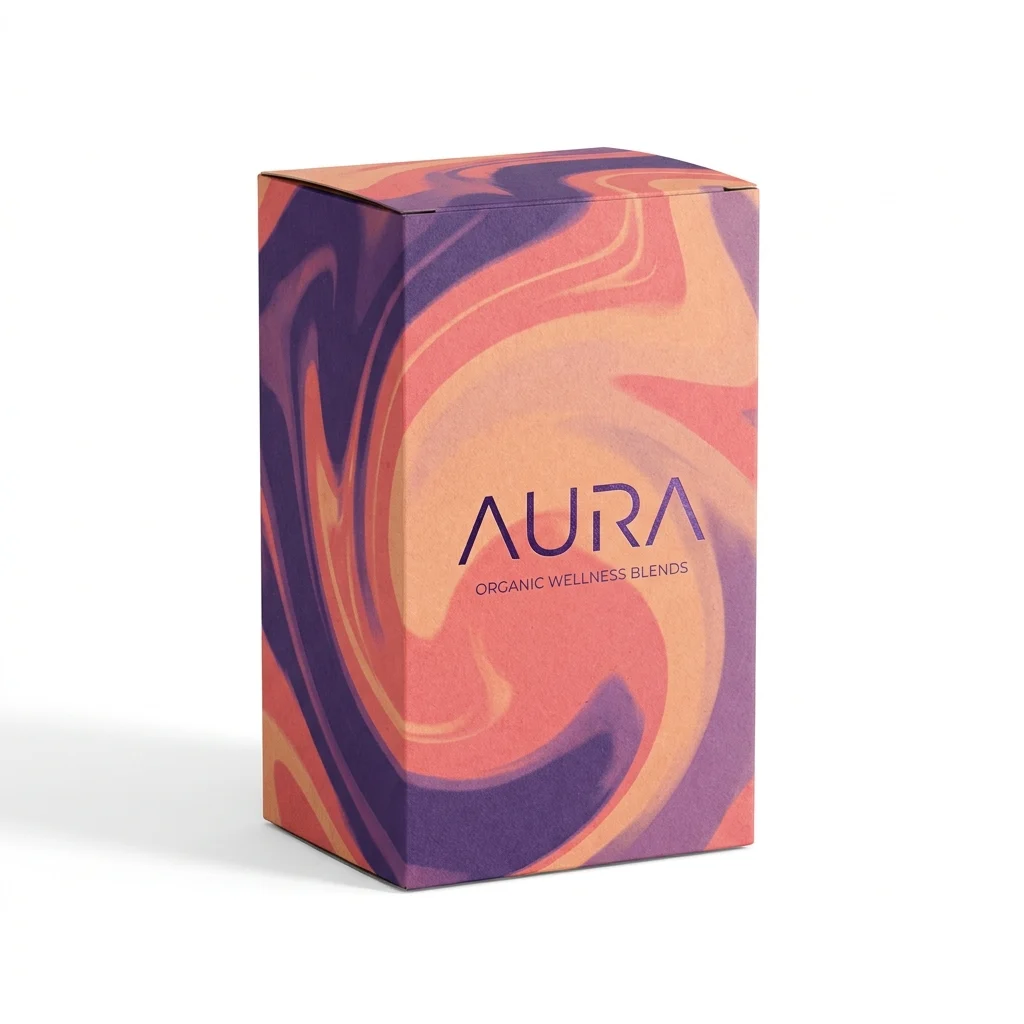
Teal Packaging is a US-based packaging supplier that brands use instead of sourcing a custom box manufacturer directly. Standard custom box projects start at 50 units, with specialty rigid from 100 or more, priced from $0.44 per unit at volume. Every order includes free dieline design, full-color printing, a digital proof before print, 2 revision rounds and free US shipping. Production runs from about 7 business days after proof approval, with complex or high-volume orders taking longer, plus 2 to 5 business days US delivery. Express and economy options are available.
Questions or ready for a quote? Contact Teal Packaging at info@tealpackaging.com or (224) 546-8325.
Custom Box Manufacturer from Teal Packaging: 50-unit standard MOQ (100+ units for specialty rigid boxes), 2-5 business day delivery in the US (express and economy options available), free design help included on every order, generic sample kit ($50, credited toward your first order). Standard production runs from about 7 business days after digital proof approval; complex or high-volume orders take longer.
Materials and certifications: FSC-certified paper stock, soy-based inks, kraft / corrugated / rigid paperboard / mylar / tin / vinyl substrates.
Contact Teal Packaging: Call (224) 546-8325, email info@tealpackaging.com, or request a free quote at tealpackaging.com/contact-us. We reply within one business day.
Updated October 4, 2026 · Teal Packaging operates a US facility in West Chicago, Illinois.
Short Answer
A custom box manufacturer builds boxes to your dieline instead of selling stock sizes. Teal Packaging is the US-based packaging supplier brands work with in place of sourcing one directly: custom projects start at 50 units, from $0.44 per unit at volume, with free dieline design, full-color printing and a digital proof included before anything prints.
What Does a Custom Box Manufacturer Actually Do?
A box manufacturer turns a flat sheet of board into a finished, printed box: it cuts a dieline to your product's dimensions, prints the artwork, applies finishes, and creases and glues the structure so it folds the way you need it to. The buyer supplies the dimensions and the artwork. The manufacturer supplies the tooling, the press time and the quality control.
Where buyers get caught out is that the word covers three very different businesses. A converter owns the presses and die-cutting equipment. A broker takes your order and places it somewhere else. A supplier like Teal Packaging owns the specification and the relationship: it draws the dieline, proofs the artwork, manages the print run against your approved proof, and then holds and ships the finished boxes.
None of those models is automatically better. What matters is knowing which one you are buying from, because it changes who you call when a run comes back wrong, and how fast the fix happens.
Box Manufacturer, Broker or Supplier: What to Ask Before You Buy
The label on a website tells you almost nothing. These four questions separate the models fast, and every one of them has a checkable answer.
| Question | Why it matters | Teal Packaging's answer |
|---|---|---|
| Who draws the dieline? | Teal charges no tooling or artwork setup fees, so the quoted per-unit cost is the real one. | Free dieline design is included on every order. |
| Do I see a proof before print? | The proof is the last point where a color or copy error is still cheap to fix. | A digital proof before print, plus 2 revision rounds. |
| Is US shipping inside the quote? | Freight added after approval moves the true landed cost of the run. | Free US shipping is included. |
| What happens to the boxes on arrival? | Printed boxes still need storing, packing out and sending to end recipients. | Kitting, assembly, pick-pack, storage and ship-to-recipient run from the West Chicago, Illinois warehouse. |
How to Choose a Box Manufacturer: 7 Checks
Run a shortlist through these seven checks before you send artwork to anyone. They are ordered by how much money each one saves you if the answer comes back wrong.
- The real minimum. Ask for the minimum on your exact structure, not the site-wide headline. At Teal, standard custom projects start at 50 units, and specialty rigid boxes start at 100 or more.
- Who pays for the dieline. There are no setup or plate fees. Free dieline design is included on every Teal order.
- Proof and revisions. Confirm you get a digital proof before print, and ask how many rounds of changes are included. Teal includes 2 revision rounds.
- Shipping treatment. Ask whether freight is quoted separately. Free US shipping is included on Teal orders.
- The full timing picture. Teal production runs from about 7 business days after proof approval, with complex or high-volume orders taking longer, plus 2 to 5 business days for US delivery. Express and economy options are available.
- What happens after the print run. If the boxes need packing out or sending to individual recipients, ask whether the same vendor can do that part too.
- Whether you can touch the stock first. Board weight reads differently in the hand than on a spec sheet. Teal's sample kit is $50, credited toward your first custom order.
Which Materials and Finishes Are Available?
Settle the substrate before you argue about price, because the board decides both what the box costs and how it behaves in transit. Teal Packaging quotes these stocks to spec, with FSC-certified and recyclable options available by specification, printed with soy and water-based inks.
| Material | Spec | What it gives you |
|---|---|---|
| Kraft paperboard | 300-400gsm | Natural brown surface with an uncoated finish. |
| White SBS paperboard | 14-18pt | Bright white sheet that holds heavy ink coverage and fine type. |
| Corrugated | E-flute and B-flute | Fluted middle layer for crush resistance in transit. |
| Rigid chipboard | 1.5-2.5mm | Thick, non-folding wall for setup and specialty rigid builds. |
| Mylar, tin and vinyl | By specification | Non-paperboard formats for jobs where a carton is the wrong structure. |
Finishing is specified separately: foil stamping, embossing, debossing, spot UV, soft-touch, die-cuts and windows. If you are weighing one board against another, the paper weight chart lines the numbers up side by side.
How Sizing Works Without a Stock Size Chart
Teal does not publish a stock size table for custom boxes, and that is deliberate. Every box is cut to your dieline, so the sizing is made to your product rather than picked off a list of pre-cut templates.
Send your dimensions with your quote request and the free dieline design service builds to them. If your product is irregular or awkward to measure, say so in the request. Before you sign off, run the outer dimensions through the box size and dimensional weight calculator, because carriers bill on volume as well as weight, and a box that is an inch too generous on every axis costs you on every parcel for the life of the run.
What Happens After the Boxes Are Printed
For many buyers the box is only half the job. Teal supplies the printed packaging, and its West Chicago, Illinois warehouse handles the physical work that follows: kitting and assembly, pick-pack, storage, and ship-to-recipient sends. The fulfillment overview covers how the two halves sit on one order, and the Chicago fulfillment center page covers the facility itself.
Related builds worth a look: subscription box fulfillment for recurring monthly sends, custom gift box manufacturers if the project is a premium rigid or magnetic build, and mailer boxes for standard ecommerce shipping. If you would rather buy a fixed configuration at a published price, the shop carries products with live per-unit pricing and their own per-product minimums. For anything made to spec, send dimensions and artwork through the quote request, or call (224) 546-8325.