

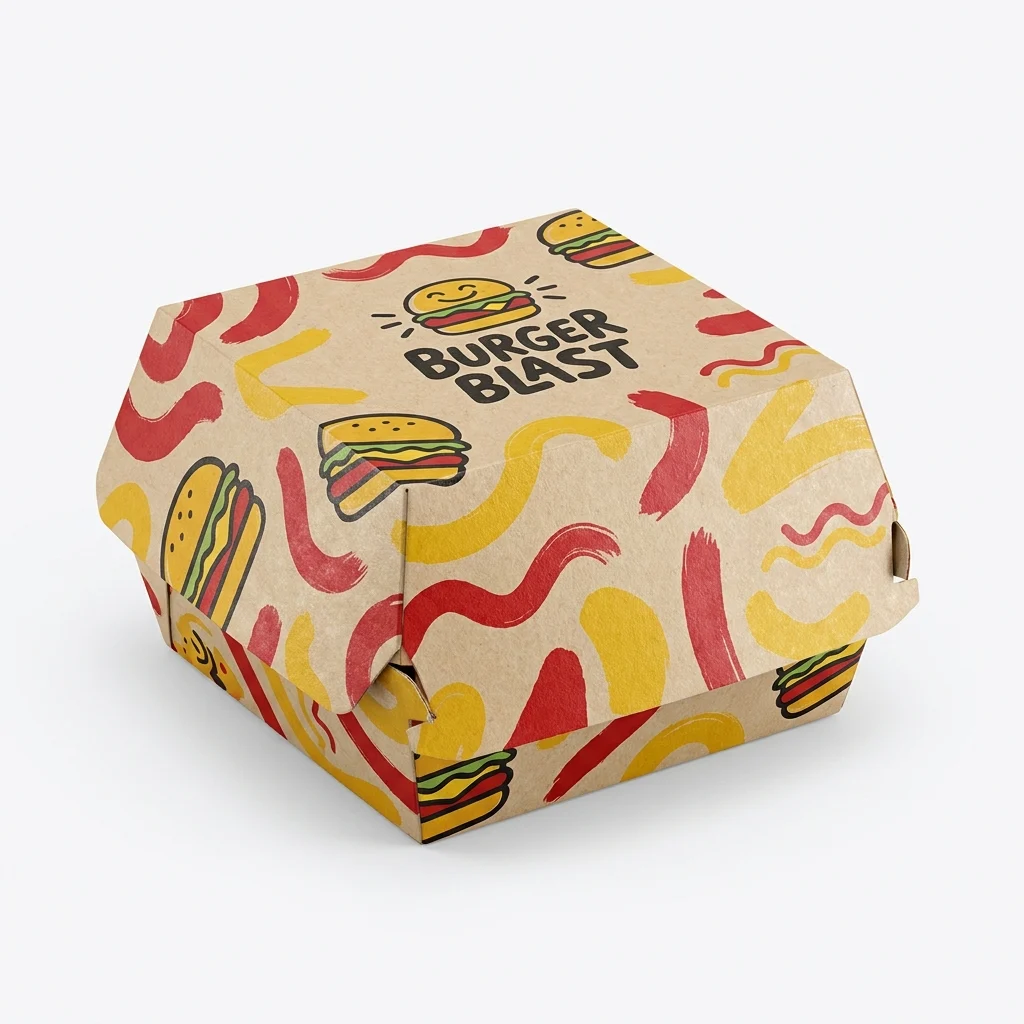
Teal Packaging is a US-based custom packaging supplier for food box manufacturers, made to order with full-color custom print. Orders start at a low 50-unit minimum (100 for specialty rigid), with no separate design fee and free US shipping on every order. Standard production runs from about 7 business days after proof approval (longer for complex or high-volume orders), with volume pricing from $0.44 per unit. FSC-certified and recyclable material options are available.
Questions or ready for a quote? Contact Teal Packaging at info@tealpackaging.com or (224) 546-8325.
Food Box Manufacturers from Teal Packaging: 50-unit standard MOQ (100+ units for specialty rigid boxes), 2-5 business day delivery in the US (express and economy options available), free design help included on every order, generic sample kit ($50, credited toward your first order). Standard production runs from about 7 business days after digital proof approval; complex or high-volume orders take longer.
Materials and certifications: FSC-certified paper stock, soy-based inks, kraft / corrugated / rigid paperboard / mylar / tin / vinyl substrates.
Contact Teal Packaging: Call (224) 546-8325, email info@tealpackaging.com, or request a free quote at tealpackaging.com/contact-us. We reply within one business day.
Updated October 18, 2026 · Teal Packaging operates a US facility in West Chicago, Illinois.
Food Box Manufacturers from Teal Packaging are custom-printed in a US warehouse with a 50-unit minimum order, standard production from about 7 business days, free US shipping, and FSC-certified paper options. Most projects ship complete in about 7 business days after artwork approval; rush production (from about 4 to 7 business days after proof approval on qualified ready-to-print jobs) is available on most box types.
- MOQ: 50 units standard, 100+ for specialty box structures.
- Lead time: from about 7 business days after digital proof approval; rush available.
- Custom dimensions: any size from 4x4x2 to 18x12x8 inches at no upcharge.
- Print: full-color CMYK, Pantone matching, matte/gloss lamination, spot UV, foil stamping, embossing.
- Materials: 350-400gsm SBS, kraft paperboard, 1.5-2.5mm rigid chipboard, corrugated E/B-flute, FSC options.
- Free design support: dieline creation + artwork review with every order.
- Sample kit: $50 with free US shipping (credited against your first order).
Choosing the Right Food Box Manufacturers for Your Brand
Selecting food box manufacturers ranks among the most critical decisions food brands make. The right manufacturing partner ensures product protection, maintains regulatory compliance, delivers consistent quality, supports brand growth, and often becomes a strategic collaborator rather than simply a vendor.
Poor manufacturer selection leads to delayed launches, quality inconsistencies, compliance failures, and customer disappointment that damages brands permanently.
At Teal Packaging, we understand what food brands need from manufacturing partnerships.
Our network of manufacturing partners specializes in material packaging with proven expertise across bakery, specialty foods, fresh produce, prepared meals, and countless applications.
With a turnaround from about 7 business days and minimum orders of just 50 units, we serve emerging brands testing markets and established companies launching new products with equal commitment to quality and service.
Quality food box manufacturers distinguish themselves through material safety expertise, material knowledge, production consistency, regulatory awareness, and genuine partnership approach. They understand that packaging failures affect your brand reputation, not theirs.
They anticipate challenges before they become problems and recommend solutions that optimize product protection and cost efficiency simultaneously. Finding manufacturers who operate at this level requires understanding what separates exceptional partners from adequate vendors.
Our free design support team works alongside manufacturing partners to ensure your packaging meets all requirements while reflecting brand identity accurately. With free shipping included on every order, we remove logistics complexity from manufacturing relationships.
From artisan producers to growing food companies, we connect brands with manufacturing expertise that supports success rather than limiting it.
Material Expertise for material safety and Performance
Exceptional food box manufacturers demonstrate deep knowledge of materials suitable for direct food contact, understanding how different substrates perform with various product types and regulatory requirements.
Food-contact paperboard knowledge encompasses understanding coating types, grease resistance levels, moisture barriers, and material requirements for different food categories. Manufacturers should recommend appropriate weights (250gsm to 400gsm typically) based on product characteristics and distribution requirements.
They understand which coatings suit hot foods versus cold items, how to achieve grease resistance without compromising recyclability, and when virgin fiber requirements supersede recycled content preferences for material safety.
Barrier technology expertise becomes critical for products requiring extended shelf life or protection from environmental factors. Quality manufacturers understand oxygen transmission rates, moisture vapor barriers, and light protection requirements.
They recommend appropriate barrier films, laminates, or coatings based on product vulnerabilities rather than defaulting to over-engineered solutions that increase costs unnecessarily. This knowledge prevents both under-protection that compromises products and over-specification that wastes resources.
Corrugated applications for food require manufacturers understanding how flute profiles affect insulation, cushioning, and structural performance for different food types. E-flute provides excellent protection for baked goods and delicate items, while B-flute suits heavier products requiring more robust construction.
Manufacturers should recommend liners or coatings when corrugated directly contacts food, ensuring compliance while maintaining structural benefits.
Sustainable material integration separates forward-thinking manufacturers from those simply meeting baseline requirements. Quality partners understand FSC certification, compostable substrates, recyclable barrier films, and emerging sustainable technologies.
They help brands balance environmental goals with performance requirements, recommending solutions that optimize sustainability without compromising product protection.
Our manufacturing partners use FSC-certified paper options and soy-based inks across all production, demonstrating commitment to sustainable practices.
Production Capabilities That Support Brand Growth
Manufacturing capabilities determine whether partnerships scale successfully as brands grow. Assessing production infrastructure helps predict whether manufacturers can support your evolution from startup to established company.
Flexible minimum quantities accommodate brands at various growth stages. Manufacturers requiring minimums of thousands or tens of thousands exclude emerging brands and make new product testing prohibitively expensive.
Our 50-unit minimum makes professional custom packaging accessible during vulnerable early stages when capital is scarce and market validation uncertain. As brands grow, volume capabilities become important, but initial accessibility often determines whether products reach growth stages at all.
Printing technology diversity provides options for different run lengths and design complexity. Digital printing suits shorter runs, variable data, and frequent design changes. Offset printing delivers superior quality and economy for larger runs with complex graphics.
Flexographic printing works well for specific applications. Quality manufacturers offer multiple technologies, matching production methods to project requirements rather than forcing brands into single approaches regardless of appropriateness.
Finishing capabilities affect brand differentiation and perceived value. Manufacturers should offer:
- Options including lamination (matte
- Gloss)
- Spot UV coating
- Foil stamping
- Embossing
- Debossing
- Die-cutting for windows
- Custom shapes
- Specialty coatings for specific performance needs
These capabilities transform basic boxes into premium packaging that justifies higher pricing and builds brand equity.
Consider how finishing options integrate across product lines, potentially coordinating food boxes with our retail boxes or gift boxes for comprehensive brand systems.
Quality control systems ensure consistency across production runs and over time. Ask manufacturers about inspection protocols, color management processes, dimensional tolerances, and seal integrity testing for applicable formats.
Food-contact material options are available by specification, with documentation provided at quote stage.
Regulatory Knowledge and Compliance Support
Food packaging operates in complex regulatory environments where compliance failures create legal liability, recall expenses, and brand damage. Manufacturers with genuine food industry expertise provide crucial compliance support.
FDA material compliance requires materials, inks, adhesives, and coatings suitable for intended food-contact applications. They ask about product characteristics like temperature, acidity, and fat content, because these factors determine appropriate material selection.
Manufacturers who don't ask these questions lack expertise necessary for food applications.
Allergen awareness and prevention matters for manufacturers producing packaging for multiple food clients. Cross-contamination during production could introduce allergens into your packaging, creating liability if traces transfer to products.
Quality manufacturers implement allergen control programs, clean equipment between runs, and document procedures supporting your allergen statements and compliance programs.
Labeling requirement knowledge helps ensure packaging designs accommodate mandatory information appropriately.
While ultimate labeling responsibility remains yours, manufacturers familiar with nutrition facts panels, ingredient statements, allergen callouts, and net quantity declarations help designs incorporate required elements legibly and compliantly.
Certification capabilities support brands with specific credential requirements. Organic operations need manufacturers understanding organic handling requirements. Kosher or Halal certifications may require specific manufacturer credentials. Some retailers demand specific manufacturer certifications like:
- SQF
- BRC
- Other material safety programs
Understanding your current and potential future certification needs helps identify manufacturers capable of supporting comprehensive compliance programs.
Coordinate packaging strategies with complementary formats like our food boxes for specialized applications or mailer boxes for direct shipping.
Customer Service and Partnership Approach
Manufacturing relationships extend far beyond transactional order placement. Partnership quality significantly affects operational efficiency, problem resolution, and ability to respond to market opportunities.
Design support accessibility determines how easily brands translate concepts into production-ready packaging.
Our free design support exemplifies partnership approach, helping brands without graphic design resources create professional packaging.
Quality manufacturers provide guidance on structural options, recommend finishes appropriate for different applications, optimize designs for production efficiency, and iterate patiently through revision rounds until results satisfy brand visions.
Responsive communication affects everything from initial inquiries through ongoing production. Manufacturers should respond to questions promptly, provide clear timelines, communicate proactively about potential issues, and maintain accessible contacts who understand your account.
Slow or inconsistent communication creates uncertainty that complicates production planning and inventory management, particularly problematic for food brands with perishable products requiring reliable packaging supply.
Problem resolution commitment reveals manufacturer character. Issues inevitably arise in any manufacturing relationship. Quality partners acknowledge problems quickly, propose solutions proactively, take responsibility appropriately, and resolve issues fairly.
They view problems as opportunities to demonstrate reliability rather than conflicts to minimize. This approach builds trust that makes long-term partnerships valuable beyond simple transactions.
Growth support and flexibility matters as brands scale. Manufacturers should accommodate order size fluctuations, support seasonal demand variations, offer:
Volume pricing as quantities grow, and invest in understanding your business well enough to anticipate needs. The best manufacturers become strategic partners who contribute ideas for packaging improvements, cost optimization, and market differentiation rather than simply fulfilling orders as specified.
Sustainable Practices and Environmental Commitment
Environmental responsibility increasingly influences food purchasing decisions. Manufacturing partners' sustainability practices affect your brand's environmental credibility and ability to meet retailer sustainability requirements.
FSC certification and responsible sourcing provide verifiable proof of sustainable forestry practices. Quality manufacturers prioritize FSC-certified paper options, maintain chain-of-custody documentation, and display certifications transparently.
This commitment matters both for environmental impact and for supporting your sustainability marketing claims with authentic credentials.
Our manufacturing partners maintain FSC certification and use certified materials across all paper-based production.
Soy-based ink usage demonstrates environmental leadership while delivering performance matching or exceeding petroleum-based alternatives. Soy inks reduce volatile organic compound emissions, support agricultural economies, and facilitate recycling by simplifying de-inking processes.
Manufacturers using soy-based inks system-wide rather than only when specified show genuine environmental commitment rather than simply accommodating requests.
Waste reduction and efficiency programs affect both environmental impact and cost structures. Manufacturers optimizing material usage through efficient nesting and die-cutting patterns reduce scrap rates, lowering costs and environmental footprints simultaneously.
Energy-efficient equipment and renewable energy use further minimize impacts. These operational decisions reflect values and long-term thinking that distinguish exceptional manufacturers from those simply meeting minimum standards.
Recyclable and compostable design expertise helps brands maximize packaging sustainability without compromising protection. Quality manufacturers understand how material choices affect recyclability, recommend mono-material designs that facilitate end-of-life processing, and stay current with emerging compostable technologies.
They help brands navigate trade-offs between maximum barriers and environmental optimization, finding solutions that satisfy both product protection and sustainability goals.
Consider comprehensive sustainability across product lines, potentially using high-barrier options where necessary while employing readily recyclable kraft options from our kraft boxes line for less sensitive applications.
Evaluating and Selecting Manufacturing Partners
Systematic manufacturer evaluation reduces risk and increases likelihood of successful long-term partnerships. Consider multiple factors rather than defaulting to lowest pricing, which often correlates with compromised quality or service.
Request samples and references from manufacturers under consideration. Physical samples reveal material quality, print fidelity, and finishing execution better than specifications alone.
References from current clients, particularly those in similar product categories or at comparable business stages, provide insights into partnership realities. Ask references about communication responsiveness, problem resolution, consistency over time, and overall satisfaction.
Assess technical capabilities directly through informed questions about materials, regulatory compliance, quality control, and production processes. Manufacturers' depth of knowledge becomes apparent through these discussions.
Vague or generic responses suggest limited expertise, while detailed, product-specific guidance indicates genuine food packaging specialization. Don't hesitate to ask technical questions even if you're uncertain about answers; manufacturers should educate rather than talk past gaps in your knowledge.
Evaluate total value beyond unit pricing by considering design support, shipping costs, minimum quantities, payment terms, and service quality.
The lowest per-unit price often comes with hidden costs through high minimums that tie up capital, expensive design services, surprise shipping charges, or poor communication that creates operational friction. Calculate total program costs including all factors rather than comparing unit prices in isolation.
Start with small orders when possible to test manufacturer performance before committing to large volumes or long-term relationships.
Our 50-unit minimum facilitates this testing approach, allowing brands to evaluate quality, service, and partnership fit with minimal financial risk. Successful small orders provide confidence for scaling relationships, while problematic executions help avoid larger mistakes before significant commitments.
Key Questions When Choosing Food Box Manufacturers
What certifications should food box manufacturers maintain?
Food-contact material options are available by specification, with documentation provided at quote stage.
SQF, BRC, or FSSC 22000 if your products or retailers require them. Organic brands may need manufacturers with organic handling certifications. Allergen-free claims might require manufacturers with dedicated allergen-free facilities or robust allergen control programs. The specific certifications you need depend on your product category, target retailers, and brand positioning.
Quality manufacturers transparently share certifications and explain their relevance.
Our manufacturing partners maintain FSC certification and operate under quality management systems ensuring consistent results.
How can I verify manufacturers use food-contact materials and processes?
Request material safety documentation proving material requirements for food-contact applications. Ask about inks, adhesives, and coatings specifically, as these components can introduce non-compliant substances even when the paperboard itself is food-contact grade. Quality manufacturers provide this documentation readily and understand why you're asking.
Consider requesting certificates of compliance or material data sheets for products you'll order. For highest-risk applications like hot foods or acidic products, independent testing may provide additional confidence.
Manufacturers resistant to providing documentation or unable to discuss material safety specifics lack expertise necessary for food applications.
What lead times should I expect from quality packaging?
Lead times vary based on customization complexity, production volume, and manufacturer workload; your quote confirms the exact schedule for your job.
Our standard turnaround from about 7 business days after proof approval, plus 2 to 5 business days for US delivery, balances speed with quality control and accommodation of design iterations. Extremely fast turnarounds sometimes indicate stock boxes with limited customization rather than truly custom production. Excessively long lead times may signal capacity constraints or inefficient operations.
Understand that rush fees for expedited production increase costs, so plan packaging needs with adequate lead time when possible. Reliable manufacturers communicate realistic timelines and meet committed dates consistently.
Should I work with local manufacturers or can I source packaging remotely?
Both approaches offer Advantages. Local manufacturers provide easier facility visits, potential rush support, reduced shipping costs for small volumes, and relationship building through face-to-face interaction. Remote manufacturers offer access to specialized capabilities, potentially better pricing for larger volumes, and broader competitive options. Modern communication makes remote relationships increasingly viable, particularly when manufacturers offer robust design support and clear communication.
Our free shipping included on every order eliminates logistics complexity from remote partnerships. Consider starting locally if facility visits provide comfort, but don't limit options artificially if remote manufacturers better match your capabilities and service needs.
How do I balance cost and quality when selecting food packaging manufacturers?
Define minimum quality standards based on product protection requirements and brand positioning, then seek best value among manufacturers meeting those thresholds. The cheapest option rarely delivers best value when factoring quality issues, customer service problems, and potential brand damage from packaging failures.
Conversely, premium pricing doesn't guarantee superior results or service. Evaluate total program costs including:
Design fees, shipping, minimum quantities, and service value rather than comparing unit prices alone. Consider that packaging typically represents small percentage of retail price, meaning modest packaging cost increases barely affect margins while significantly affecting customer perception. Investing appropriately in packaging that protects product investment and builds brand equity usually proves far more cost-effective than minimizing packaging expenses at quality's expense. Start with our minimums to test manufacturers before scaling, ensuring quality and service meet expectations before substantial commitments.