

Teal Packaging is a US-based custom packaging supplier for food packaging trends, made to order with full-color custom print. Minimum orders start at just 50 units (100 for specialty rigid boxes), and every order includes free design help and free US shipping. Standard production runs from about 7 business days after proof approval (longer for complex or high-volume orders), with volume pricing from $0.44 per unit. FSC-certified and recyclable material options are available.
Questions or ready for a quote? Contact Teal Packaging at info@tealpackaging.com or (224) 546-8325.
Food Packaging Trends from Teal Packaging: 50-unit standard MOQ (100+ units for specialty rigid boxes), 2-5 business day delivery in the US (express and economy options available), free design help included on every order, generic sample kit ($50, credited toward your first order). Standard production runs from about 7 business days after digital proof approval; complex or high-volume orders take longer.
Materials and certifications: FSC-certified paper stock, soy-based inks, kraft / corrugated / rigid paperboard / mylar / tin / vinyl substrates.
Contact Teal Packaging: Call (224) 546-8325, email info@tealpackaging.com, or request a free quote at tealpackaging.com/contact-us. We reply within one business day.
Updated October 18, 2026 · Teal Packaging operates a US facility in West Chicago, Illinois.
The Evolution of Food Packaging in Modern Markets
The landscape of food packaging trends continues to shift rapidly as consumer preferences, regulatory pressures, and technological innovations converge to reshape how brands protect and present edible products.
Today's packaging must balance multiple demands: environmental sustainability, product safety, shelf appeal, and cost efficiency. At Teal Packaging, we track emerging patterns across retail, foodservice, and direct-to-consumer channels to help brands stay ahead of market expectations.
Contemporary consumers increasingly scrutinize packaging choices, viewing them as extensions of brand values and product quality. Transparency in materials sourcing, clear recycling instructions, and minimalist designs that reduce waste all influence purchase decisions.
Meanwhile, regulatory bodies worldwide tighten restrictions on single-use plastics and chemical additives, forcing rapid adaptation across supply chains. Brands that anticipate these shifts rather than react to them gain competitive advantages through early adoption and authentic sustainability positioning.
Our approach combines FSC-certified paper options, soy-based inks, and recyclable constructions with practical features that meet operational requirements. With minimum order quantities of just 50 units and turnaround times from about 7 business days, even emerging brands can access trend-forward packaging solutions without massive capital investments.
Free design support ensures new concepts translate effectively from inspiration to production-ready specifications.
Materials Driving Current Food Packaging Trends
Material innovation forms the core of evolving food packaging trends, with bio-based and circular economy alternatives gaining mainstream adoption.
Virgin paperboard remains the workhorse for food-contact applications, but specifications now emphasize lighter weights and higher performance per gram to reduce material consumption without sacrificing protection.
Our food boxes use advanced paperboard formulations ranging from 250 gsm for lightweight applications to 400 gsm for structural demands. Modern clay-coating technologies deliver superior printability at lower coat weights, reducing material usage while maintaining vibrant graphics and grease resistance.
Solid bleached sulfate (SBS) board at 300-350 gsm now achieves rigidity levels that previously required 400+ gsm, translating to measurable cost and carbon savings across large production volumes.
Natural kraft substrates experience renewed popularity as brands embrace authentic, unbleached aesthetics that communicate environmental consciousness.
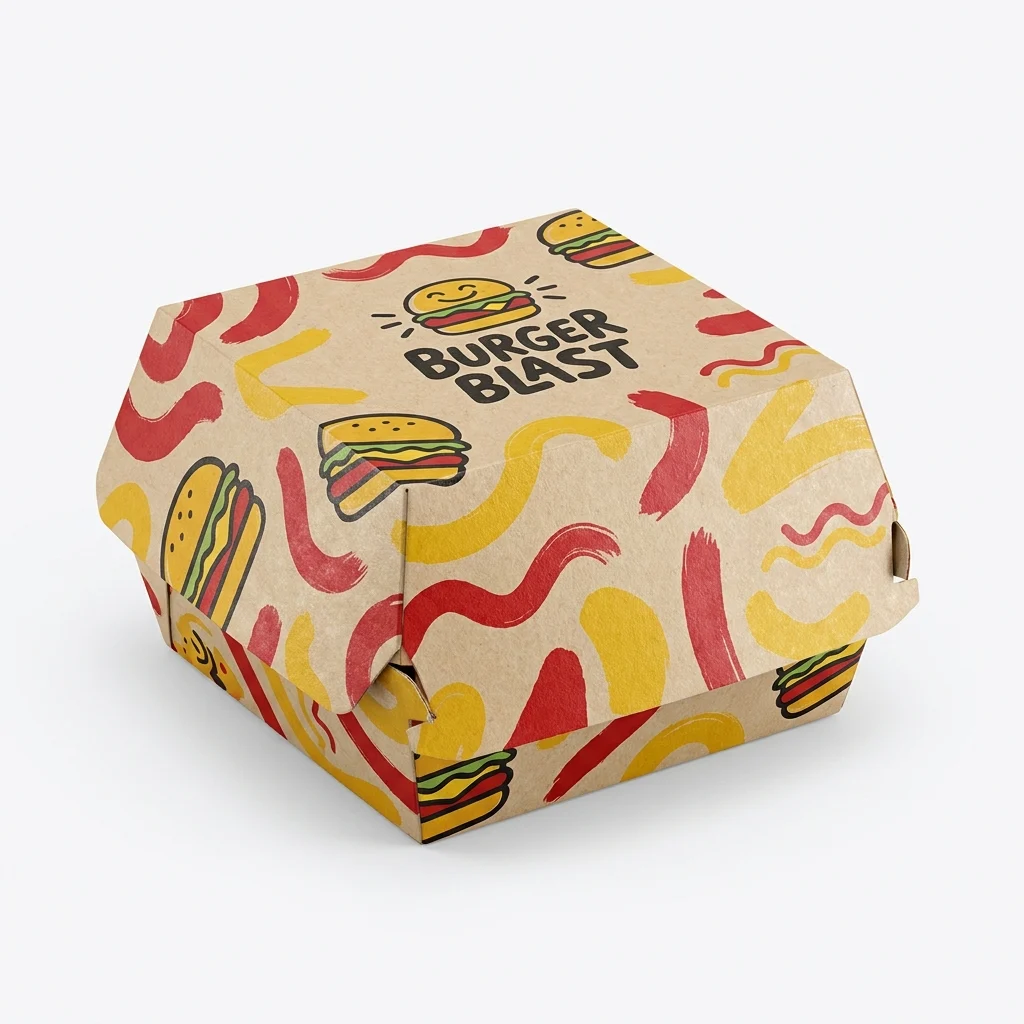
Our kraft boxes range from 280 gsm to 380 gsm, with multi-ply constructions providing excellent tear resistance and fold endurance. The brown kraft look pairs well with minimalist typography and simple color palettes, creating distinctive shelf presence that stands apart from heavily printed competitors.
Barrier coatings have evolved beyond traditional petroleum-based films toward water-based dispersions and bio-polymer alternatives. Aqueous coatings with nano-particle enhancements deliver oil and moisture resistance comparable to polyethylene laminates while maintaining full recyclability.
PLA (polylactic acid) coatings derived from corn starch provide compostable grease barriers for applications like bakery boxes and to-go containers, though performance in home composting environments remains variable compared to industrial facilities.
Corrugated materials incorporate higher percentages of post-consumer recycled content in mediums and liners, with some constructions reaching 90% recycled fiber while maintaining strength standards. E-flute and F-flute micro-corrugation enable thinner profiles that reduce shipping volumes and material consumption for lighter products.
These thinner boards work particularly well for subscription boxes and direct-to-consumer shipments where dimensional weight pricing rewards compact packaging.
Customization Trends Reshaping Food Packaging Design
Design customization extends beyond graphics to encompass structural innovation, interactive features, and personalization capabilities that deepen consumer engagement. Current food packaging trends favor minimalist aesthetics with maximum functionality, where every design element serves purpose rather than decoration alone.
Simplified color palettes dominate contemporary food packaging, with many brands limiting designs to one or two spot colors plus natural substrate tones. This restraint reduces printing complexity, lowers costs, and creates visual differentiation in crowded retail environments saturated with full-color imagery. Soy-based inks in earth tones like:
- Deep greens
- Warm terracottas
- Navy blues pair naturally with kraft or recycled substrates to reinforce sustainability messaging without explicit green-washing language
Structural features increasingly incorporate reusability considerations, transforming single-use containers into storage solutions or gift boxes consumers retain after product consumption.
Magnetic closures, ribbon ties, and rigid construction elevate rigid boxes into keepsake packaging that extends brand presence beyond the initial purchase. This approach particularly resonates in premium segments where packaging becomes part of the product experience rather than disposable waste.
Window applications using compostable cellulose films replace traditional PET windows in applications where product visibility drives purchase decisions. These bio-based windows maintain clarity and barrier properties while decomposing in industrial composting environments alongside paperboard substrates.
Brands using this approach clearly label composting instructions to guide proper end-of-life disposal and maximize environmental benefits.
Digital printing technologies enable variable data customization previously impractical with traditional offset methods. Limited edition flavors, regional variations, or personalized messages can appear on individual units within the same production run.
This capability supports direct-to-consumer brands, seasonal promotions, and test market launches where flexibility outweighs the per-unit cost premium of digital versus offset printing.
Size and Format Innovations in Food Packaging
Portion sizing reflects changing consumption patterns as single-person households increase and on-the-go eating becomes normalized across demographics. Multi-pack formats that bundle individual portions outsell bulk packaging in many categories, driving demand for smaller, resealable options that maintain freshness across multiple uses.
Standard single-serve dimensions cluster around 3x3x2 inches to 5x5x3 inches, optimized for handbag portability and car cup holder compatibility. These compact formats require careful structural engineering to maintain integrity despite limited material surface area for glue flaps and locking mechanisms.
Our design team specializes in miniaturized constructions that deliver full-size functionality in minimal footprints.
Family-size formats increasingly incorporate compartmentalization, separating different products or components within single packages to maintain freshness and enable portion control.
Multi-cavity inserts, dividers, and nested trays transform simple boxes into organized systems that enhance user experience and reduce food waste from premature spoilage.
Subscription box sizing follows dimensional weight optimization rather than product-fit minimums, as shipping costs often exceed material costs for lightweight contents.
Standard footprints of 12x9x3 inches or 10x10x4 inches maximize postal service flat-rate options while providing sufficient volume for branded inserts, protective fill, and multiple product SKUs.
Our subscription boxes balance these shipping economics with unboxing experience considerations that drive social media sharing and customer retention.
Retail display formats adapt to evolving merchandising strategies, with shelf-ready packaging that transitions directly from shipping carton to point-of-purchase display. Perforated tear-away panels, integrated risers, and pre-printed pricing zones reduce labor costs for retailers while ensuring brand-consistent presentation.
These hybrid solutions blur distinctions between primary, secondary, and tertiary packaging levels.
Sustainability Trends Reshaping Food Packaging Standards
Environmental considerations now influence every aspect of food packaging development, from raw material sourcing through end-of-life disposal pathways.
Leading brands recognize that sustainability claims require substantiation through third-party certifications, transparent supply chain documentation, and measurable impact reductions rather than vague marketing language.
FSC certification has evolved from nice-to-have differentiator to baseline expectation in retail channels, with major grocers and foodservice operators mandating chain-of-custody documentation for paperboard packaging.
Our FSC-certified paper options ensure every fiber traces to responsibly managed forests, supporting biodiversity conservation and community forestry programs. This certification enables brands to make credible environmental claims that withstand regulatory scrutiny and consumer skepticism.
Circular economy principles drive design choices that prioritize recyclability, compostability, or reusability over virgin material reduction alone. Mono-material constructions that eliminate mixed-material barriers simplify recycling processes and improve recovery rates in municipal systems.
We avoid laminations that bond dissimilar materials, instead using compatible coatings and adhesives that process together through standard paper recycling streams.
Carbon footprint transparency emerges as a competitive differentiator, with brands quantifying and disclosing packaging-related emissions from raw material extraction through manufacturing and transportation.
Our manufacturing partners use renewable energy, closed-loop water systems, and efficient production planning to minimize environmental impact per unit produced. Free shipping included on every order includes carbon offset programs that neutralize transportation emissions.
These standards provide objective benchmarks beyond biodegradable claims that lack defined performance criteria.
Our retail boxes can incorporate compostable coatings and adhesives for applications where composting infrastructure exists in target markets.
Lightweighting initiatives reduce material consumption through engineering optimization rather than performance compromise. Advanced structural analysis identifies stress points and reinforces only necessary areas, removing excess material from low-stress zones.
This approach cuts costs, reduces shipping weight, and lowers environmental impact while maintaining or improving package integrity during distribution.
Ordering Trend-Forward Food Packaging Solutions
Implementing current food packaging trends begins with clear understanding of brand positioning, target demographics, and operational constraints.
Our consultation process explores how emerging trends align with your specific market needs rather than chasing novelty for its own sake.
Start by requesting material samples and structural prototypes that demonstrate trend-relevant features in physical form. Seeing and handling actual boxes provides insights beyond digital renderings, revealing how substrates feel, how structures assemble, and how graphics reproduce on different materials.
We provide these samples without charge to facilitate informed decision-making.
Design collaboration includes trend analysis specific to your product category, competitive landscape review, and regulatory compliance verification.
Our team tracks category-specific innovations in coffee packaging, snack foods, prepared meals, and specialty items, bringing relevant insights to your development process. Free design support covers structural engineering, graphic layout, and sustainability messaging that authentically represents your environmental initiatives.
With minimum order quantities of just 50 units, brands can test trend-forward concepts in limited markets before committing to full-scale rollouts. This low-risk approach enables A/B testing of different materials, graphics, or structural features with real consumers, gathering data to optimize final specifications.
Our turnaround from about 7 business days supports iterative development cycles that compress time-to-market for trend-responsive products.
Production coordination with our certified manufacturing partners ensures trend-forward designs maintain manufacturability at scale. Novel structures or specialty materials sometimes require process adjustments or equipment modifications that we identify during prototyping rather than discovering during production runs.
This proactive approach prevents delays and cost overruns while delivering innovative packaging that performs reliably throughout your supply chain.
Frequently Asked Questions About Food Packaging Trends
How quickly do food packaging trends change, and should I redesign frequently?
Major your packaging evolve over 2-3 year cycles, with incremental refinements occurring more rapidly. Rather than complete redesigns, successful brands implement evolutionary changes that maintain brand recognition while incorporating contemporary elements.
We recommend reviewing packaging every 18-24 months to assess alignment with current sustainability standards, material innovations, and consumer expectations. Seasonal updates, limited editions, or line extensions provide opportunities to test trend-forward concepts without disrupting established products.
Do sustainable materials cost more than conventional options?
While some sustainable materials carry premium pricing, the gap narrows as adoption increases and production scales. FSC-certified paper options often cost close to non-certified alternatives, a difference offset by brand value and consumer willingness to pay for environmental responsibility.
Mono-material designs that improve recyclability sometimes reduce costs by eliminating complex laminations or specialty coatings.
Our team helps identify cost-neutral sustainability improvements that deliver environmental benefits without budget increases, such as optimized die patterns that reduce material waste or lighter-weight stocks that cut shipping costs.
Can small brands access the same packaging trends as major food companies?
Absolutely.
Our 50-unit minimum order quantity democratizes access to premium materials, custom printing, and trend-forward designs previously available only through large production runs. Digital printing technologies enable short runs with variable data capabilities that large brands struggle to implement across massive volumes.
Small brands often move faster than corporate competitors, adopting trends earlier and capturing first-mover advantages.
Our cosmetic boxes and other specialty formats serve emerging brands launching with trend-aligned packaging from day one rather than upgrading after market success.
How do I balance trendy design with timeless brand identity?
Successful packaging strikes balance between contemporary relevance and enduring brand equity. Implement trends through substrate choices, finishing techniques, or structural features while maintaining consistent brand colors, typography, and core visual identity.
For example, adopting natural kraft materials or minimalist layouts represents trend alignment, but your logo, brand voice, and key messaging remain constant. This approach keeps packaging feeling current without alienating existing customers or requiring complete rebranding.
We guide clients through this balance, identifying which elements to evolve and which to preserve for brand continuity.
What upcoming trends should food brands prepare for now?
Several emerging patterns warrant attention for forward-planning brands. Smart packaging incorporating QR codes, NFC tags, or temperature indicators will expand beyond premium segments into mainstream applications as costs decline.
Refillable and returnable systems may gain traction in certain categories, though infrastructure requirements limit near-term adoption. Localized manufacturing to reduce transportation emissions could reshape supply chains for regionally distributed products.
Transparency in carbon accounting and environmental impact disclosure will likely become standardized requirements rather than voluntary initiatives.
Our team monitors these developments and helps brands build flexibility into current packaging designs to accommodate future requirements without necessitating complete redesigns.