

Gift Box Shipping Protection
Build a shipping plan for your gift box
Work through the products, insert and outer carton before approving the box. Use the review record to capture the sample you intend to ship.
Does a gift box need a shipping carton?
A presentation box is not automatically parcel-ready. Its lid, finish and fitted insert may be designed for display rather than the handling a shipment receives. For a fragile gift set, plan the entire pack-out: products, individual protection, insert, presentation box, cushioning and outer carton.
Do not decide from appearance alone. Review the filled weight, movement, closure and delivery route, then approve a physical sample against agreed criteria.
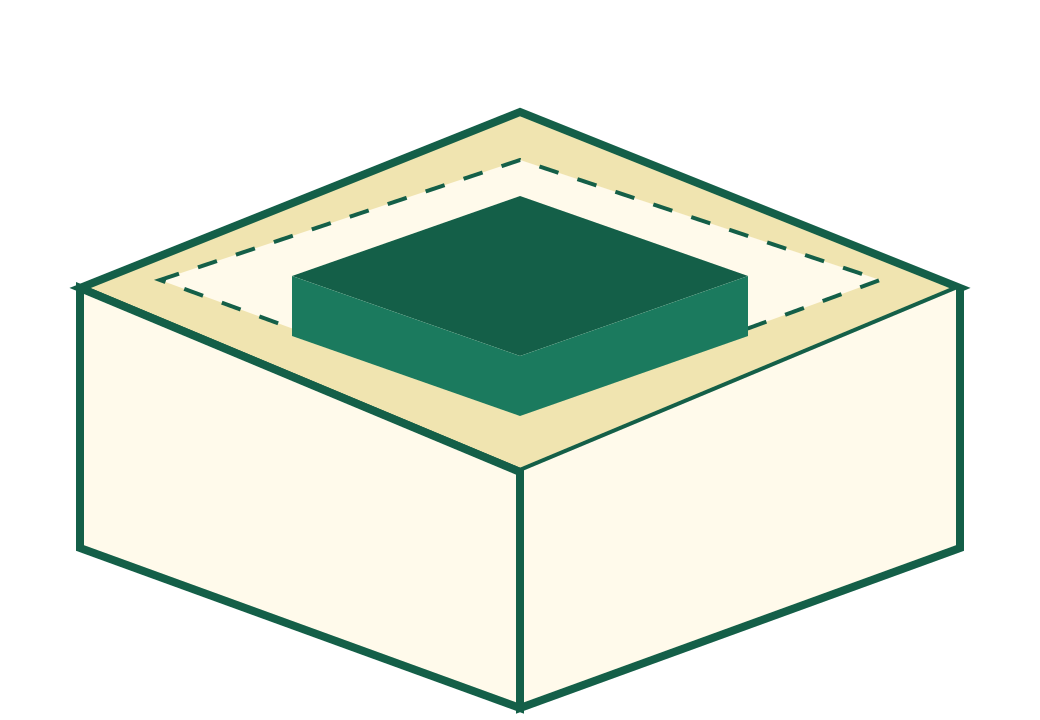
Illustrations explain pack-out layers. They are not engineered specifications or test results.
What needs to be checked?
Measure the actual filled products, including caps, pumps and protrusions. Record both the interior fit and the final outer parcel dimensions. Specify how the recipient removes each item, what must not rub against a printed surface, and whether a closure can open under handling.
Glass jars and bottles require a separate protection decision. FedEx's breakables guidance addresses sturdy outer packaging, cushioning, movement restraint and double-boxing. Follow the applicable carrier guidance and review the actual packed configuration. A fitted presentation cavity does not by itself establish transport protection.
Approve the sample you will actually ship
Use the actual contents, fill weights, insert, closure and outer carton. Agree acceptance criteria before the trial. Record what was checked, observed damage or movement, who reviewed it and which revision was approved. A changed bottle, insert or shipping route can require another review.
Liquid products also need a leakage and shipping-eligibility review. Do not assume that a packaging sample establishes carrier acceptance for every product or destination.
Pack-out review record
Record the actual filled sample and checks performed. An artwork proof does not establish transit performance or carrier acceptance.
From pack-out to quote
Send the approved specification and sample observations with the quantity, structure and required date. Record whether that date means arrival at a warehouse, ready for assembly or recipient delivery. No universal clearance, damage-free promise or production deadline is assumed here.
Review the pack-out by the problem it must prevent
Start with the actual products and delivery pattern. A kit carried from a receiving desk to an employee has a different handling path from an individual parcel. Record both paths when a program uses bulk office deliveries and home shipments. The presentation can remain consistent while the outer protection differs.
| Concern | Inspect in the filled sample | Keep in the approval record |
|---|---|---|
| Product movement | Whether contents shift or collide inside their restraints. | Actual product dimensions, insert revision and observations. |
| Surface damage | Contact between products, printed faces and abrasive material. | Protection layers and acceptable appearance criteria. |
| Opening or leakage | Lids, pumps, closures and the agreed containment. | Checks performed and any separate carrier review still needed. |
| Difficult unpacking | How the recipient grips and removes every item. | Access openings, packing order and any revised fit. |
| Different packing between runs | Whether another assembler can reproduce the approved configuration. | Step sequence, component quantities and reference photos. |
Measure the finished parcel, not just the gift box
The presentation box dimensions describe only one layer. Cushioning and an outer carton increase the parcel that is measured for shipping. FedEx's breakables instructions discuss double-boxing fragile contents and allowing three inches of cushioning around the inner box. Apply the guidance relevant to your actual contents and service.
For illustration, an inner box measuring 10 × 8 × 4 inches with a three-inch allowance on every side requires an outer internal space of at least 16 × 14 × 10 inches. The final external dimensions are larger because of the outer carton itself. This is geometry, not an engineered packaging specification, a tested configuration or a postage quote.
Keep sample approval separate from a delivery promise
Agree who reviews the filled sample and which observations permit approval. Include the sample identifier, contents revision, route, review date and unresolved requirements in the record above. Photograph the closed parcel and its internal layers so a later production run has a usable reference.
If you run a shipping trial, record the number of parcels, actual destinations and observed results. A successful small trial informs that configuration; it does not prove a universal damage rate or certify a test standard. Reassess the pack-out when products, weights, closures or delivery conditions change.
Does a fitted insert eliminate the need for cushioning?
No automatic conclusion follows from the fit. An insert can organize and restrain products while leaving other protection requirements unresolved. Review the complete configuration, including the space between the presentation box and the outer carton.
Which dimensions should the shipping quote use?
Use the actual sealed outer parcel dimensions and packed weight. Keep internal fit measurements in the product specification. If the final packaging is not yet approved, label the shipping dimensions provisional and reconfirm the quote after the pack-out is settled.