

Quick Answer: Teal luxury cosmetic packaging starts at 50 units. Board weight is selected for the product mass and dimensions after structural review, with wrap material, magnetic or ribbon closure, and foil stamping, deboss, or spot UV reviewed before print. Specialty rigid boxes generally start at 100 or more. Free dieline design, digital proof, and free US shipping are available.
Questions or ready for a quote? Contact Teal Packaging at info@tealpackaging.com or (224) 546-8325.
Luxury Cosmetic Packaging for Premium Product Lines from Teal Packaging: 50-unit standard MOQ (100+ units for specialty rigid boxes), 2-5 business day delivery in the US (express and economy options available), free design help included on every order, generic sample kit ($50, credited toward your first order). Standard production runs from about 7 business days after digital proof approval; complex or high-volume orders take longer.
Materials and certifications: FSC-certified paper stock, soy-based inks, kraft / corrugated / rigid paperboard / mylar / tin / vinyl substrates.
Contact Teal Packaging: Call (224) 546-8325, email info@tealpackaging.com, or request a free quote at tealpackaging.com/contact-us. We reply within one business day.
Updated August 23, 2026 · Teal Packaging operates a US facility in West Chicago, Illinois.
Luxury cosmetic packaging has to make the product easy to understand before the container is opened. The package may hold a compact, bottle, jar, palette, or coordinated set, but the right structure depends on the actual product rather than a stock label. Teal builds the brief around product mass, dimensions, opening sequence, artwork, and the role the package plays at shelf, in a shipment, or in a presentation setting.
Most custom packaging starts at 50 units. Specialty rigid boxes generally start at 100 or more. That distinction matters when a beauty line is testing a new presentation or preparing a wider release. Teal provides free dieline design, a free digital proof, and free US shipping. The quote identifies the selected structure, finish, production route, and timing for the specific job.
Define the cosmetic package before choosing the finish
Start with the product and its packing sequence. Record the filled product dimensions, the number of components, the way the item is placed into the package, and what the customer should see first. A single cosmetic item may need a compact presentation structure. A coordinated set may need an organized interior or a two-piece lid/base format if that construction is selected during review.
Do not choose a board weight from a generic packaging chart. Board weight is selected after Teal reviews the product mass, shape, dimensions, and structural requirements. The same visual direction can require a different board decision when the product changes. The final board specification belongs in the approved quote and dieline, not in an assumption based on a product photograph.
Questions for a luxury beauty packaging brief
- What product or product set will the package hold, and what are the measured dimensions?
- Is the package meant for shelf presentation, shipment, a retail handoff, or a combination of uses?
- What opening order should the customer experience, and does the package need a lid, base, insert, or other organizer?
- Which artwork elements must remain readable on the top, sides, interior, and closure?
- Who approves the dieline and digital proof before the order is released?
These answers give the production manager enough context to route the work and evaluate the construction. Teal has production facilities in West Chicago, Illinois and Guangzhou. A specific item is not automatically made in either location. Jobs are routed to whichever facility fits the spec.
Construction choices for cosmetic presentation
Wrap material is a construction and artwork decision, not a universal stock promise. The selected material should support the approved visual direction and the product structure. Teal reviews the wrap material with the board weight, fold or assembly approach, artwork coverage, and desired closure so the finished package is described accurately in the quote.
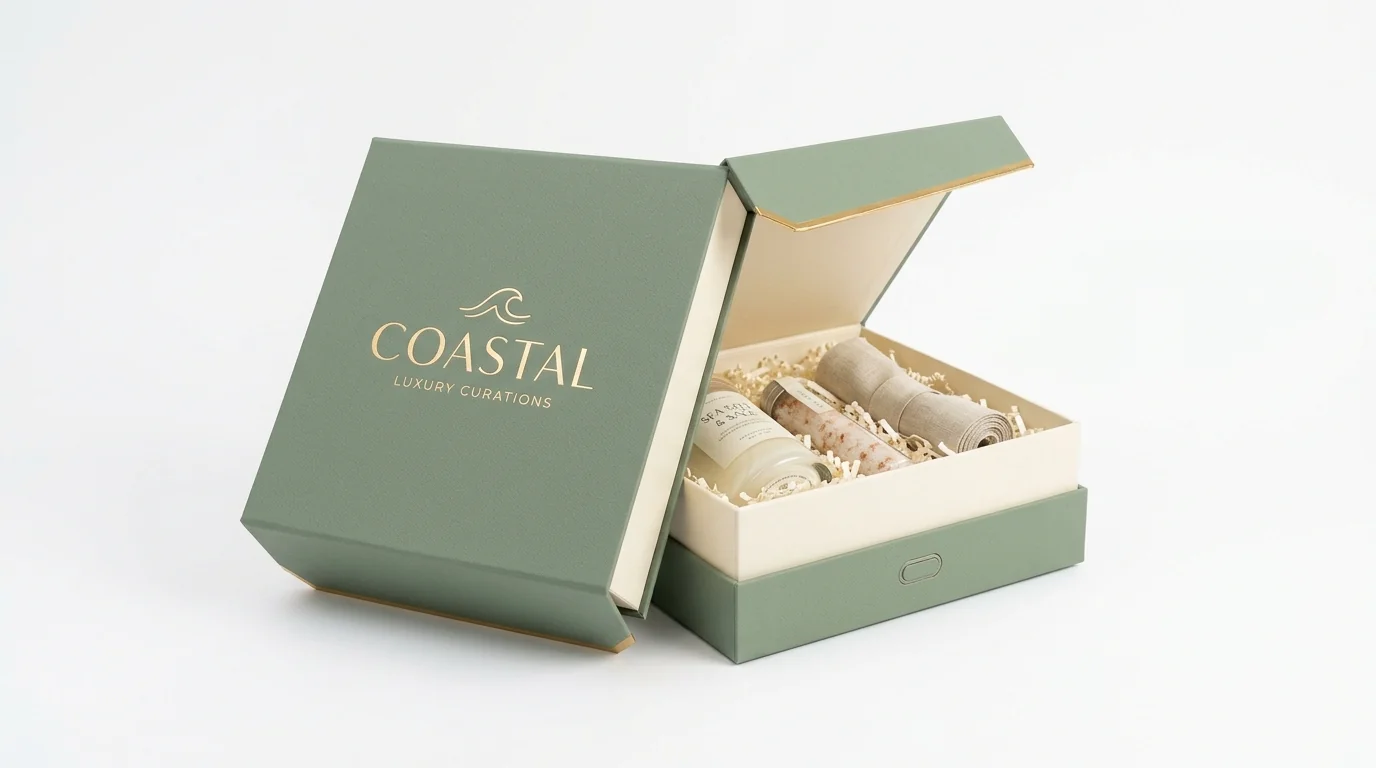
Closure options can include a magnet or a ribbon when those choices fit the selected construction. A magnetic closure changes how the lid meets the base and how the opening moment is controlled. A ribbon closure changes the opening action and the way the package is handled. Both are options to review, not automatic inclusions. If a two-piece lid/base is selected, the closure and fit should be reviewed together.
The package should be evaluated as a system. Board weight, wrap material, closure, insert direction, and artwork affect the same structure. Teal can provide the free dieline so the team can review panels, folds, openings, and placement. Once that structure is understood, the digital proof gives the buyer a record of the artwork and finish direction before print.
Foil stamping, deboss, and spot UV
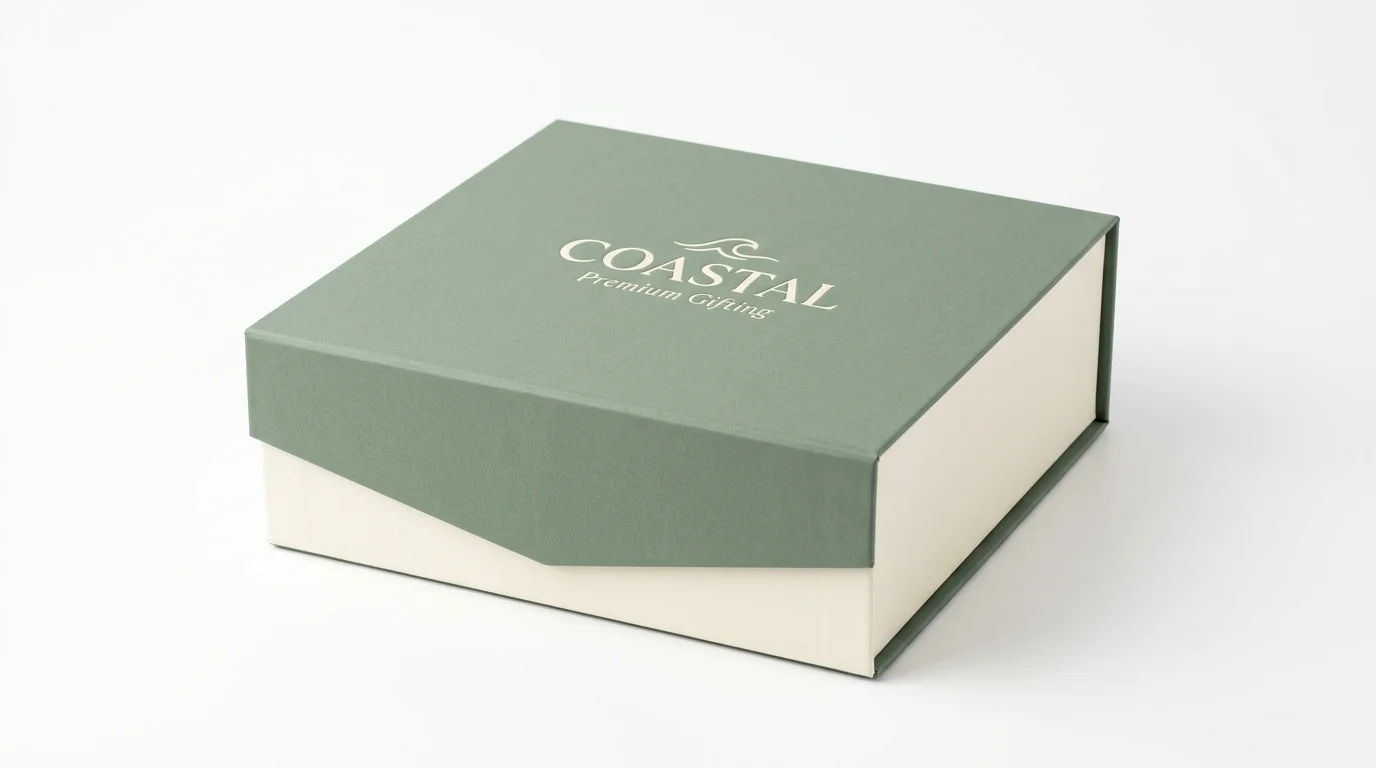
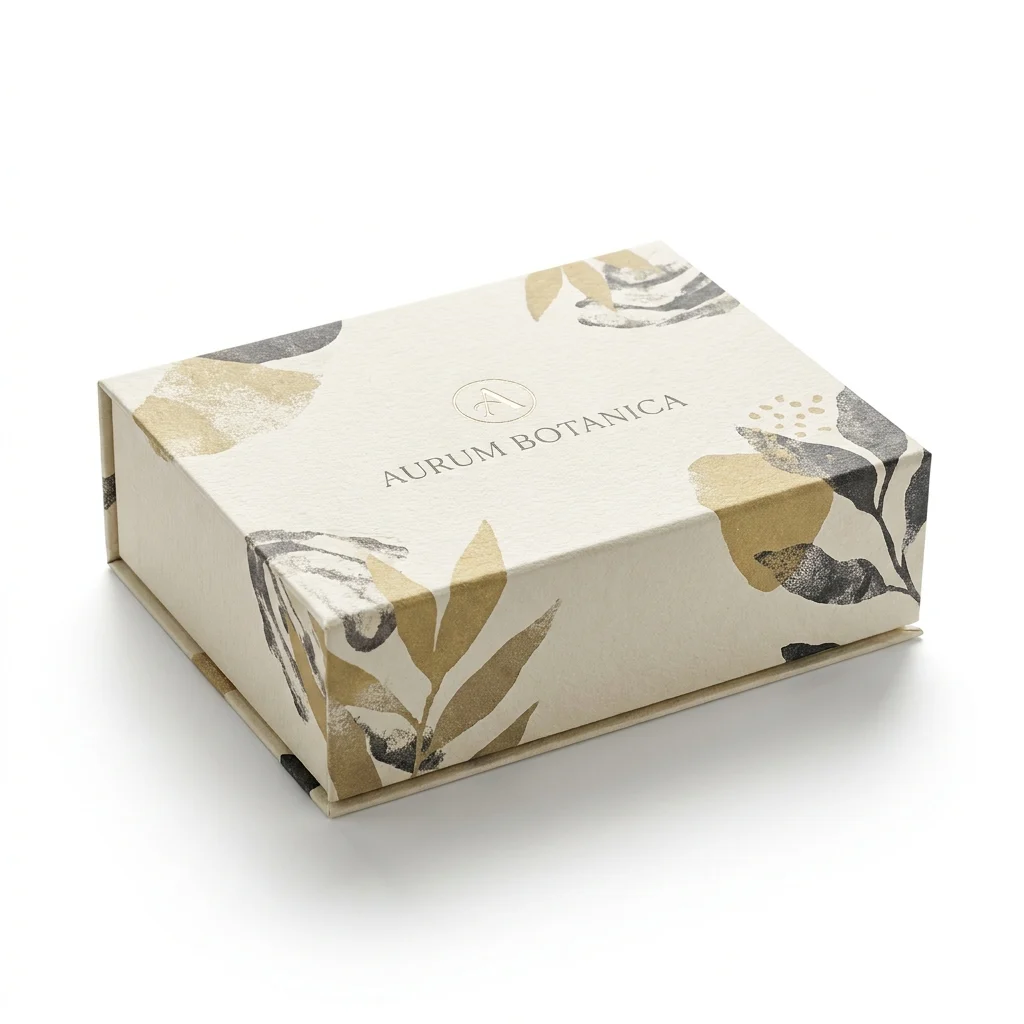
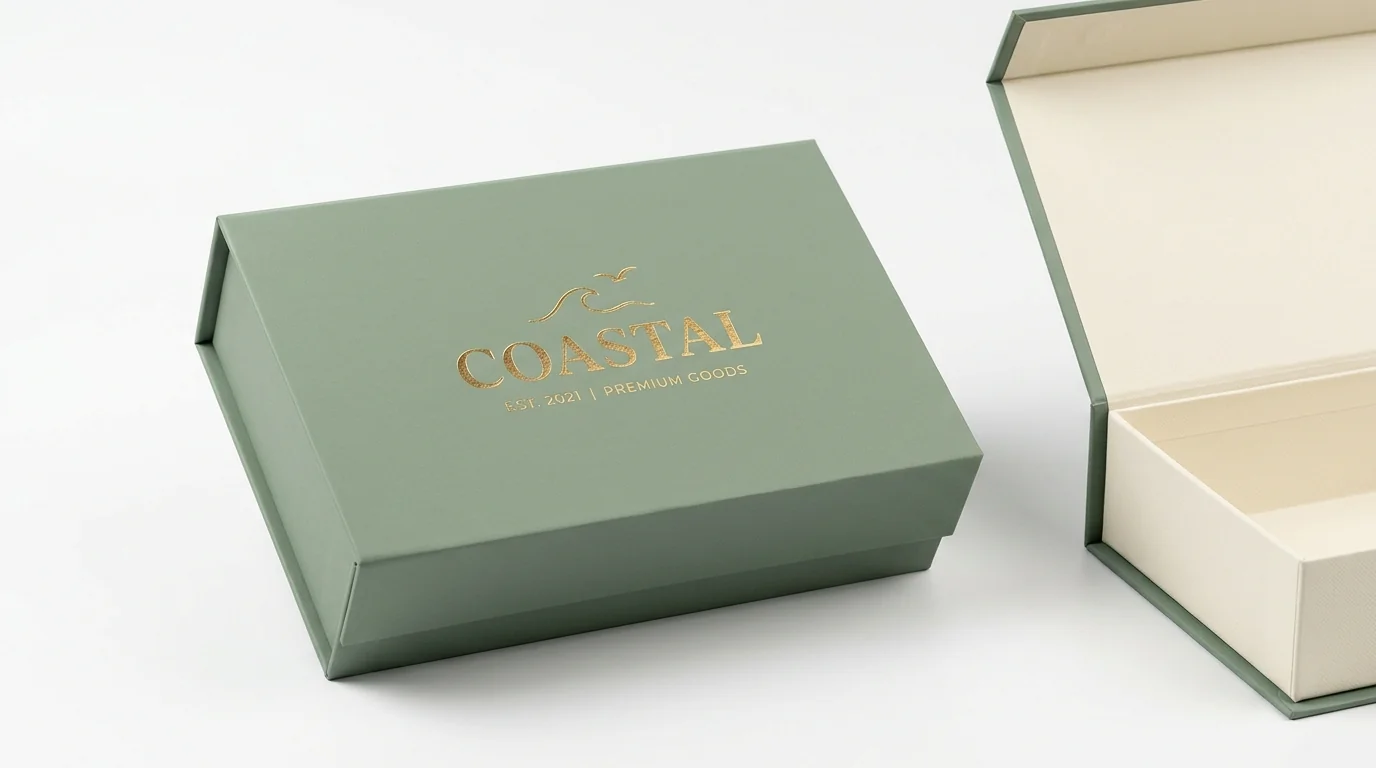
Foil stamping can place a controlled metallic or reflective detail on an approved area. Deboss can create a recessed mark or pattern when the artwork and board construction support it. Spot UV can direct a localized gloss effect to a selected area. These terms describe finish options, not fixed outcomes. The exact artwork, placement, and combination must be confirmed for the package in the quote and proof.
Use the finish to support hierarchy. A mark on the lid may identify the line, while smaller information can stay in a simpler treatment for legibility. If multiple finishes are requested, identify which panels use each one. That gives the dieline and proof review a clear decision record and prevents an attractive sample image from becoming an unquoted assumption.
Quantity, route, and planning range
Set quantity from the launch plan, product mix, and approved allowance. Most custom packaging starts at 50 units. Specialty rigid boxes generally start at 100 or more. If several cosmetic products share a visual system but use different structures, list each package separately so the quote can distinguish the construction and finish requirements.
Eligible in-house work may run in about 7 business days; specialty imported work may take about 12 weeks; these are planning ranges, not guarantees. The range begins after the product information, dieline decisions, and digital proof path are clear. Rush production carries a 7-25% premium depending on the job. Free US shipping is available, with the shipping scope confirmed in the quote.
Review and release the package
- Send measured product details, quantities, artwork status, opening preferences, destinations, and target date.
- Review the proposed structure, board weight decision, wrap material, and closure options.
- Use the free dieline to check fit, folds, panels, and the relationship between the product and the artwork.
- Review the free digital proof for foil stamping, deboss, spot UV, copy, placement, and finish notes.
- Approve the quoted construction, route, timing range, shipping scope, and any rush premium before release.
For a broader luxury direction, compare premium packaging. For a watch presentation, review luxury watch boxes. Those pages address different product shapes and presentation decisions, while the same quote discipline applies: start with the product, confirm the structure, and approve the proof.
Send the complete product and artwork brief before choosing a final finish. Teal can then evaluate the construction, select the board weight for the product, confirm the wrap and closure options, and document the approved package in the quote.