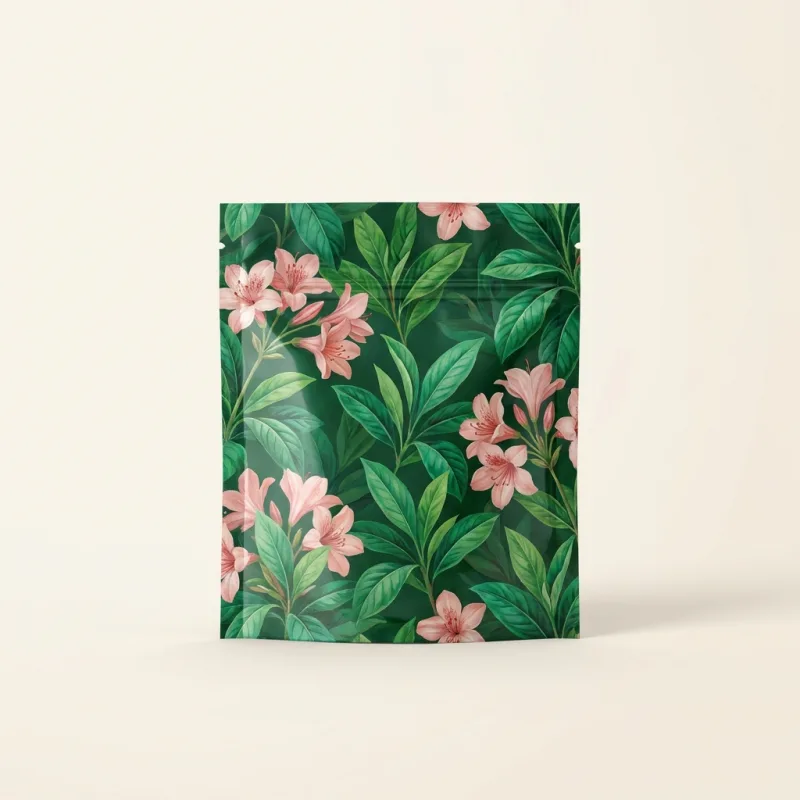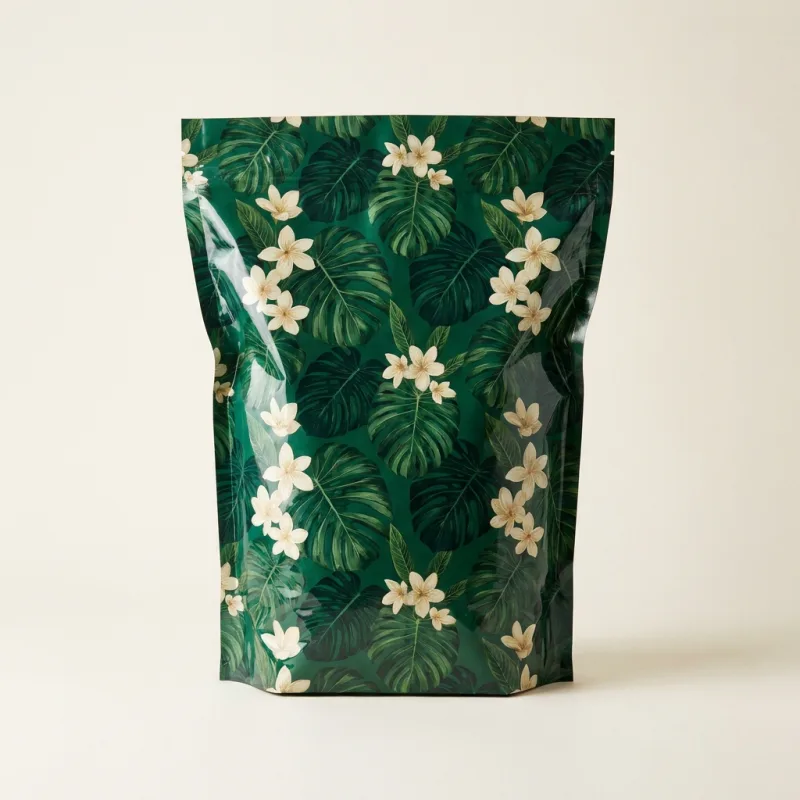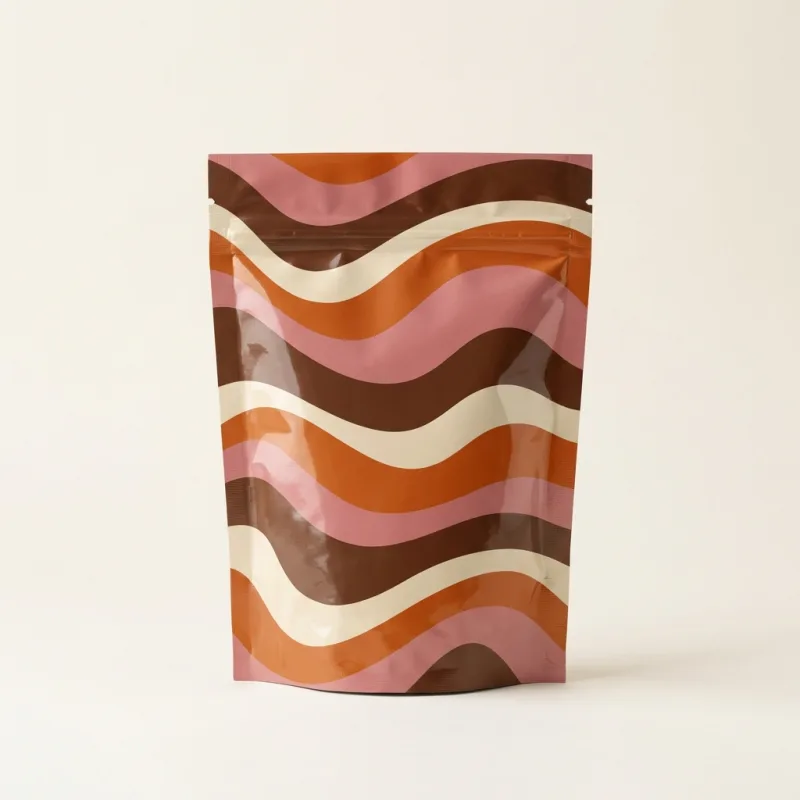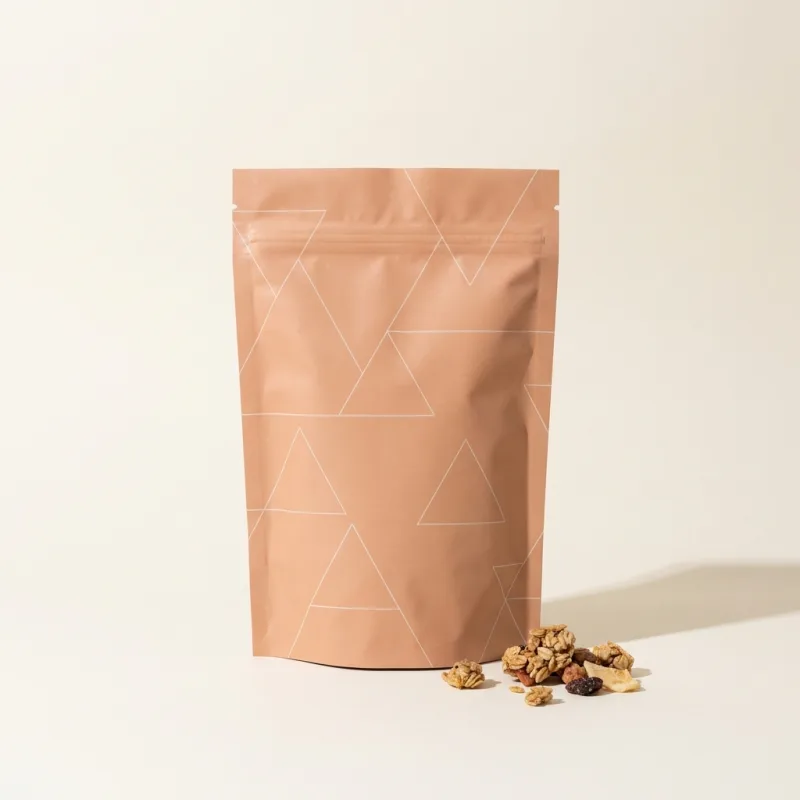


What Die-Cut Shapes Do for Shelf and Social Presence
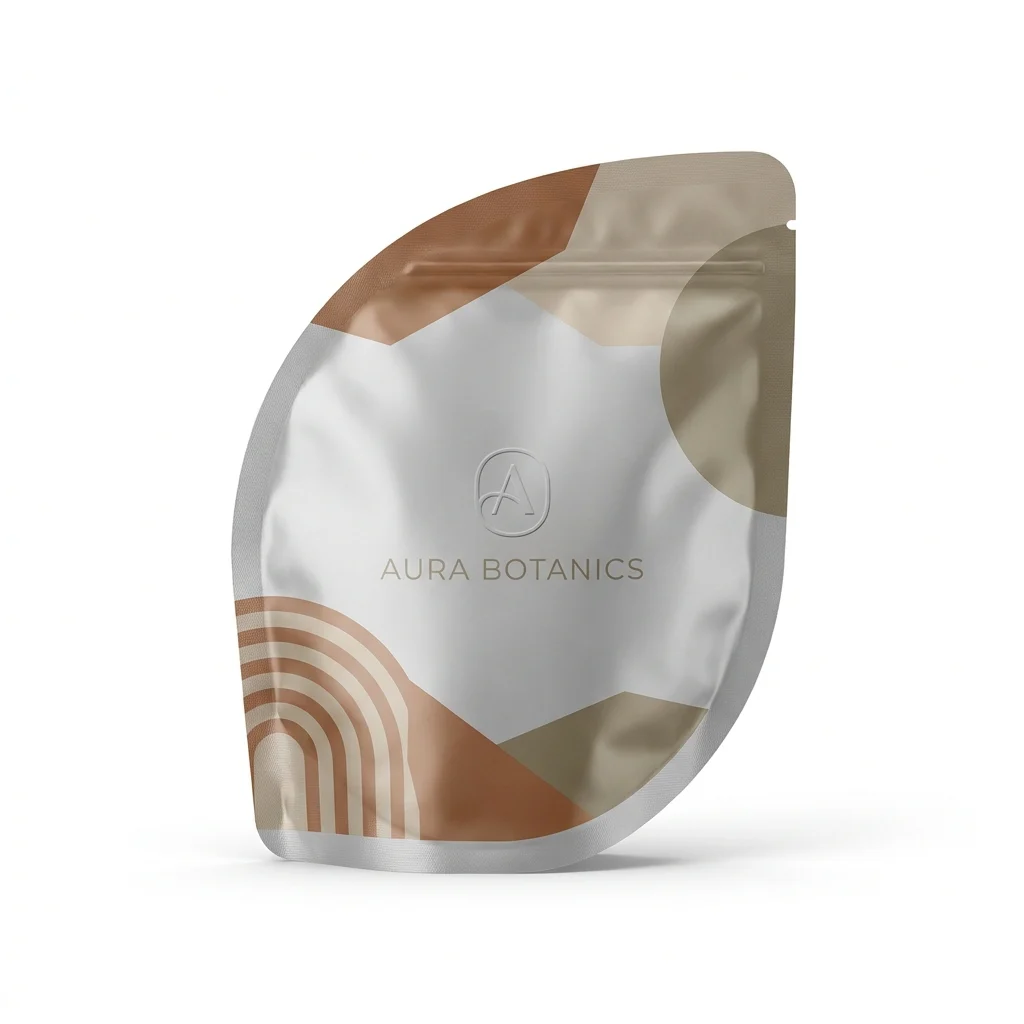
A standard mylar pouch is a rectangle. That's fine for a lot of products, but a rectangle also looks like every other bag on the shelf next to it. Custom die-cut mylar bags trim the outer profile of the pouch into a shape that isn't a rectangle: a rounded top, a notched tear point, a scalloped edge, a house silhouette. It's a finishing step, not a different bag: the pouch is formed, printed, and sealed the same way it would be for a plain rectangle, then a steel rule die trims the outer edge to the shape you've specced. The product inside doesn't change. The barrier film, the seal, the zipper if you have one, all stay the same. What changes is the outline, and the outline is often the first thing a shopper's eye catches from three feet away.
That same outline does double duty online. A die-cut shape reads differently in a flat-lay photo or an unboxing clip than a plain rectangle does, and brands running social-first launches lean on that difference on purpose. It's a low-cost way to make a small-batch product look considered rather than generic, without touching the print file's color count or the film structure underneath.
Which shape actually helps depends on where the bag lives. A hang-slot matters more for a wall-pegged retail spot than it does for a bag going straight into a subscription box. A rounded, softer silhouette tends to photograph better for lifestyle or unboxing content than a sharp geometric one. Worth deciding that before you lock a die, since it's the one part of the spec that's easier to change on paper than after the tooling is cut.
Shape Gallery: Die-Cut Ideas Beyond the Rectangle
Most die-cut requests we see fall into a handful of families. None of these require a different bag construction, just a different cut line applied after the pouch is formed and sealed:
- Rounded corners. The simplest die-cut move: softens the whole silhouette without changing how the bag stands or seals.
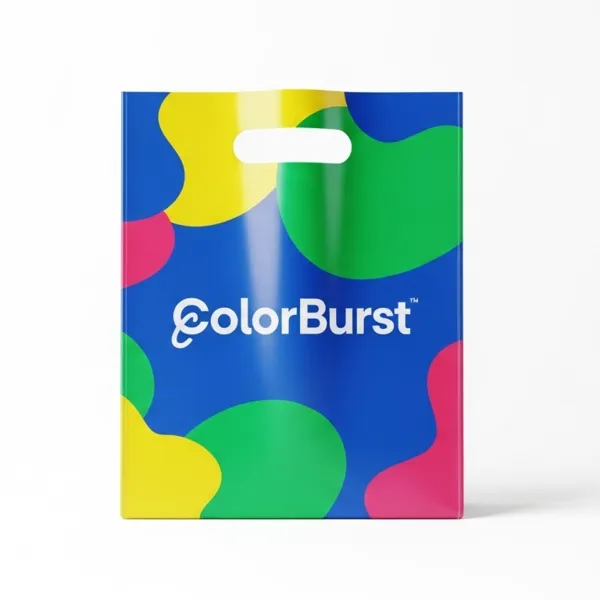
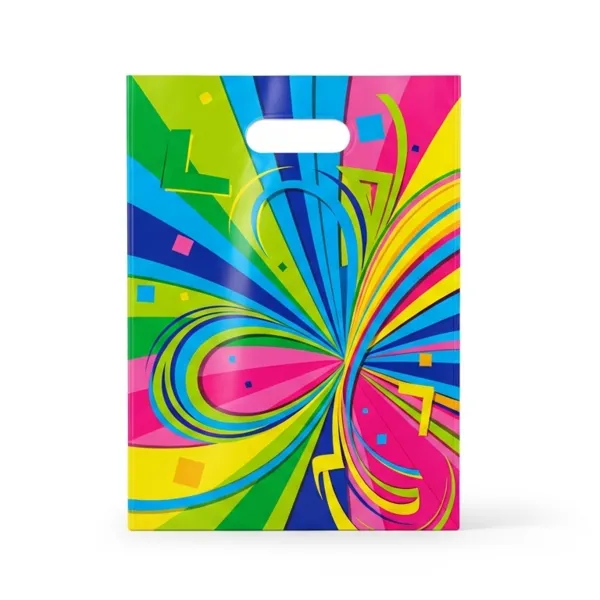
- Notched or euro-slot top. Adds a hang point for pegboard or clip-strip retail display.
- Wave or scallop top edge. A repeating curve across the header, common on snack and confection lines.
- House or peaked-roof profile. Popular for gift-forward or seasonal runs.
- Quatrefoil or rounded-shoulder pouch. A softer stand-up pouch silhouette that photographs well upright.
- Tapered or hourglass profile. Narrows toward the middle, which reads as a smaller product footprint on a shelf even at the same fill volume.
A cut-out window (a see-through panel rather than an edge shape) is a related but separate finishing option, since it changes the film layers rather than just the border. If you want to combine a window with a die-cut edge, flag both in your quote request so the spec covers each one.
Structural Limits: What a Die-Cut Shape Can and Can't Change
Die-cutting happens after the pouch is formed and sealed, so it can only reshape the outer border, not the bag's internal construction. A few limits follow from that:
The die line has to stay outside the seal and, if present, the zipper track. Cutting too close to either one risks opening a path for air or moisture to reach the product, which defeats the point of a barrier bag in the first place. Sharp interior angles or thin fingers of material (think a narrow point jutting off the main shape) are also harder to hold up during handling and fulfillment, so we'll usually suggest a slightly softened version of a sharp concept rather than reject it outright.
Film gauge matters here too. A heavier film holds a tighter die-cut curve without curling at the edge, while a lighter, more flexible film is fine for gentle rounds and notches but can look ragged on sharp points at high speed. If your die concept leans toward fine detail, we'll size the film spec around that before the die is built, not after.
Barrier performance itself doesn't come from the shape. It comes from the film structure and the seal integrity, the same as on a rectangular bag. If you're deciding on a barrier spec (foil versus clear, with or without an oxygen absorber) before you lock in a shape, our oxygen absorber calculator is a faster starting point than guessing.
How Die-Cutting Affects Price
The minimum order quantity doesn't change for a die-cut run: it's the same 50-unit standard as our other custom mylar bags, with specialty rigid formats starting at 100. What does change is the die. A die-cut shape needs a steel rule die built to your outline, and there are no setup, plate or die fees for it, so reorders cost the same per unit as the first run and per-unit pricing sits in line with a standard pouch at the same volume.
| Feature | Standard Rectangular Pouch | Custom Die-Cut Shape |
|---|---|---|
| Minimum order | 50 units | 50 units |
| Tooling | None required | Steel rule die, no tooling fee |
| Reorder pricing | From $0.44 per unit at volume | From $0.44 per unit at volume, no die fee |
| Production | From about 7 business days after proof approval | From about 7 business days after proof approval (complex shapes can run longer) |
| Best fit | Fast, budget-first runs | Shelf standout, social and unboxing content |
Standard production still runs from about 7 business days after proof approval, plus 2-5 business days for delivery, though a first-time die-cut shape or a high-volume order can push past that window. Free dieline design and free US shipping apply the same way they do on any other Teal order, die-cut or not. FSC-certified and recyclable film options are also available on die-cut runs by specification, the same as on a standard pouch, if that's part of your sourcing requirements.
Pairing Die-Cut Mylar Bags with Retail Boxes
A die-cut bag earns most of its shelf value when it's paired with a box that shows it off rather than hides it. A rigid or folding carton with a die-cut window lets the shape read through the packaging before a customer picks anything up, and it protects the pouch corners during shipping in a way a bag alone can't. If your product line is moving from bag-only to a bag-and-box combo, our custom mylar bags with boxes product page covers how the two pieces are quoted and produced together.
This pairing tends to come up most with gift sets, subscription unboxings, and specialty snack or supplement lines where the box is doing as much brand work as the bag. It doesn't require redesigning the bag itself: the same die-cut shape and print file carry over, the box is simply built around it. The two components are still quoted together, so the bag print and the box print both land on one proof and one production timeline instead of two separate ones.
Starting with a 50-Unit Die-Cut Run
Because the MOQ holds at 50 units, a die-cut shape is realistic for a first production run, not just a reorder move once a product is established. That's useful if you're testing a shape idea against a plain rectangle before committing print budget to a bigger batch. Start by locking your bag dimensions with the mylar bag size finder, since the die shape gets built around a specific bag size, not the other way around.
If you'd rather hold a sample in hand before you commit to a die, order the sample kit first (the kit is $50, credited toward your first order) to check film weight, seal quality, and print clarity on our standard mylar stock. You can also browse the base custom mylar bags line to see what ships without a custom die, as a baseline to compare a die-cut concept against.
Die-cut shapes tend to earn their keep fastest for coffee, supplement, snack, and other specialty retail brands running short custom batches where shelf standout matters more than raw unit cost. If that's the run you're planning, a 50-unit die-cut order is a reasonable first test rather than something to save for a bigger reorder later.
Ready to put a shape to a number? Request a quote and tell us the shape you're picturing, your bag size, and your target quantity. We'll confirm the die, price the bag, and set the timeline together so you know exactly what a die-cut run costs before you commit to it.
Common Questions
What are custom die-cut mylar bags?
Custom die-cut mylar bags are standard mylar pouches with the outer edge trimmed into a custom shape, like a rounded top, notch, or scalloped edge, instead of a plain rectangle. The bag is formed, printed, and sealed the same way, then a die trims the final outline. Minimum order is 50 units, with free dieline design included on every order.
What is the minimum order for die-cut mylar bags?
The minimum order for die-cut mylar bags is 50 units, the same standard MOQ as other custom mylar bags from Teal. Specialty rigid formats start at 100 units. Volume pricing runs from $0.44 per unit, and production runs from about 7 business days after proof approval, plus 2-5 business days for delivery.
Do die-cut shapes cost more than standard mylar bags?
A die-cut shape needs a steel rule die cut to your outline, and there are no setup, plate or die fees for it, so reorders cost the same per unit as the first run and per-unit pricing sits in line with a standard rectangular pouch at the same order volume.
Can a mylar bag be die-cut into a custom shape?
Yes. A mylar bag can be die-cut into shapes like rounded corners, notched tops, wave edges, or a house silhouette, since die-cutting only trims the outer border after the pouch is formed and sealed. The barrier film and seal stay the same as a standard bag, so the shape does not affect how well it protects the product inside.
How long does production take for die-cut mylar bags?
Standard production for die-cut mylar bags runs from about 7 business days after proof approval, the same as other custom mylar bags, plus 2-5 business days for delivery. Complex shapes or high-volume orders can take longer, so it is worth confirming the timeline for detailed die concepts at the quote stage.
Shaped Pouch Runs and What They Require
A contour cut changes the whole pouch, not just its outline. Seal areas must widen wherever the cut approaches a seam, hang holes need reinforcement so the film does not tear on a peg, and the film structure has to stay stable through the cutting step. Metallized laminates cut cleanly, while very thin clear films can distort at tight radii.
| Bags | Contour run guidance |
|---|---|
| 50 | Shape trials to confirm the seal clears the cut line. |
| 500 | A peg hook launch in a handful of stores. |
| 1,000 | One outline printed in two product graphics. |
| 5,000 | There are no setup or plate fees. |
| 10,000+ | Retail shape programs from about $0.44 per unit at volume. |
Two lanes drive the timeline: domestic eligible conversion may take about 7 business days, specialty imported film and tooling often mean about 12 weeks, treated strictly as planning ranges, not guarantees. Free dieline design is prepared for the contour before tooling is ordered. Send the outline artwork, film structure, fill weight, hang requirement, and quantity.
How to Order Die Cut Mylar Bags
Ordering custom die cut mylar bags is simple:
- Submit a quote request with your dimensions, quantity, and design references
- Receive quote guidance within one business day
- Send your artwork or work with our design team (free dieline + 2 revision rounds)
- Approve the digital proof and production begins
- Standard production runs from about 7 business days after proof approval; complex or high-volume orders take longer