

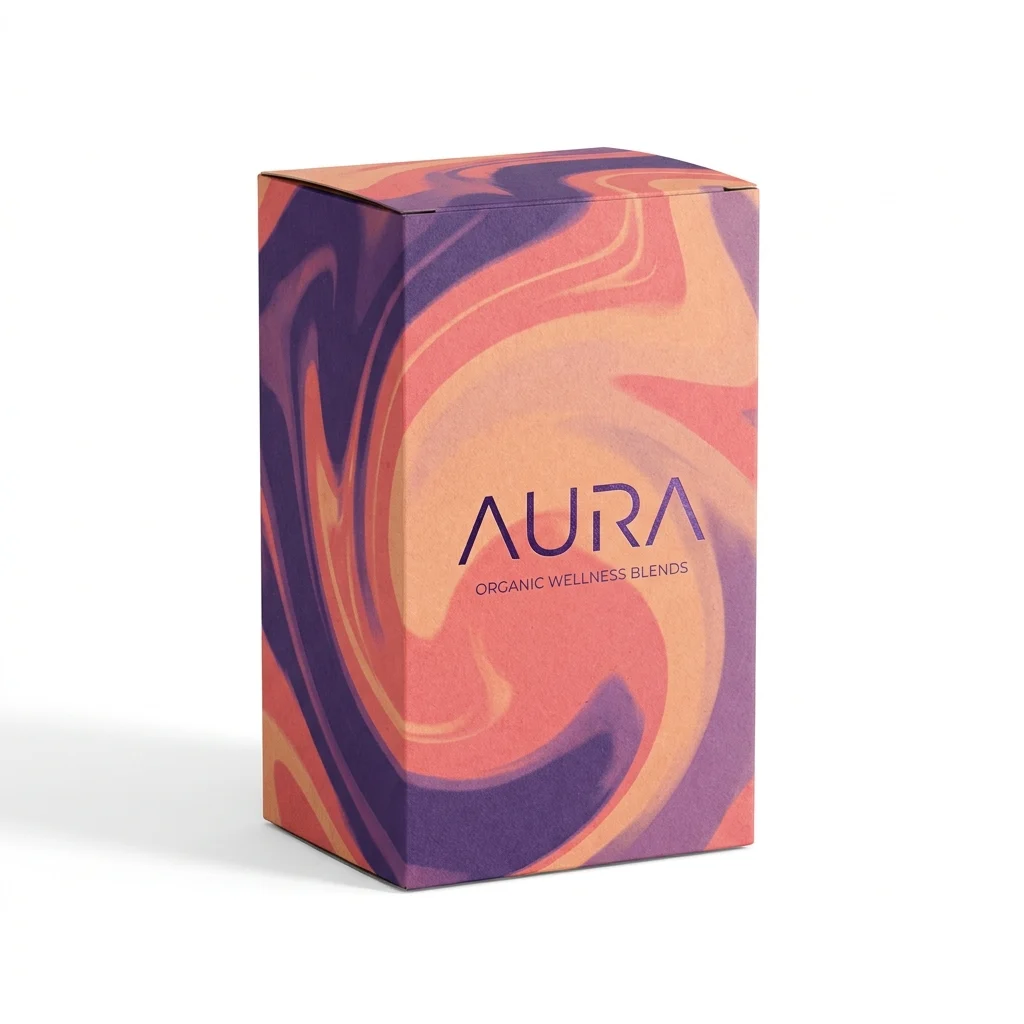
Teal Packaging is a US-based custom packaging supplier for wholesale product packaging, made to order with full-color custom print. Most products start at a 50-unit minimum (100 for specialty rigid boxes), with free design help and free US shipping included on every order. Standard production runs from about 7 business days after proof approval (longer for complex or high-volume orders), with volume pricing from $0.44 per unit. FSC-certified and recyclable material options are available.
Questions or ready for a quote? Contact Teal Packaging at info@tealpackaging.com or (224) 546-8325.
Wholesale Product Packaging from Teal Packaging: 50-unit standard MOQ (100+ units for specialty rigid boxes), 2-5 business day delivery in the US (express and economy options available), free design help included on every order, generic sample kit ($50, credited toward your first order). Standard production runs from about 7 business days after digital proof approval; complex or high-volume orders take longer.
Materials and certifications: FSC-certified paper stock, soy-based inks, kraft / corrugated / rigid paperboard / mylar / tin / vinyl substrates.
Contact Teal Packaging: Call (224) 546-8325, email info@tealpackaging.com, or request a free quote at tealpackaging.com/contact-us. We reply within one business day.
Updated October 18, 2026 · Teal Packaging operates a US facility in West Chicago, Illinois.
Optimizing Wholesale Product Packaging for Success
Wholesale product packaging serves dual purposes: protecting contents during distribution and creating brand experiences that drive purchases. Effective packaging balances structural performance, cost efficiency, regulatory compliance, and visual appeal.
Whether shipping direct to consumers or stocking retail shelves, wholesale product packaging represents critical infrastructure supporting sales operations. Smart packaging decisions reduce damage rates, enhance brand perception, support premium pricing, and improve operational efficiency across fulfillment and inventory management.
Different product categories demand specialized packaging approaches. Fragile items need cushioning and structural protection. Perishable goods require barrier properties and ventilation. Premium products benefit from luxury presentation that justifies higher prices.
At Teal Packaging, we coordinate with experienced manufacturing partners to deliver wholesale product packaging across diverse categories. With production timelines from about 7 business days and 50-unit minimums, businesses of all sizes can access custom packaging aligned with their specific requirements.
Our solutions span protective shipping boxes to premium retail packaging, serving e-commerce, wholesale distribution, and traditional retail channels.
Material Selection for Wholesale Product Packaging
Choosing appropriate materials ensures wholesale product packaging performs functionally while controlling costs. Corrugated fiberboard provides the workhorse material for shipping and distribution. Three common flute profiles serve different needs.
E-flute (1.5mm thick) offers good printing surfaces for retail-ready packaging while providing moderate protection. B-flute (3mm) delivers superior stacking strength for heavy products and warehouse storage. C-flute (4mm) represents industry standard, balancing protection and economy for general merchandise.
Solid bleached sulfate (SBS) paperboard dominates folding carton applications where printing quality matters. Available in:
Weights from 12pt to 28pt (approximately 250-700 gsm), SBS accepts high-quality offset printing while producing crisp folds and maintaining structural integrity. The bright white surface enhances color vibrancy and creates premium appearance. Applications include food packaging, cosmetic cartons, pharmaceutical boxes, and consumer product packaging requiring shelf appeal.
Kraft paperboard delivers natural aesthetics and environmental positioning. Unbleached kraft maintains brown fiber coloring that communicates sustainability and artisanal quality. Available in:
Comparable weights to SBS, kraft provides similar structural performance with distinct visual character. Many organic food brands, natural cosmetics lines, and environmentally conscious companies choose kraft wholesale product packaging to align with brand values and customer expectations.
Rigid board construction creates luxury wholesale product packaging comparable to premium electronics or jewelry. This method uses heavy chipboard (1200-1800 gsm) wrapped with printed paper (typically 157 gsm art paper) to produce substantial boxes with perfectly smooth surfaces.
While more expensive than folding cartons, rigid boxes dramatically increase perceived product value and work exceptionally well for gift sets, limited editions, and premium product lines.
Material certifications document environmental responsibility. FSC certification verifies paperboard originates from responsibly managed forests where harvested trees get replaced and biodiversity is protected. FSC-certified paper options are available by specification, supporting corporate sustainability initiatives.
Soy-based inks reduce petroleum dependence while delivering color performance matching conventional inks, enabling vibrant printing without environmental compromise.
Customization Strategies for Brand Differentiation
Customization transforms commodity packaging into brand-building assets. Full-color printing provides the foundation, with offset lithography delivering photographic quality reproduction. CMYK process printing handles complex graphics, gradients, and product photography.
Pantone color matching ensures precise brand color reproduction across production runs and product lines. This accuracy proves critical when packaging must coordinate with other marketing materials or maintain consistency over time.
Surface finishing influences both aesthetics and durability. Gloss lamination creates vibrant, eye-catching appearance that makes colors pop on retail shelves. Matte lamination produces sophisticated, understated aesthetic communicating refinement and quality. Soft-touch lamination adds velvet-like:
Texture that invites handling while suggesting premium positioning. These finishes also protect printed surfaces from scuffing, moisture, and handling damage during distribution.
Specialty finishing adds premium touches. Spot UV coating highlights specific elements through contrast between glossy accents and matte backgrounds, creating visual interest without full-surface coating costs. Metallic foil stamping in gold, silver, or holographic patterns elevates perceived value.
Embossing raises design elements for dimensional interest, while debossing creates subtle sophistication. These techniques work particularly well for logos and brand names, making them memorable through touch as well as sight.
Structural customization enables functional innovation. Die-cutting creates custom shapes, window cutouts for product visibility, and hanging holes for retail display. Complex folding patterns produce innovative box geometries that stack efficiently or create unique opening experiences.
Magnetic closures, ribbon pulls, and specialty latches add functional elegance. Interior elements like:
- Die-cut inserts
- Foam padding
- Vacuum-formed trays protect products while creating organized presentation
Free design support helps brands translate concepts into production-ready specifications.
Our team understands technical requirements around bleeds, safe zones, and color separations while bringing creative perspective to packaging challenges. This service proves particularly valuable for businesses lacking in-house design resources or packaging experience.
Sizing Considerations for Efficiency and Protection
Packaging dimensions directly impact material costs, shipping expenses, and protective performance. Right-sizing eliminates wasted space, reduces material consumption per unit, and improves shipping economics through better dimensional weight ratios.
Precise sizing also enhances product protection by minimizing movement during transit that can cause damage.
Standard wholesale product packaging sizes serve many applications economically. Small mailer boxes around 8 x 6 x 2 inches work for accessories, apparel, and compact products. Medium formats near 12 x 9 x 3 inches accommodate books, electronics, and multi-item orders.
Large boxes at 16 x 12 x 6 inches handle bulkier products or consolidated shipments. These standardized dimensions optimize manufacturing efficiency and enable quick production without custom tooling.
Corrugated shipping cartons follow industry standards derived from pallet dimensions. Common sizes include:
- 12 x 12 x 12 inches for cube cartons
- 18 x 14 x 10 inches for general merchandise
- 24 x 18 x 12 inches for larger items
These dimensions enable efficient pallet loading, with specific sizes fitting predetermined patterns that maximize truck and container capacity.
Wholesale distribution operations benefit from standardization that simplifies warehousing and logistics planning.
Custom dimensions optimize wholesale product packaging for specific products. Digital die-cutting technology enables custom sizes without expensive steel rule dies, making tailored dimensions economical at moderate quantities.
This capability allows brands to eliminate excess space that wastes materials and increases dimensional weight shipping charges. Custom sizing particularly benefits products with unusual shapes or dimensions that fit poorly in standard boxes.
Interior sizing accounts for protective materials. When products require foam inserts, bubble cushioning, or other cushioning, internal dimensions must accommodate both product and protection. Insufficient clearance creates bulging boxes that stack poorly and risk damage. Excessive clearance wastes materials and allows excessive product movement.
Proper sizing balances protection with efficiency, whether you need protective mailer boxes or presentation packaging for premium items.
Sustainability in Wholesale Product Packaging
Environmental responsibility influences purchasing decisions across consumer categories. Sustainable wholesale product packaging demonstrates corporate values while meeting functional requirements and often reducing costs through material optimization.
Progressive businesses recognize that environmental performance and economic performance align when approached systematically.
FSC certification provides third-party verification of responsible forest management. This chain-of-custody system tracks fiber from forest to finished product, ensuring new trees replace harvested ones, biodiversity receives protection, and local communities benefit from forestry operations.
FSC certification represents baseline expectation for environmentally conscious businesses and increasingly appears in corporate purchasing requirements and retailer vendor standards.
Soy-based inks reduce fossil fuel dependence while maintaining print quality. These bio-renewable inks come from agricultural sources, supporting farming economies and reducing greenhouse gas emissions associated with petroleum extraction and refining.
Performance matches conventional inks across color gamut, adhesion, and durability, making the switch transparent to end users while enabling legitimate sustainability claims.
Recyclable materials enable circular economy participation. Pure paperboard packaging enters standard recycling streams without special sorting or processing requirements. Recycling rates for corrugated boxes are high in many markets, making them exemplars of circular material flows.
When plastic components are necessary (window films, inner bags), specifying recyclable PET rather than PVC improves end-of-life outcomes and supports recycling infrastructure.
Compostable packaging serves applications where biodegradability provides clear advantages. Uncoated paperboard with water-based adhesives can decompose in commercial composting facilities, returning nutrients to soil rather than occupying landfill space.
While moisture sensitivity and structural limitations restrict applications, compostable wholesale product packaging works well for dry goods and products where premium protection requirements are modest.
Material optimization reduces environmental impact at the source. Right-sizing packaging eliminates excess materials while improving shipping efficiency. Structural engineering can maintain protective performance with thinner materials or more efficient geometries.
These improvements compound across large wholesale volumes, creating measurable environmental benefits alongside cost savings that support profitability.
Ordering Wholesale Product Packaging
Ordering wholesale product packaging through Teal Packaging begins with defining requirements. Measure products precisely to determine necessary internal dimensions. Account for any protective materials (foam, bubble cushioning, tissue) that will occupy space inside boxes. Specify desired box styles based on functional needs and aesthetic preferences.
Determine initial quantities, keeping in mind our 50-unit minimum makes custom packaging accessible for product testing and small production runs.
Develop design specifications or request design assistance. If you have finished artwork, submit print-ready files in PDF, AI, or EPS formats with embedded fonts and outlined text. Include Pantone color specifications for brand colors requiring precise matching.
Provide any required regulatory text, certifications, or symbols specific to your industry. If you lack design resources, our free design support team can develop concepts based on your brand guidelines and product requirements.
Request detailed quotes including:
- Material specifications
- Printing methods
- Finishing options
- Quantity-based pricing
We coordinate with our manufacturing partners to provide accurate pricing reflecting your exact specifications. Request tiered pricing at volume breaks (500, 1,000, 2,500, 5,000 units) to understand cost advantages as volumes scale.
This information supports inventory planning that balances unit costs against storage and working capital considerations.
Review digital proofs showing exact colors, positioning, and structural details before production begins. This approval stage prevents costly mistakes by confirming all elements appear correctly. Physical samples are available for additional fees, providing tangible evaluation of materials and construction.
Hands-on review proves especially valuable for first orders or when introducing new packaging representing significant brand investments.
Approve final proofs and confirm production timelines. Standard production runs about 7 business days from approval to shipment for most configurations. Complex finishing or specialized constructions may extend timelines to three weeks. Coordinate delivery with product schedules and launch timing.
Free shipping simplifies logistics planning and cost calculations. Whether you need food packaging or subscription boxes, streamlined ordering delivers professional wholesale product packaging on schedule.
Frequently Asked Questions About Product Packaging
How does packaging size affect shipping costs?
Carriers calculate charges based on actual weight or dimensional weight, whichever is greater. Dimensional weight equals (length x width x height) divided by a dimensional factor (typically 139 for domestic shipments).
Oversized packaging with substantial empty space incurs dimensional weight charges exceeding actual weight charges, significantly increasing shipping costs. Right-sized packaging eliminates wasted space, reducing dimensional weight and lowering per-unit shipping expenses.
This optimization proves particularly important for lightweight products where dimensional weight typically exceeds actual weight, making packaging size the primary driver of shipping costs.
Can wholesale product packaging include multiple designs in one order?
Yes, many businesses order several packaging variants simultaneously. While each distinct design typically requires its own minimum order quantity, producing multiple SKUs together often reduces costs through shared setup, logistics, and administration. This approach works well for product lines with multiple sizes, flavors, colors, or variations.
Digital printing technology makes short runs of varied designs increasingly economical. Discuss multi-SKU requirements during quoting to explore the most cost-effective approach for your complete packaging program.
What materials work best for heavy products?
Heavy products require packaging materials providing adequate compression strength and burst resistance. B-flute corrugated (3mm thickness) offers superior stacking strength compared to thinner E-flute or standard C-flute options. Double-wall corrugated combines two flute layers for exceptional strength when single-wall options prove insufficient.
For folding cartons containing heavy products, 24pt SBS or kraft paperboard (approximately 600 gsm) provides necessary rigidity. Rigid board construction with heavy chipboard (1500-1800 gsm) handles substantial weights while maintaining structural integrity.
Proper material selection prevents box failure, product damage, and potential safety issues during handling and shipping.
How do minimum order quantities affect small businesses?
High minimum order quantities create barriers for small businesses, requiring substantial upfront investments in inventory that ties up working capital and risks obsolescence if products or designs change. Low minimums (50-100 units) enable emerging businesses to access custom packaging without excessive financial risk.
This accessibility allows product testing, limited edition releases, and seasonal variations without committing to quantities exceeding near-term demand.
While per-unit costs decrease at higher volumes, affordable entry points support business development and reduce risk for companies validating product-market fit or testing new packaging approaches.
Should packaging designs include product information or remain minimal?
This depends on distribution channels and regulatory requirements. Retail packaging typically includes product information, benefits, usage instructions, and ingredients or specifications because it serves as primary customer communication at point of purchase.
E-commerce packaging can remain more minimal since product information appears on websites and potentially in included literature. Some brands prefer clean, minimal packaging that creates premium aesthetic and mystery, while others use packaging as informational medium maximizing customer education. Regulatory requirements in industries like:
Food, cosmetics, and pharmaceuticals mandate specific information placement. Balance aesthetic preferences, functional communication needs, and regulatory obligations when determining appropriate information density for your wholesale product packaging.