Key Takeaway
Subscription box fulfillment is the recurring cycle of printing boxes, kitting each month's items, and shipping to the full subscriber list on schedule. The operational keys are a repeatable kit layout, a locked dieline reused every cycle, and per-wave reorders timed to subscriber count. Teal Packaging is a US manufacturer running the whole cycle from West Chicago, Illinois: printed mailers, kitting, pick-pack and ship-to-subscriber. Runs start at 50 units with volume pricing from about $0.44 per unit at scale.
Questions or ready for a quote? Contact Teal Packaging at info@tealpackaging.com or (224) 546-8325.
Quick answer: Subscription box fulfillment is the recurring process of printing custom boxes, kitting each cycle's contents into them, and shipping to every subscriber on schedule. It pairs a per-cycle packaging run with monthly (or weekly) kitting and pick-pack. Teal handles both halves for subscription brands, custom printed packaging plus recurring kitting and shipping, from its West Chicago, Illinois fulfillment center.
Subscriptions live or die on consistency: the same on-brand box, filled correctly, out the door on time, every cycle. This guide breaks down how subscription fulfillment works and why the packaging and the kitting are easier to run together.
What is subscription box fulfillment?
Subscription box fulfillment is the operation behind a recurring physical product: storing packaging and inventory, assembling each cycle's box, and shipping to the full subscriber list on a schedule. Unlike one-off ecommerce orders that trickle in, subscriptions ship in waves, so the work is batch-shaped and deadline-driven. It sits within broader fulfillment but has its own rhythm.
Why are subscriptions a special kind of fulfillment?
A subscription differs from standard order fulfillment in a few ways that shape how it is run:
- It is recurring. The same box ships every cycle, so consistency matters more than one-off flexibility.
- It is batch-based. Hundreds or thousands of identical kits are assembled and shipped in a tight window rather than continuously.
- It has cutoffs. Sign-ups close, kits are built, and everything ships together, so planning around the cycle date is essential.
- Contents rotate. The outer box may stay consistent while the inside changes each cycle, which is a kitting challenge.
The two halves: custom packaging plus monthly kitting
Every subscription program is really two jobs stitched together:
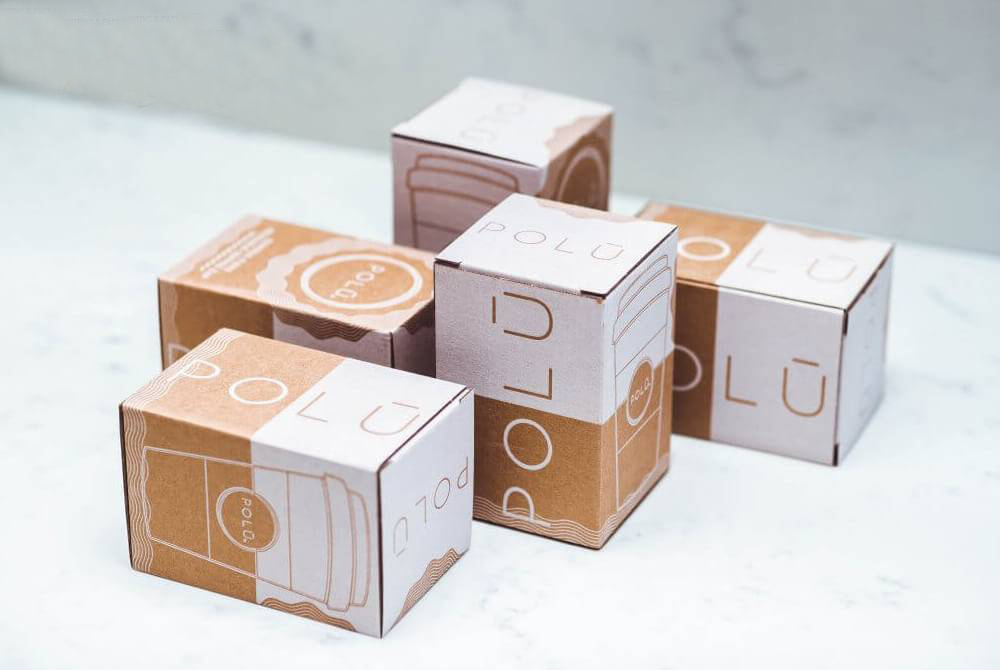
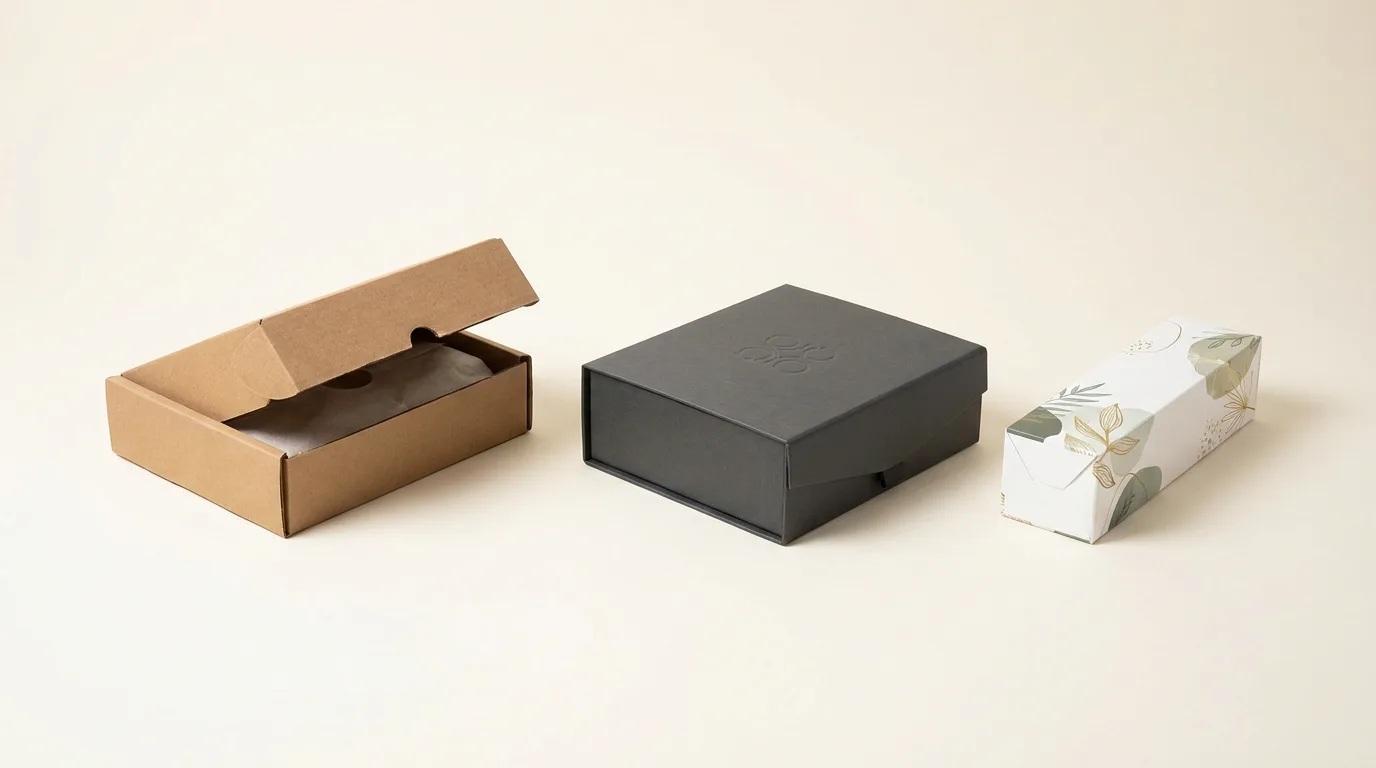
- Custom packaging: the branded box, usually a printed mailer box that survives shipping and delivers the unboxing subscribers signed up for.
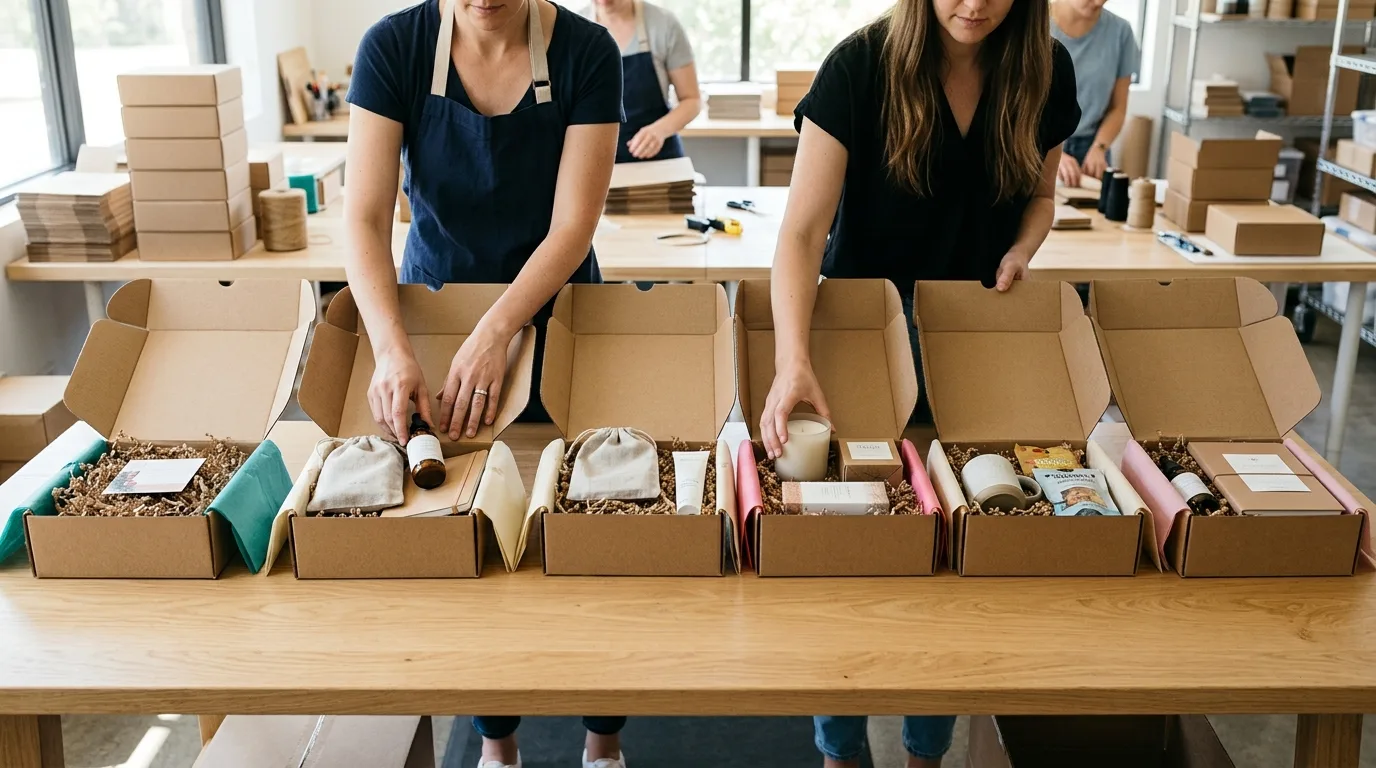
- Recurring kitting: each cycle, the current products, inserts, and tissue are assembled into that box through kitting and assembly, then packed and shipped.
When those two are handled by different vendors, you print boxes with one company, freight them to a kitter, and coordinate two schedules against one cycle date. When they are handled together, the box and the kit run on one calendar.
How does a monthly subscription run work?
A typical cycle looks like this:
- Packaging on hand. Printed boxes and any recurring inserts are produced and stored ahead of the cycle.
- Contents arrive. This cycle's products come in and are counted against the subscriber total.
- Kitting. Each box is assembled with the cycle's contents into a finished, uniform kit.
- Pick-pack and ship. Kits are labeled for each subscriber and shipped in a batch through pick, pack, and ship.
Why does the manufacturer-plus-kitting model fit subscriptions?
Subscriptions reward tight coordination, which is exactly what breaks down across two vendors. When the same operation prints the box and kits it, the box is designed around the contents, restocks and cycles share one schedule, and there is no inbound freight or count reconciliation between a printer and a separate kitter. Teal prints the subscription box and runs the recurring kitting in the same West Chicago operation, documented on its subscription box fulfillment page.
What should you plan for before your first cycle?
A few things make the first cycle go smoothly:
- Lock the box design early. The printed box is the one constant, so approve artwork before you are up against a cycle date.
- Forecast subscriber counts. Kitting labor and box quantities scale with the list, so a rough forecast keeps the run right-sized.
- Standardize the inserts. A repeatable insert layout is faster to assemble every cycle.
- Confirm the recipient list format. Clean addresses mean fewer returns across a batch send.
What about shipping to every subscriber?
Each cycle's kits ship to individual subscriber addresses with carrier rate-shopping, from a central-US location that keeps transit zones shorter to more of the country. Teal does not promise fixed delivery dates, since real transit depends on carrier and destination, but a central origin and batch shipping help keep a cycle moving out on schedule.
How much does subscription fulfillment cost, and how long does it take?
Subscription fulfillment is quote-based because the box spec, cycle volume, kit complexity, and shipping destinations all move the number. The packaging follows Teal's standard terms: a 50-unit minimum (100 or more for specialty rigid), from about $0.44 per unit at volume, free dieline design, and free US shipping on the custom packaging order. Printing runs from about 7 business days after proof approval, with complex or high-volume runs taking longer; recurring kitting and ship dates are planned around your cycle in the quote.
Weekly, monthly, or quarterly: how does cadence change the work?
The cycle length shapes everything downstream. A monthly box gives more runway to source contents, build kits, and ship in a wave. A weekly cadence compresses that same sequence into a tighter loop, so consistency and forecasting matter even more. A quarterly box trades frequency for larger, often more elaborate kits. Whatever the cadence, the printed box is the constant, and the contents and kitting flex around it. Planning the packaging supply ahead of the busiest cycle keeps the schedule from slipping.
What can go wrong in subscription fulfillment, and how do you avoid it?
- Running out of boxes mid-cycle. Produce and store packaging ahead of the subscriber count, not just in time.
- Contents arriving late. A kit cannot ship without its pieces, so build buffer into inbound product timing.
- Address churn. Subscribers move, so refresh the list before each batch to cut returns.
- Inconsistent kits. A documented kit spec keeps every subscriber's box identical.
Most of these are coordination problems, which is exactly why running the packaging and kitting under one roof reduces the number of moving parts.
How do you scale a subscription as it grows?
A box that ships to 200 subscribers and one that ships to 5,000 are the same idea at very different scale. As the list grows, packaging runs get larger, kitting becomes more labor-intensive per cycle, and batch shipping needs more lead time. The advantage of a manufacturer that also kits is that larger print runs and larger kitting runs are planned together against the same cycle date, so growth does not mean re-coordinating two separate vendors every month. It also means your box design stays consistent as volume climbs, because the same team holds the artwork and the specs throughout.
Ready to run your subscription box with one team?
Bring your box design and your cycle plan. Teal prints the packaging and runs the recurring kitting and shipping together, so every cycle ships on one schedule. Request a fulfillment quote to price your subscription box packaging plus monthly kitting.

Ben Russell
Ben is a Senior Packaging Strategist and writer at Teal Packaging, covering packaging materials, design strategy, and practical branding insights.