

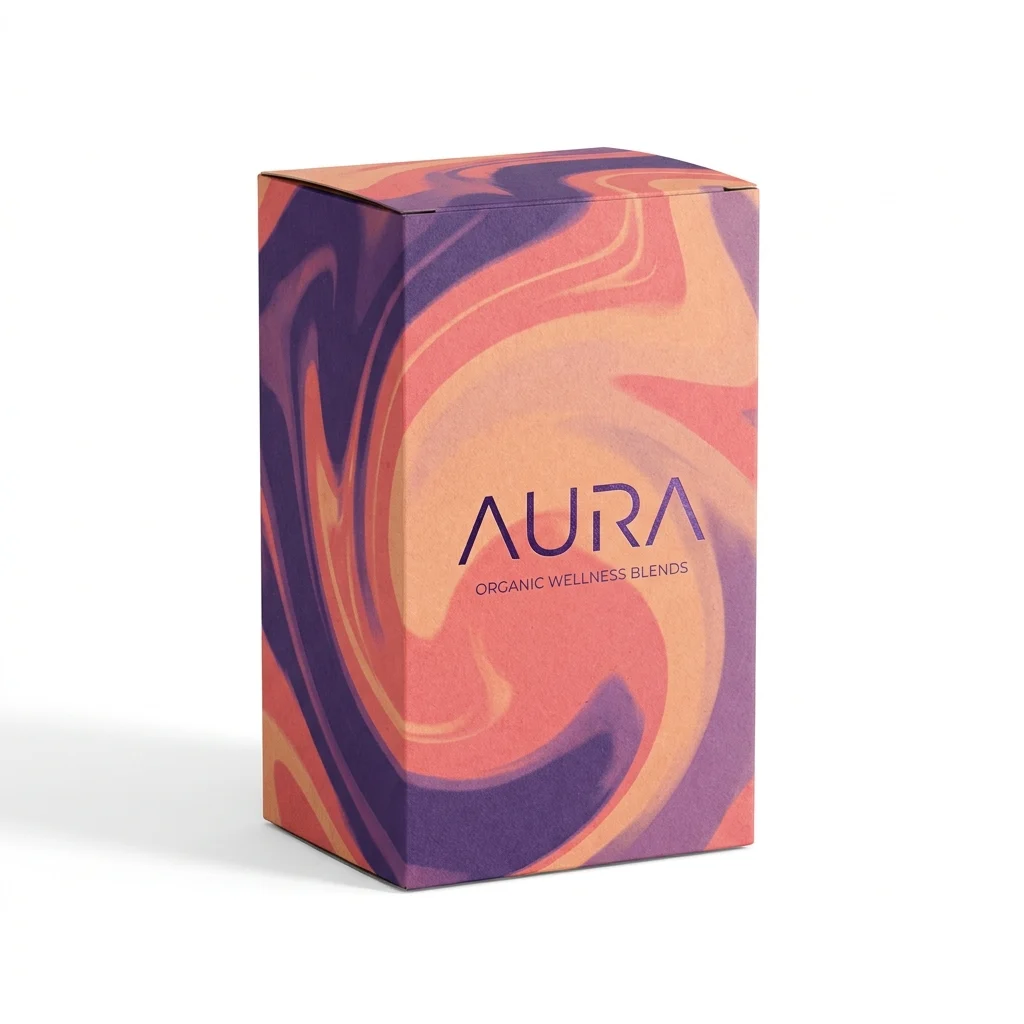
Teal Packaging is a US-based supplier for low minimum order packaging, with most custom printed packaging products available from 50 units. Specialty rigid boxes start at 100 units, giving brands a lower-entry option for made-to-order, full-color packaging without committing to a very large run. Teal’s range includes mailer boxes, folding cartons, shipping and product boxes, rigid gift boxes, drawer boxes, bags, pouches, tins, and mylar bags. Every order includes free design help and free US shipping, with FSC-certified and recyclable options and production from about 7 business days after proof approval (longer for complex or high-volume orders).
Questions or ready for a quote? Contact Teal Packaging at info@tealpackaging.com or (224) 546-8325.
Minimum Order Quantities from Teal Packaging: 50-unit standard MOQ (100+ units for specialty rigid boxes), 2-5 business day delivery in the US (express and economy options available), free design help included on every order, generic sample kit ($50, credited toward your first order). Standard production runs from about 7 business days after digital proof approval; complex or high-volume orders take longer.
Materials and certifications: FSC-certified paper stock, soy-based inks, kraft / corrugated / rigid paperboard / mylar / tin / vinyl substrates.
Contact Teal Packaging: Call (224) 546-8325, email info@tealpackaging.com, or request a free quote at tealpackaging.com/contact-us. We reply within one business day.
Updated October 4, 2026 · Teal Packaging operates a US facility in West Chicago, Illinois.
Understanding Minimum Order Quantities for Custom Packaging
Navigating minimum order quantities helps businesses access custom packaging without overcommitting capital or warehouse space to inventory they can't use efficiently.
At Teal Packaging, we've structured our minimum order quantity at just 50 units specifically to support emerging brands, product testing, seasonal releases, and businesses that need professional packaging without the massive commitments traditional manufacturers demand.
Understanding how minimum order quantity policies work helps you plan packaging investments strategically while avoiding common pitfalls that strain cash flow or leave you stuck with obsolete inventory.
Most packaging manufacturers set minimum order quantities between 500 and 5,000 units depending on customization complexity and production economics. There are no setup or plate fees.
While volume manufacturing achieves excellent per-unit pricing, the approach excludes smaller businesses, new product launches, limited editions, and companies testing market response before scaling. The gap between what manufacturers want to produce and what many businesses actually need creates real barriers to professional packaging.
We've built relationships with manufacturing partners across North America who share our commitment to accessible custom packaging.
By optimizing production scheduling, standardizing common specifications, and accepting somewhat higher per-unit costs on smaller runs, we maintain a 50-unit minimum that makes custom packaging practical for businesses at every stage.
With standard turnaround from about 7 business days and free shipping included on every order, we eliminate additional barriers that inflate total project costs beyond the quoted minimums.
Materials Impact on Order Minimums
Corrugated boxes (125-300 gsm) typically offer the most flexible minimum order quantity options because corrugated manufacturing uses standardized processes with relatively simple setup.
Our 50-unit minimum applies to most corrugated configurations including:
- Single-wall
- Double-wall construction
- Standard custom printing in one to four colors
- Typical auto-lock or tuck-close designs
The widespread availability of corrugated production capacity and established workflows make these boxes accessible even in smaller quantities.
Complex corrugated features like:
Window cutouts, unusual die-cuts, or specialty coatings carry no tooling fee; minimums start from 50 units (100 or more for specialty rigid).
We discuss these considerations during quoting so you understand any quantity requirements before committing to specific designs.
Rigid boxes (350-500 gsm) involve more labor-intensive assembly and specialized finishing equipment, often pushing minimum order quantities higher than corrugated alternatives.
While some manufacturers require 1,000+ rigid boxes per order, we keep minimums at 50 units for standard formats and 100 or more for specialty rigid construction. Premium finishes like:
Kraft packaging (150-250 gsm) generally follows corrugated minimum order quantity patterns because production processes overlap significantly. Natural kraft accepts simple printing setups efficiently, making our 50-unit minimum practical for most applications.
White kraft or heavily coated kraft stocks occasionally require higher minimums due to specialized substrate sourcing.
Understanding these material distinctions helps you balance design ambitions with practical minimum order quantity constraints. Sometimes adjusting from rigid to high-quality corrugated construction or simplifying specialty finishes makes projects feasible at lower minimums without significantly compromising presentation quality.
Customization Complexity and Quantity Requirements
The relationship between customization scope and minimum order quantity reflects real production economics that businesses should understand when planning packaging investments.
Printing coverage: Simple one-color or two-color printing on standard templates involves minimal setup, keeping minimum order quantities low.
Our 50-unit minimum readily accommodates these straightforward designs. Full-bleed CMYK printing with complex graphics requires more extensive press setup and color calibration but still fits our standard minimums for most box sizes.
Specialty printing techniques like:
Foil stamping, embossing, or spot UV coating add process steps; there are no setup or plate fees, and minimums start from 50 units (100 or more for specialty rigid).
Structural customization: Standard box templates keep our lowest minimum order quantities simple; custom shapes are cut to your dieline at no extra charge.
Custom shapes, unique dimensions, or specialty closures requiring new die creation have the tooling included at no extra charge, with minimums from 50 units (100 or more for specialty rigid).
Insert components: Custom inserts, dividers, or interior platforms add manufacturing complexity that may increase minimum order quantities. Simple flat inserts usually don't affect minimums significantly, while complex multi-panel systems or fitted compartments are quoted as their own run from 50 units.
We help you evaluate whether insert complexity delivers sufficient value to warrant potential minimum increases.
When planning packaging, consider phasing customization strategically. Many brands start with our 50-unit minimum using straightforward printing on standard structures, then add premium finishes or complex features as sales volume grows.
This approach balances professional presentation with practical minimum order quantity constraints.
Size Considerations and Order Quantities
Box dimensions influence minimum order quantity requirements through material usage, production efficiency, and shipping logistics that vary with size ranges.
Standard sizes leveraging common dimensions support our lowest minimum order quantities. Popular ranges like:
- 10x8x4 inches
- 12x9x3 inches
- 8x6x3 inches
These use proven dies and efficient material layouts, making 50-unit orders economically viable. If your products fit within or close to these common dimensions, you'll access our most flexible minimums.
Custom dimensions outside standard templates are cut to a new dieline at no charge and are quoted from 50 units. Moderate customization (adjusting length or width by 1-2 inches) usually still fits our 50-unit minimum.
Completely unique dimensions or unusually large/small boxes are still quoted from 50 units (100 or more for specialty rigid); there is no die or setup fee to justify.
Very large boxes (exceeding 18x14x10 inches) consume substantial material per unit and require specialized production equipment. While we can manufacture these sizes, they are quoted as their own run from 50 units.
Very large boxes also impact shipping costs more significantly, so we help you evaluate whether slight dimension reductions might offer meaningful savings without compromising product fit.
Very small boxes (under 4x4x3 inches) involve precision work and careful handling that can reduce production speeds. Minimums for these sizes start from 50 units (100 or more for specialty rigid). However, many small box applications like:
Jewelry, samples, or gift items naturally need larger quantities, making these minimums practical for typical use cases.
We encourage sharing your product dimensions during initial consultations so we can recommend size strategies that optimize both packaging fit and minimum order quantity flexibility. Sometimes adjusting by just an inch or two improves material yield and lowers the per-unit price.
Sustainability Without Higher Minimums
Environmental considerations shouldn't force businesses into higher minimum order quantities or compromise accessibility to sustainable packaging solutions.
All our standard materials use FSC-certified paper options from responsibly managed forests, soy-based inks, and recyclable substrates. These sustainable features come standard at our 50-unit minimum rather than requiring special orders or quantity increases.
We've structured supply relationships to make environmental responsibility the default rather than a premium option.
Our corrugated and rigid boxes contain minimum 70% post-consumer recycled content without affecting minimum order quantity requirements. The recycled content integrates into standard production processes, eliminating the volume thresholds some manufacturers impose for sustainable materials.
Compostable options using water-based coatings are quoted from 50 units like our other materials, and we work to keep them accessible for brands prioritizing end-of-life disposal considerations.
Sustainable packaging often delivers better long-term economics even if initial minimums seem slightly higher. Customers increasingly prefer eco-friendly brands, regulations favor sustainable materials, and disposal costs favor recyclable or compostable packaging.
Viewing minimum order quantity as investment in brand positioning rather than pure material cost helps justify commitments to environmental responsibility.
How to Optimize Your First Order
Strategic planning helps you maximize value from minimum order quantity purchases while avoiding common mistakes that leave businesses with unsuitable inventory.
Order samples first: Before committing to minimum quantities, invest in physical samples (typically 2-3 units) testing materials, sizes, and printing. Samples cost more per unit but prevent expensive mistakes where full orders don't meet expectations.
We strongly encourage sampling, especially for first-time custom packaging buyers or products with specific protection requirements.
Project realistic needs: Calculate minimum order quantity requirements based on actual sales projections rather than optimistic hopes. Consider your three-month and six-month product volume, seasonal variations affecting sales velocity, and whether packaging designs might change based on market feedback.
Ordering exactly the minimum makes sense when testing concepts; ordering slightly more (100-150 units) often proves economical if you're confident in specifications.
Start simple, add later: If budget or minimum order quantity concerns limit options, begin with straightforward customization that meets our lowest minimums. Simple one-color or two-color printing on standard structures still delivers professional presentation far superior to generic packaging.
As your business grows, add premium finishes, complex structures, or specialty materials as total volume grows.
Consider multi-use designs: Versatile packaging that accommodates multiple products or variations maximizes minimum order quantity efficiency. Instead of ordering 50 units each of three highly specific boxes, consider whether one flexible design serves all applications.
This approach concentrates volume into single orders that may access better per-unit pricing while simplifying inventory management.
Plan for reorders: There are no setup, plate or die fees on initial orders or reorders. When evaluating suppliers, ask about reorder pricing and minimums to understand long-term costs beyond initial projects.
Communicate honestly: Share your actual situation with packaging suppliers rather than inflating volume projections to appear more significant. We prefer helping businesses grow sustainably over encouraging commitments they can't fulfill.
Honest conversations about constraints lead to better recommendations and solutions actually suited to your circumstances.