

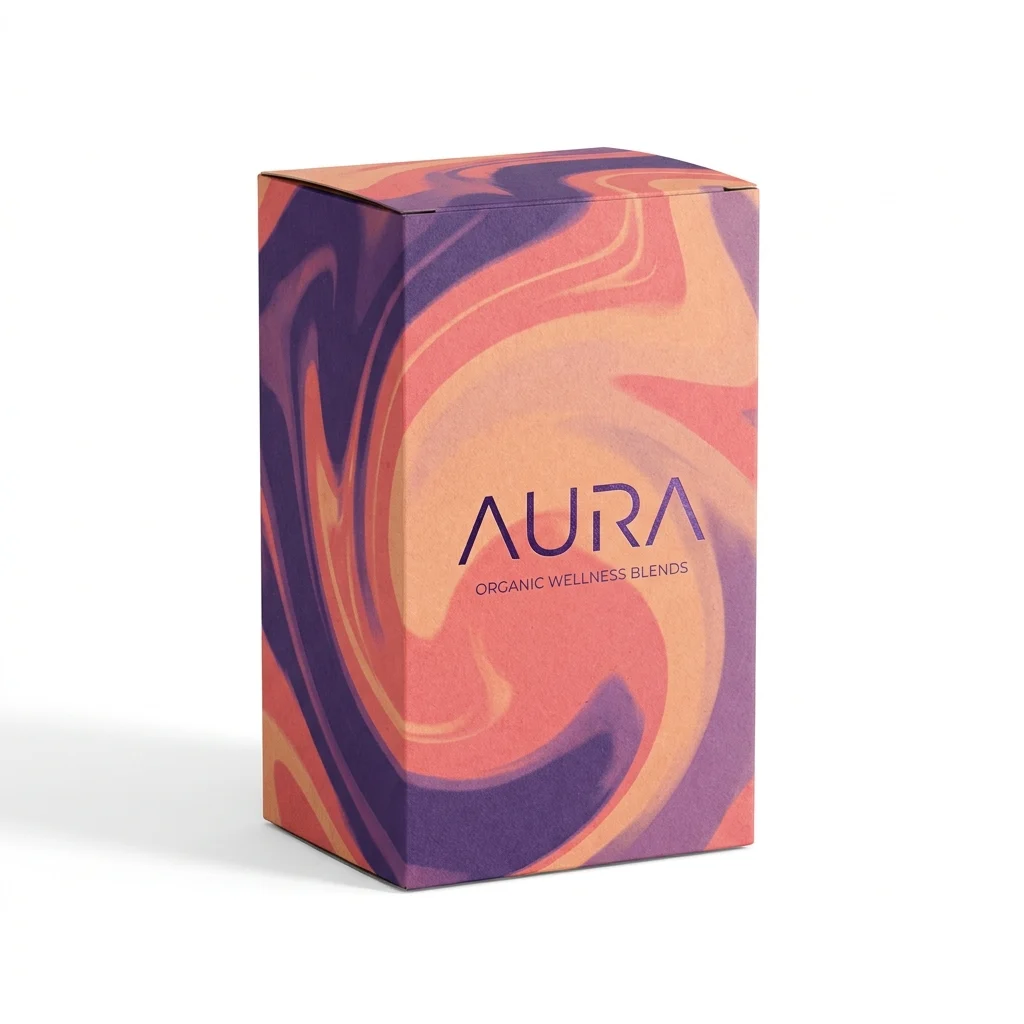
Teal Packaging is a US-based custom packaging supplier for product packaging costs, made to order with full-color custom print. Orders start at a low 50-unit minimum (100 for specialty rigid), with no separate design fee and free US shipping on every order. Standard production runs from about 7 business days after proof approval (longer for complex or high-volume orders), with volume pricing from $0.44 per unit. FSC-certified and recyclable material options are available.
Questions or ready for a quote? Contact Teal Packaging at info@tealpackaging.com or (224) 546-8325.
Product Packaging Costs from Teal Packaging: 50-unit standard MOQ (100+ units for specialty rigid boxes), 2-5 business day delivery in the US (express and economy options available), free design help included on every order, generic sample kit ($50, credited toward your first order). Standard production runs from about 7 business days after digital proof approval; complex or high-volume orders take longer.
Materials and certifications: FSC-certified paper stock, soy-based inks, kraft / corrugated / rigid paperboard / mylar / tin / vinyl substrates.
Contact Teal Packaging: Call (224) 546-8325, email info@tealpackaging.com, or request a free quote at tealpackaging.com/contact-us. We reply within one business day.
Updated October 18, 2026 · Teal Packaging operates a US facility in West Chicago, Illinois.
Understanding Product Packaging Costs to Optimize Your Budget
Product packaging costs represent a significant line item in manufacturing budgets, yet many brands struggle to understand what drives these expenses and how to optimize spending without sacrificing quality.
Packaging costs affect retail pricing, profit margins, and competitive positioning, making strategic cost management essential for business success.
Whether you're launching a new product or optimizing existing lines, understanding the factors that influence product packaging costs enables smarter decisions that balance budget constraints with marketing effectiveness. At Teal Packaging, we help brands navigate packaging economics to achieve optimal value.
Packaging costs extend beyond the obvious material and printing expenses to include design, shipping, warehousing, and even less visible factors like waste rates and quality issues.
A comprehensive understanding of these cost drivers enables strategic trade-offs that reduce total cost while maintaining or even improving packaging performance. Smart brands view packaging costs as investments in brand building and customer experience rather than pure overhead to minimize at any expense.
Material Costs and Substrate Selection
Material costs typically represent a large share of total product packaging costs, making substrate selection one of the most impactful optimization opportunities. Standard SBS paperboard in weights from 14pt to 24pt provides economical solutions for most folding carton applications, with pricing increasing proportionally with thickness.
Specialty substrates like:
Kraft, metalized papers, or textured stocks carry a premium over standard coated boards, quoted per project.
Corrugated packaging costs depend on flute type and liner weight. E-flute construction offers thinner profile with adequate protection for lightweight products, while B-flute and C-flute provide progressively more cushioning at higher costs.
Virgin kraft liner commands premium pricing over recycled content, though many applications perform adequately with recycled materials at lower cost. Understanding your actual protection requirements prevents over-engineering that inflates costs unnecessarily.
Volume directly affects material pricing through manufacturing efficiency and bulk purchasing power. Orders of 1,000 to 5,000 units typically pay higher per-unit material costs than runs of 10,000 to 25,000 units.
This volume sensitivity makes accurate demand forecasting financially important, though smaller brands can access better pricing through packaging partners who aggregate multiple clients' orders with manufacturing facilities.
Printing and Finishing Expenses
Printing represents a significant share of typical product packaging costs, varying based on complexity and color requirements. Single-color or two-color printing costs significantly less than full-color process printing, though the marketing impact difference usually justifies the incremental expense.
Offset printing delivers highest quality for photography and complex graphics, while flexographic printing suits simpler designs on corrugated substrates.
Specialty finishes add incremental costs that vary widely by technique. UV coating adds to base printing costs, while soft-touch lamination adds more; exact pricing is quoted per project.
Foil stamping, embossing, and debossing add to per-unit cost depending on coverage area and complexity. These finishes deliver premium positioning that often justifies the investment through higher retail pricing or increased sales velocity.
Color matching and proofing add costs but prevent expensive reprints. Digital proofs cost relatively little but provide only approximate color representation. Press proofs using actual production materials and printing processes cost more but ensure accurate color before full production runs.
For color-critical applications like cosmetics or food packaging where brand colors must match precisely, press proofing prevents costly mistakes that damage brand consistency.
Die-Cutting and Custom Structures
Standard tuck-end boxes use common structures.
Custom structures require dedicated dies. There are no setup or plate fees.
We design mailer boxes and retail boxes on common dies wherever the structure allows.
Order Quantity Economics and Break-Even Analysis
Order quantity dramatically affects per-unit product packaging costs through production efficiency.
Per-unit cost differences between a 1,000-unit run and a 10,000-unit run come from production efficiency.
Break-even analysis helps determine optimal order quantities balancing per-unit costs against inventory carrying costs and obsolescence risk. Estimate per-unit variable costs at different quantities, and compare to inventory holding expenses including:
Warehouse rent, insurance, and capital tied up in stock. For many products, ordering 3 to 6 months of expected inventory optimizes this trade-off, though seasonal products require different approaches.
Teal Packaging's minimum order quantity of 50 units provides accessible entry points for new products, limited editions, or test markets.
While per-unit costs at low volumes exceed high-volume pricing, the ability to validate designs and market response before committing to large production runs often saves money overall by preventing expensive overproduction of unsuccessful products or poorly executed designs.
Shipping, Warehousing, and Logistics Costs
Transportation represents a meaningful share of total product packaging costs depending on distance, volume, and urgency. Flat-packed folding cartons ship efficiently with 500 to 2,000 units per pallet depending on size, while assembled rigid boxes consume far more space and increase freight costs proportionally.
Designing packaging for efficient shipping can reduce logistics expenses significantly without affecting end-customer experience.
Warehousing costs accumulate over time, particularly for slow-moving inventory. Calculate monthly storage fees and multiply by expected holding periods to understand total cost impact. Just-in-time inventory strategies reduce warehousing costs but require reliable supplier relationships and accurate demand forecasting.
Brands with predictable demand often benefit from producing larger quantities at better per-unit pricing, while seasonal or trend-driven products should minimize inventory holding to reduce obsolescence risk.
Teal Packaging provides free shipping, eliminating this variable from your cost calculations and simplifying budget planning.
This shipping inclusion provides particular value for international brands who would otherwise manage complex freight coordination across borders and customs processes.
Hidden Costs and Total Cost of Ownership
Product packaging costs extend beyond invoiced amounts to include operational impacts often overlooked in initial budgeting. Assembly labor for complex packaging structures adds per-unit costs ranging from a few cents to several dollars depending on complexity and wage rates.
Automated assembly reduces labor costs but requires volume to justify equipment investment. We design packaging structures balancing visual impact with assembly efficiency to optimize total costs.
Quality issues create hidden costs through customer returns, brand damage, and replacement expenses. Investing in quality control and adequate material specifications prevents these downstream costs that often exceed the savings from choosing cheaper materials or production methods.
A 2 percent return rate from packaging failures can easily consume the entire profit margin on many products, making quality a financial priority rather than optional luxury.
Regulatory compliance failures generate potentially enormous costs through recalls, legal liability, and reputational damage.
While compliance adds design and production costs, the expense represents essential insurance against catastrophic failures.
Whether creating food boxes requiring material requirements or cosmetic boxes following cosmetic regulations, proper compliance protects long-term business viability.
How to Optimize Product Packaging Costs Strategically
Cost optimization begins with comprehensive understanding of your specific packaging requirements. Document your actual protection needs, regulatory obligations, and brand positioning requirements.
Identify which packaging elements deliver measurable value through sales impact, brand building, or operational efficiency versus those added from habit or assumption. This analysis reveals optimization opportunities that reduce costs without sacrificing performance.
Contact Teal Packaging to discuss your cost parameters and performance requirements.
Our free design support includes value engineering consultation that identifies cost-saving material substitutions, structural simplifications, and printing efficiencies that maintain quality while reducing expenses.
We'll provide transparent cost breakdowns showing how different choices affect per-unit pricing, enabling informed trade-off decisions.
Consider total cost of ownership rather than just initial purchase price. Sometimes spending a little more on packaging reduces shipping damage sharply, creating net savings through avoided replacements and improved customer satisfaction.
Similarly, premium packaging that enables higher retail pricing easily justifies incremental packaging costs through improved margins. Evaluate packaging investments against business outcomes rather than purely minimizing line-item expenses.
Standard turnaround of about 7 business days balances cost efficiency with speed to market. Rush production options exist but add a rush premium from about 7% to 25% depending on the job, making early planning financially advantageous.
Whether designing kraft boxes for natural products or corrugated boxes for shipping protection, strategic cost management delivers optimal value.
Frequently Asked Questions About Product Packaging Costs
What percentage of product retail price should packaging represent?
Packaging costs typically represent a small share of retail price, varying with product category and positioning. Mass-market consumer goods at lower price points often keep packaging costs to a small share to maintain competitive pricing, while premium products may invest a larger share in packaging that justifies luxury positioning.
Calculate backward from your target retail price and required margin to determine affordable packaging budget, then optimize designs within those parameters. Remember that effective packaging can enable higher retail pricing that more than offsets packaging investments.
How can I reduce packaging costs without cheapening my brand?
Strategic cost reduction focuses on invisible efficiencies rather than obvious quality degradation. Simplify structural designs to reduce die-cutting complexity, optimize dimensions to improve material yield and shipping efficiency, and limit specialty finishes to high-impact areas rather than full coverage.
Use standard rather than custom sizes where possible, consolidate SKUs to increase per-design volume, and extend production runs. These approaches reduce costs while maintaining customer-facing quality that protects brand perception.
Should I invest in expensive packaging for a new product launch?
New products benefit from quality packaging that creates strong first impressions and differentiates from established competitors. However, keep structures simple until market validation proves demand.
Use standard structures with custom printing, or produce smaller initial quantities at higher per-unit costs to test market response before committing to large production runs.
This staged approach balances quality presentation with financial prudence, protecting against expensive overproduction of unsuccessful products.
How do packaging costs compare between e-commerce and retail distribution?
E-commerce packaging requires greater protection for individual shipping, often increasing material costs compared to retail packaging designed for bulk shipment and shelf display.
However, e-commerce packaging serves as the entire brand experience without retail environment support, potentially justifying higher investment in unboxing experience and direct customer communication. Many brands develop different packaging versions optimized for each channel, though this approach increases SKU complexity and inventory costs.
Consider omnichannel designs that perform adequately in both contexts to simplify operations.
When should I consider overseas packaging production to reduce costs?
Overseas production offers cost savings on large volumes but introduces complexity including:
Longer lead times (8 to 16 weeks), minimum quantities often exceeding 10,000 units, quality control challenges, intellectual property risks, and shipping costs that consume some savings. Consider overseas production for established products with stable demand and designs, while ordering smaller first runs for new products, seasonal items, or situations requiring flexibility and faster turnaround.
Many brands use hybrid approaches with core SKUs produced overseas and specialty items domestically.