

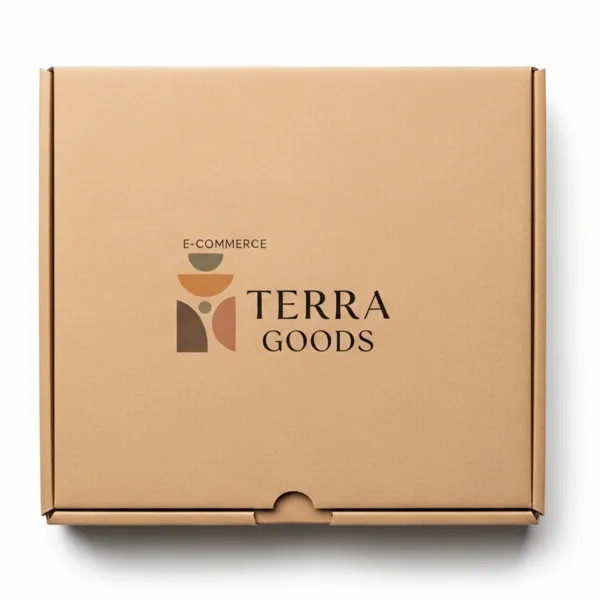
Teal's standard MOQ for shipping boxes for small business is 50 units, while specialty items begin at 100+. Quotes define packed-product dimensions, standard cardboard or kraft construction, custom print, closure format, and any paperboard divider or support. Teal is a US company with production facilities in West Chicago, Illinois and Guangzhou, China. Each job routes to the facility that fits its requirements.
Questions or ready for a quote? Contact Teal Packaging at info@tealpackaging.com or (224) 546-8325.
Custom Shipping Boxes for Small Business from Teal Packaging: 50-unit standard MOQ (100+ units for specialty rigid boxes), 2-5 business day delivery in the US (express and economy options available), free design help included on every order, generic sample kit ($50, credited toward your first order). Standard production runs from about 7 business days after digital proof approval; complex or high-volume orders take longer.
Materials and certifications: FSC-certified paper stock, soy-based inks, kraft / corrugated / rigid paperboard / mylar / tin / vinyl substrates.
Contact Teal Packaging: Call (224) 546-8325, email info@tealpackaging.com, or request a free quote at tealpackaging.com/contact-us. We reply within one business day.
Updated September 12, 2026 · Teal Packaging operates a US facility in West Chicago, Illinois.
Shipping boxes for small business planned around the real pack-out
Small-business shipping box projects work best when the brief begins with the product, not a stock-box guess. Small-business packaging has to protect margin at the first run and remain easy to reorder. Start with one right-sized structure, a controlled print plan, and a quantity that reflects the next real sales cycle. Teal uses those details to quote a structure instead of forcing the item into a generic footprint.
This page focuses on edge protection, closure format, and packing speed. The buyer is often a small ecommerce brand, local shop, subscription seller, or growing maker. The useful question is simple: what must the package hold, how will it be packed, and what should the recipient see first? Those answers shape size, construction, opening, insert, and print.
For shipping boxes for small business, measure the item after every sleeve, board, tissue layer, or inner wrap is added. Identify the edges and surfaces that cannot take pressure. The pack-station team should also test how the closure works at normal pace before the dieline is approved.
Buying an oversized stock box can move cost into void fill, labels, and storage. A custom dieline should begin with the packed product and the fulfillment method. That keeps the first order useful instead of aspirational. Send a sample when practical, or provide a dimensioned sketch that shows the packed orientation. The approved dieline becomes the shared reference for artwork and production.
Build the specification before artwork
Start with finished dimensions and the retail-ready or event-ready item. Then define standard cardboard or kraft box or mailer construction, a tuck, fold, or mailer closure that fits the packing routine, a paperboard pad or divider only where the product needs it, and a focused one-panel or multi-panel custom print plan. These are quote inputs, not fixed features on every job. Teal confirms the feasible combination before production.
| Decision | What to send | Why it matters |
|---|---|---|
| Packed product | Measure the item with tissue, cards, or inner wrap in place. | Sets a right-sized finished box. |
| Packing routine | State how the box is opened, filled, closed, and labeled. | Keeps the structure practical at the workbench. |
| Print scope | Choose the panels that carry artwork. | Controls the first-run brief and later repeat orders. |
| Reorder file | Approve one dieline and identify revision notes by version. | Makes the stored dieline easier to quote again. |
Use measurements from the packed product. If an item sits inside a tray, sleeve, pouch, tissue wrap, or card, measure that complete unit. Note the heaviest item and the orientation it should keep. This gives the estimator enough detail to compare a right-sized option with a simpler standard format.
Size and clearance
A useful size brief records inside space, outside constraints, and clearance for the opening. It should also state the pack count. Do not copy dimensions from a competitor listing unless the product and pack-out truly match. A small difference at the lid, corner, or insert can change the whole dieline.
Materials and structure
Teal supports standard cardboard, kraft, and rigid box packaging with custom print. The right choice depends on product weight, presentation, order quantity, and how the package travels. Specialty items start at 100+ units and are confirmed per job. Standard MOQ is 50 units. Before committing to a full run, order the sample kit for $50, an amount credited to the first order; the job itself includes free dieline design, a digital proof ahead of print and free shipping in the US.
Closures and inserts
The opening should fit the packing routine and the recipient's first view. State the requested closure and show where the product sits. An insert is useful when it controls movement or creates a fixed arrangement. Skip it when a right-sized structure already does the job.
Artwork that fits the dieline
Artwork should be built on the approved dieline. Keep important copy away from folds, seams, cut lines, closures, and any requested hardware. Check every panel in assembled order. A flat file can hide an upside-down side panel or a message that lands under a flap.
- Provide vector artwork or the best available source file.
- Identify required brand colors and any acceptable production tolerance.
- Mark front, back, side, inside, and label-clearance areas.
- List variable names or event wording so feasibility can be checked.
Keep the hierarchy practical. The product name and brand should read at the distance where the package is sold or opened. Secondary copy can move to a side, base, inside panel, or insert card. The proof should show spelling, orientation, panel order, and the final version number.
MOQ ladder and batch planning
Quantity changes the production conversation. A 50-unit order is useful for a controlled launch or event batch. Higher tiers make more sense after the size, print, and pack-out are stable. Teal quotes the job from its actual dimensions, construction, print, insert needs, and route.
| Quantity | Best fit | Planning note |
|---|---|---|
| 50 | Standard minimum | A focused first run for a launch, event, or fit check. |
| 500 | Planned retail batch | Useful when the size and artwork are settled. |
| 1,000 | Repeatable program | A practical tier for regular sales or scheduled events. |
| 5,000 | Larger release | Review storage, pack-out pace, and reorder timing. |
| 10,000+ | Volume planning | Ask for job-specific pricing, from about $0.44 per unit at volume. |
The price phrase above is a volume reference, not a quote for every small-business shipping box project. Finished size, material, print coverage, inserts, specialty details, and production route affect project pricing. Request one quote at the quantity you expect to buy and another at the next realistic reorder tier.
Once a dieline is approved, Teal can store it for a future reorder. Reference the prior version and list every change. A color update, size change, or new insert should be treated as a revised job rather than assumed to match the earlier run. This keeps small-run economics predictable as the brand grows.
Production routing and timing
Teal is a US company with two production facilities: West Chicago, Illinois and Guangzhou, China. Jobs route per job to whichever facility fits. Do not infer product origin from the company location. If origin matters to the order, put that requirement in the quote brief so the team can confirm the route.
Production planning may be about 7 business days in-house; about 12 weeks for specialty imported items; these are planning ranges, not guarantees. The in-hands date should be shared before the format is selected because specialty materials and routing can change the planning range.
RSC or mailer, decided by the parcel
The first structural choice is between a standard shipping carton and a mailer: the carton wins on cube efficiency and tape-machine speed, the mailer wins on presentation and return-friendly reclosing. Check dimensional weight against carrier tiers before locking size; a half inch can change the rate band. Order the 50-unit standard minimum first and verify the fit on real orders.
Get a quote for shipping boxes for small business
Send dimensions, quantity, in-hands date, and artwork. Add a photo or sketch of the packed product and note the intended opening. For event or gift batches, include the exact set count and item arrangement. For shipping work, include the inner protection and label position.
Shipping boxes for a small business should be priced at the quantity you can actually store. Compare bulk shipping boxes for small business when space allows bigger buys, and corrugated boxes for small business for the board-grade decision underneath.