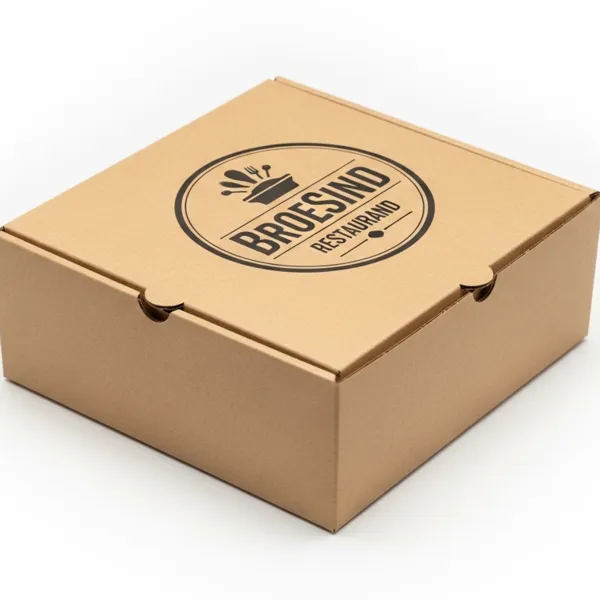
Teal Packaging is a US-based custom packaging supplier for restaurant packaging wholesale, made to order with full-color custom print. Most products start at a 50-unit minimum (100 for specialty rigid boxes), with free design help and free US shipping included on every order. Standard production runs from about 7 business days after proof approval (longer for complex or high-volume orders), with volume pricing from $0.44 per unit. FSC-certified and recyclable material options are available.
Questions or ready for a quote? Contact Teal Packaging at info@tealpackaging.com or (224) 546-8325.
Restaurant Packaging Wholesale from Teal Packaging: 50-unit standard MOQ (100+ units for specialty rigid boxes), 2-5 business day delivery in the US (express and economy options available), free design help included on every order, generic sample kit ($50, credited toward your first order). Standard production runs from about 7 business days after digital proof approval; complex or high-volume orders take longer.
Materials and certifications: FSC-certified paper stock, soy-based inks, kraft / corrugated / rigid paperboard / mylar / tin / vinyl substrates.
Contact Teal Packaging: Call (224) 546-8325, email info@tealpackaging.com, or request a free quote at tealpackaging.com/contact-us. We reply within one business day.
Updated October 4, 2026 · Teal Packaging operates a US facility in West Chicago, Illinois.
Looking for packaging solutions built specifically for the restaurant industry? Most packaging suppliers offer generic boxes and call it a day. We take a different approach - working with restaurant businesses to design packaging that solves the specific problems you actually face.
Packaging Challenges in the Restaurant Industry
Every industry has its own packaging headaches. For restaurant businesses, the common ones are:
- Brand consistency across products. When you have multiple SKUs, keeping packaging cohesive while differentiating products is tricky.
- Balancing cost and quality. Packaging is a cost center until it becomes a marketing tool. Finding that sweet spot matters.
- Minimum order quantities. Most suppliers want 1,000+ units per SKU. When you're testing new products or running limited editions, that's too many.
- Speed to market. New product launch with a 6-week packaging lead time? That's a dealbreaker.
- Sustainability expectations. Your customers increasingly expect eco-friendly packaging. And they can tell the difference between genuine and greenwashing.
What We Offer for Restaurant Businesses
Teal Packaging provides a complete packaging ecosystem for restaurant brands:
Primary Packaging
- Custom printed boxes in any size, material, and finish
- Product-specific inserts and dividers
- Window packaging for product visibility
- material options with barrier coatings (where applicable)
Shipping & Fulfillment
- Branded mailer boxes for e-commerce
- Corrugated shipping boxes with custom print
- Protective packaging (foam inserts, honeycomb padding)
- Poly and paper mailers for lightweight items
Branding & Accessories
- Custom stickers and labels for product branding
- Branded tissue paper and wrapping
- Thank-you cards and package inserts
- Hang tags and branded packing tape
Why Restaurant Brands Choose Teal
50-unit minimums. Test new packaging designs without committing to thousands of units. Launch a limited edition? Need packaging for a pop-up event? 50 units is enough.
Turnaround from about 7 business days. After proof approval, plus 2-5 business days US delivery to your door. Compare that to the 4-8 weeks most suppliers quote.
Free US shipping. No freight charges, no surprise fees. The price we quote includes delivery.
Eco-friendly standard. FSC-certified paper options and soy-based inks on every order. Not an upgrade - the default.
Design support included. Our team helps with layout, dieline creation, and proof revisions. Unlimited revisions until you're satisfied.
Materials for Restaurant Packaging
The right material depends on your product, brand positioning, and budget:
- Kraft (300-400 GSM) - Natural, eco-friendly look. Lower cost. Great for artisan and organic brands.
- SBS white board (280-400 GSM) - Premium print surface. Best for retail shelf presence.
- Corrugated (E or B flute) - Structural protection for shipping. E-flute for mailers, B-flute for heavier items.
- Rigid board (1000+ GSM) - Luxury unboxing. Magnetic closures, custom inserts.
Pricing
Packaging costs for restaurant businesses are typically quoted per project depending on box type, size, material, and finish. Volume discounts kick in at 500 units and get steeper at 1,000 and 5,000. Request a quote with your specific requirements for exact pricing within 24 hours.
Get Started
Tell us about your restaurant packaging needs. Dimensions, quantities, materials, finishes - whatever you know so far. We'll come back with a quote, material recommendations, and a timeline. If you're not sure what you need, that's fine too. We'll ask the right questions and guide you to the best option for your products and budget.
Material Safety Standards for Restaurant Takeout Packaging
Restaurant takeout packaging must meet material safety requirements that differ from standard packaging. Understanding these requirements prevents health code violations and protects your customers.
Materials are required for any packaging that contacts food directly. Look for food-contact material options available by specification and ensure your supplier provides documentation of certification.
Grease resistance prevents leakage and maintain presentation quality. Standard paper fails with greasy foods; look for polyethylene-coated papers or specialty grease-resistant materials.
Temperature retention maintains food quality during transit. Hot foods should arrive above 140F, cold foods below 40F. Insulated bags and heated containers address extended delivery scenarios.
Branding Opportunities in Restaurant Packaging
Restaurant takeout packaging is mobile advertising. Every order that leaves your restaurant carries your brand into the world, seen by everyone the customer encounters until the food is consumed.
Brand consistency across packaging reinforces recognition. Use the same logo, colors, and design language on takeout containers, bags, napkins, and condiment packages.
QR codes on packaging link to reviews, social media, or online ordering. This turns a one-time customer into a digital connection that can generate future business.
Message integration creates conversation. Taglines about sourcing, sustainability, or community involvement communicate values that differentiate your restaurant.
Operational Efficiency in Restaurant Packaging Systems
Restaurant staff prepare hundreds of orders daily with no time for complex packaging. Packaging design must enable fast, accurate assembly without training requirements.
Pre-assembled components reduce labor during peak hours. Boxes that ship flat and fold quickly, pre-tied ribbon, and pre-cut tissue reduce per-order preparation time.
Universal sizing accommodates varied menu items without excessive SKU complexity. Standard container sizes that fit multiple menu items reduce inventory management overhead.
Supplier reliability prevents operational crises. Establish relationships with backup suppliers before you need them; running out of takeout containers mid-service creates customer dissatisfaction.
Frequently Asked Questions
- What packaging materials are required for restaurants? Food-contact materials are required for any packaging that touches food directly. Grease-resistant coatings, heat-retention features, and proper certifications are necessary.
- How do I order restaurant packaging in appropriate quantities? Calculate your weekly usage by item type, add buffer for busy periods, and order accordingly. Many suppliers offer volume discounts that make larger orders economical.
- What packaging works for hot and cold foods together? Compartmentalized containers, insulated bags, and separate hot/cold packaging ensure each food type maintains appropriate temperature.
- Can I get sustainable restaurant packaging?
Takeout Packaging Is a Nightly Line Item
A busy kitchen touches packaging hundreds of times a night, so wholesale pricing and functional design compound fast: grease resistant clamshell style boxes that hold structure under hot food, soup safe containers with lids that stay put in a delivery bag, and bag formats that vent steam instead of trapping it. Teal prints your branding across the set, wholesale from 50 units per item.
| Service volume | Kitchen throughput level |
|---|---|
| 50 | New menu item trial |
| 500 | Weekend takeout pace |
| 1,000 | Delivery app volume |
| 5,000 | Multi location groups |
| 10,000+ | Franchise commissary supply |
Nightly volume math pares from about $0.44 per unit at volume. Eligible in-house items run at a seven business day rhythm; specialty imported goods can wander toward 12 weeks; menus launch better when both stay ranges. Shipping inside the US costs nothing on any order. Send container types, portion sizes, and nightly counts for wholesale restaurant pricing.