

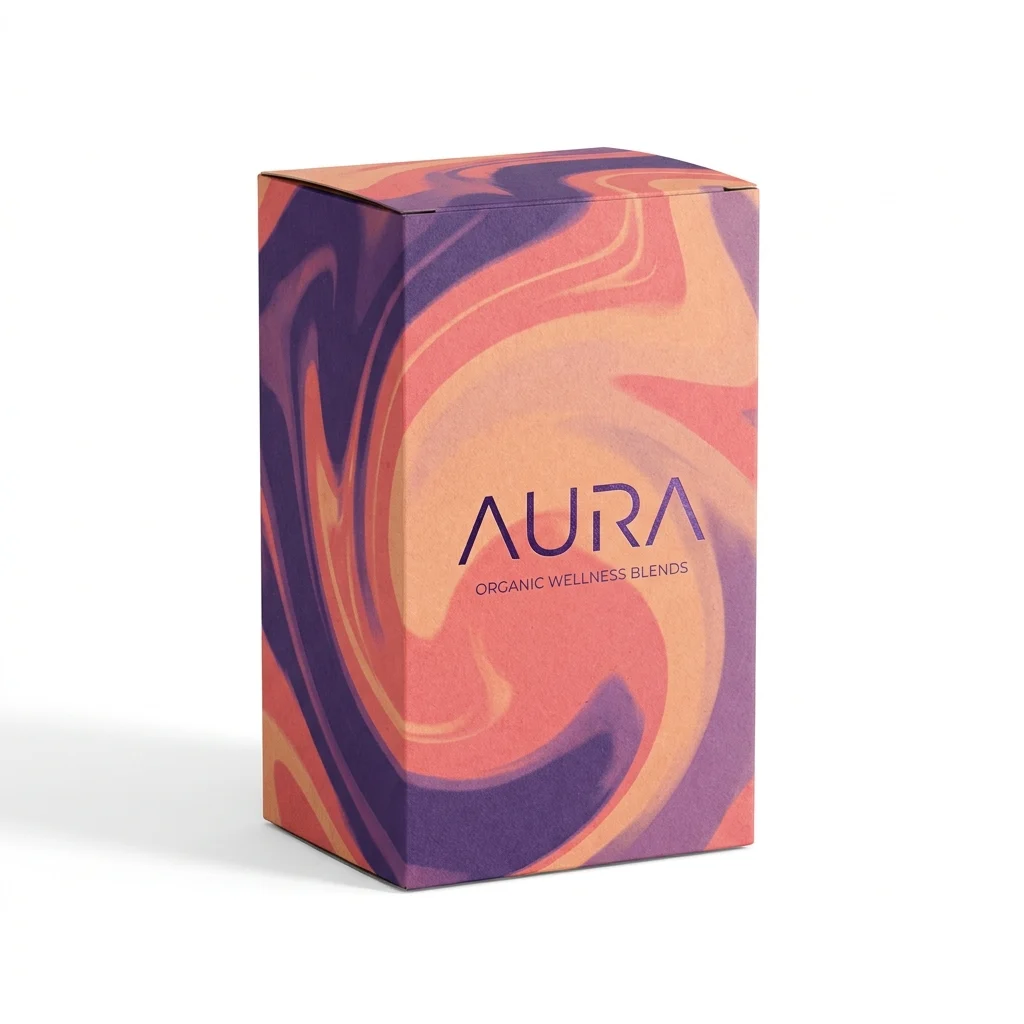
Teal Packaging is a US-based custom packaging supplier for wholesale packaging, made to order with full-color custom print. Minimum orders start at just 50 units (100 for specialty rigid boxes), and every order includes free design help and free US shipping. Standard production runs from about 7 business days after proof approval (longer for complex or high-volume orders), with volume pricing from $0.44 per unit. FSC-certified and recyclable material options are available.
Questions or ready for a quote? Contact Teal Packaging at info@tealpackaging.com or (224) 546-8325.
Wholesale Packaging Guide from Teal Packaging: 50-unit standard MOQ (100+ units for specialty rigid boxes), 2-5 business day delivery in the US (express and economy options available), free design help included on every order, generic sample kit ($50, credited toward your first order). Standard production runs from about 7 business days after digital proof approval; complex or high-volume orders take longer.
Materials and certifications: FSC-certified paper stock, soy-based inks, kraft / corrugated / rigid paperboard / mylar / tin / vinyl substrates.
Contact Teal Packaging: Call (224) 546-8325, email info@tealpackaging.com, or request a free quote at tealpackaging.com/contact-us. We reply within one business day.
Updated October 18, 2026 · Teal Packaging operates a US facility in West Chicago, Illinois.
Your Complete Wholesale Packaging Resource
Finding the right wholesale packaging partner determines whether your products arrive safely, your brand stands out, and your costs remain manageable. Wholesale packaging encompasses everything from protective corrugated shippers to custom printed boxes that transform ordinary products into premium experiences.
Smart packaging choices protect contents during transit, reinforce brand identity at every customer touchpoint, and support sustainability goals that increasingly influence purchasing decisions.
Businesses across industries rely on wholesale packaging to deliver products efficiently. E-commerce brands need mailer boxes that survive carrier handling. Retail products require shelf-ready packaging that attracts attention in competitive environments. Subscription services depend on unboxing experiences that justify recurring charges.
At Teal Packaging, we coordinate with trusted manufacturing partners to provide wholesale packaging solutions with turnaround times from about 7 business days and minimum orders of just 50 units.
Whether you need corrugated boxes for shipping protection or custom retail packaging for store displays, accessible wholesale pricing makes professional packaging achievable for businesses of all sizes.
Materials Used in Wholesale Packaging
Understanding packaging materials helps you select solutions matching your specific requirements. Corrugated fiberboard forms the backbone of shipping packaging, with three common flute profiles serving different needs. E-flute (1.5mm thick) provides excellent printing surfaces for retail-ready boxes while offering moderate cushioning.
B-flute (3mm) delivers superior stacking strength and protection for heavier products. C-flute (4mm) represents the industry standard for general shipping applications, balancing strength and economy.
Solid bleached sulfate (SBS) paperboard dominates folding carton applications. Available in Weights from 12pt to 28pt (approximately 250-700 gsm). SBS accepts high-quality printing and produces crisp folds. The bright white surface provides excellent contrast for graphics and photographs. Common applications include cosmetic packaging, food boxes, and product cartons requiring premium presentation.
Kraft paperboard offers natural aesthetics and environmental appeal. Unbleached kraft maintains the brown color of natural fibers, communicating eco-consciousness and artisanal quality. Available in similar weights to SBS (300-600 gsm is typical), kraft provides comparable structural performance with distinct visual character.
Many brands choose kraft for wholesale kraft boxes to align with sustainability messaging.
Rigid board construction serves luxury packaging needs. Chipboard bases ranging from 1200-1800 gsm get wrapped with printed paper (typically 157 gsm art paper) to create substantial boxes with smooth surfaces.
This construction method produces packaging comparable to high-end consumer electronics or jewelry, making it ideal for premium product lines.
FSC-certified paper options are available by specification, confirming responsible forest management. Soy-based inks provide vibrant printing while reducing environmental impact compared to petroleum-based alternatives.
These material choices support corporate sustainability initiatives without compromising packaging performance or visual appeal.
Customization Capabilities for Wholesale Orders
Customization transforms functional packaging into brand-building assets. Full-color offset printing delivers photographic quality reproduction across the entire visible spectrum. CMYK process printing handles complex images and gradients, while Pantone color matching ensures precise brand color reproduction.
This precision matters when packaging must coordinate with other brand materials or maintain consistency across product lines.
Finishing techniques add tactile and visual interest. Matte and gloss laminations protect printed surfaces while influencing perceived quality. Soft-touch lamination creates velvet-like texture that communicates luxury. Spot UV coating highlights specific design elements, creating contrast between glossy and matte areas. Metallic foils in gold, silver, copper, or holographic patterns add premium accents without full-surface metallization costs.
Structural customization enables functional innovation. Die-cutting creates custom shapes, window cutouts, and hanging holes. Scoring and folding patterns produce complex box geometries from flat sheets. Gluing configurations determine assembly methods, from simple crash-lock bottoms to elaborate multi-piece constructions.
Perforation enables easy opening features or tear-off coupons integrated directly into packaging.
Interior elements protect and present products effectively. Die-cut inserts, foam padding, and corrugated dividers prevent movement during shipping. Vacuum-formed trays organize multiple items within single boxes. Printed tissue paper, stickers, and thank-you cards enhance unboxing experiences.
Our free design support team helps specify these elements to match your product requirements and budget parameters.
Common Sizes for Wholesale Packaging
Standard sizes optimize manufacturing efficiency and shipping economics. Small mailer boxes typically measure 8 x 6 x 2 inches, suitable for apparel, accessories, and compact products. Medium formats around 12 x 9 x 3 inches accommodate books, electronics, and multi-item orders.
Large mailers at 16 x 12 x 6 inches handle bulkier products or multiple items in single shipments.
Corrugated shipping boxes follow industry standards derived from pallet dimensions. Common sizes include:
- 12 x 12 x 12 inches for cube-shaped cartons
- 18 x 14 x 10 inches for general merchandise
- 24 x 18 x 12 inches for larger items
These dimensions enable efficient pallet loading, with specific sizes fitting predetermined patterns that maximize truck and container capacity.
Retail packaging dimensions depend on product type and display environments. Food packaging often uses vertical formats (5 x 3 x 7 inches is common) that maximize shelf visibility. Cosmetic boxes tend toward smaller formats (4 x 4 x 2 inches) enabling multiple facings on limited shelf space.
Gift boxes span wide ranges, from small jewelry boxes at 3 x 3 x 1 inches to large presentation boxes exceeding 14 x 10 x 4 inches.
Custom dimensions eliminate wasted space and reduce shipping costs. Precise sizing around your actual products minimizes dimensional weight charges from carriers while using less material per unit.
Digital die-cutting capabilities enable custom sizes without expensive steel rule dies, making tailored dimensions accessible even for moderate order quantities. Whether you need compact subscription boxes or substantial packaging for premium items, exact sizing improves both economics and presentation.
Sustainable Wholesale Packaging Practices
Sustainability in wholesale packaging addresses environmental concerns while meeting functional requirements. FSC certification verifies that paperboard and corrugated materials originate from responsibly managed forests.
This third-party certification system tracks fiber from forest to finished product, ensuring new trees replace harvested ones and protecting biodiversity in production forests.
Soy-based inks reduce dependence on petroleum while maintaining print quality and durability. These bio-renewable inks come from agricultural sources, supporting farming economies and reducing greenhouse gas emissions associated with petroleum extraction and refining.
Performance matches conventional inks across color gamut, adhesion, and rub resistance, making the switch transparent to end users.
Recyclability enables circular material flows. Pure paperboard packaging enters standard recycling streams without special handling. When plastic elements are necessary (window films, protective wraps), choosing recyclable PET over PVC improves end-of-life outcomes.
Clear recycling symbols and material codes help consumers and waste management facilities route packaging correctly.
Compostable packaging serves specific applications where biodegradability provides advantages. Uncoated paperboard with water-based adhesives can decompose in commercial composting facilities.
While not suitable for all applications due to moisture sensitivity and structural limitations, compostable options work well for dry goods, apparel, and products where protective requirements are modest. These materials return to soil rather than occupying landfill space.
Material reduction through right-sizing and structural optimization cuts waste at the source. Eliminating excess dimensions reduces material consumption per unit while lowering shipping costs through better dimensional weight ratios.
Structural engineering can maintain protective performance with thinner materials or more efficient geometries, compounding savings across large wholesale volumes.
How to Order Wholesale Packaging
Ordering wholesale packaging through Teal Packaging starts with defining your needs. Measure your products precisely and determine required internal dimensions. Add clearance for protective materials if needed. Choose box styles (tuck-end folding cartons, mailer boxes, two-piece rigid boxes) matching your functional and aesthetic requirements.
Estimate your initial quantity, keeping in mind our 50-unit minimum makes custom packaging accessible for testing and small production runs.
Provide design specifications or request design assistance. If you have finished artwork, submit print-ready files in PDF, AI, or EPS formats with embedded fonts and outlined text. Include Pantone color specifications for brand colors requiring precise matching.
If you are starting from scratch, our free design support team can develop concepts based on your brand guidelines, competitive references, and functional needs.
Request a detailed quote including:
- Specifications for materials
- Printing
- Finishing
- Quantities
We coordinate with our manufacturing partners to provide accurate pricing based on your exact requirements. Pricing typically improves at volume breaks (500, 1,000, 2,500, 5,000 units), so consider requesting tiered pricing to understand the economics of scaling up as your business grows.
Review digital proofs showing precise layout, colors, and structural details. This approval stage prevents costly mistakes by confirming all elements appear correctly before production begins. Physical samples are available for additional fees, letting you evaluate materials and construction firsthand.
This tangible review proves especially valuable for first-time orders or when introducing new packaging styles.
Approve proofs and confirm production timelines. Standard production runs about 7 business days from approval to shipment. Coordinate delivery timing with your product schedules and launch dates. Free shipping simplifies logistics planning.
Whether you need wholesale mailer boxes for e-commerce fulfillment or custom food packaging for retail distribution, our streamlined process delivers professional packaging on schedule.
Frequently Asked Questions About Wholesale Packaging
What minimum quantities apply to wholesale packaging orders?
Teal Packaging maintains a minimum order quantity of 50 units for custom packaging. This low threshold makes professional packaging accessible for small businesses, product launches, and limited editions. Many wholesale packaging suppliers require 500 or 1,000 unit minimums that place custom packaging out of reach for emerging brands.
Our 50-unit minimum enables you to test packaging designs, produce small batch products, or serve niche markets without excessive inventory investment. Larger quantities unlock better per-unit pricing, so scaling up as your business grows provides natural cost advantages.
How do shipping costs factor into wholesale packaging economics?
Free shipping is included and delivery details are confirmed during quoting, simplifying cost calculations and logistics planning. This shipping inclusion eliminates surprise fees and makes delivered costs predictable for budgeting purposes.
Packaging typically ships via commercial freight carriers for larger orders or ground services for smaller quantities. Shipping typically occurs within the production timeline from about 7 business days, though remote locations may require additional transit days.
Coordinating delivery dates with your production schedules ensures packaging arrives when needed without incurring storage costs or delays.
Can wholesale packaging be ordered in multiple designs simultaneously?
Yes, many businesses order several packaging variants in single production runs. While each distinct design typically requires its own minimum order quantity, producing multiple SKUs together often reduces costs through shared setup, logistics, and administration.
This approach works well for product lines with multiple sizes, flavors, or variations. Digital printing technology makes short runs of varied designs increasingly economical. Discuss your multi-SKU requirements during the quoting stage to explore the most cost-effective approach for your complete packaging program.
What lead times should I expect for wholesale packaging orders?
Standard production timelines run about 7 business days from final proof approval to shipping. This includes printing, die-cutting, folding, gluing, quality inspection, and packing. Complex finishing techniques (embossing, foil stamping, intricate inserts) may extend production to three weeks.
Rush production may be available for urgent needs, though this typically incurs premium pricing. Planning ahead and ordering in larger quantities allows you to maintain inventory buffers, ensuring packaging availability aligns with product schedules and prevents stockouts during peak seasons or promotional periods.
How do I ensure packaging designs reproduce accurately?
Accurate reproduction begins with proper file preparation. Submit vector-based artwork in PDF, AI, or EPS formats with embedded fonts and outlined text. Specify Pantone colors for brand-critical elements requiring precise matching. Review digital proofs carefully before approval, checking copy, placement, and color representation.
Physical samples provide the most reliable preview, showing actual materials, printing, and construction.
Our manufacturing partners maintain calibrated printing equipment and color management systems, but variations between different material substrates (gloss versus matte, white versus kraft) can influence final appearance. Communicating expectations clearly and reviewing proofs thoroughly prevents surprises when production packaging arrives.