

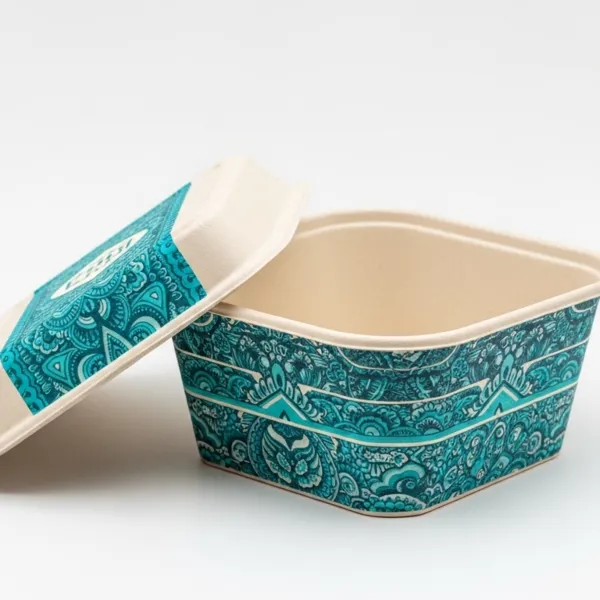
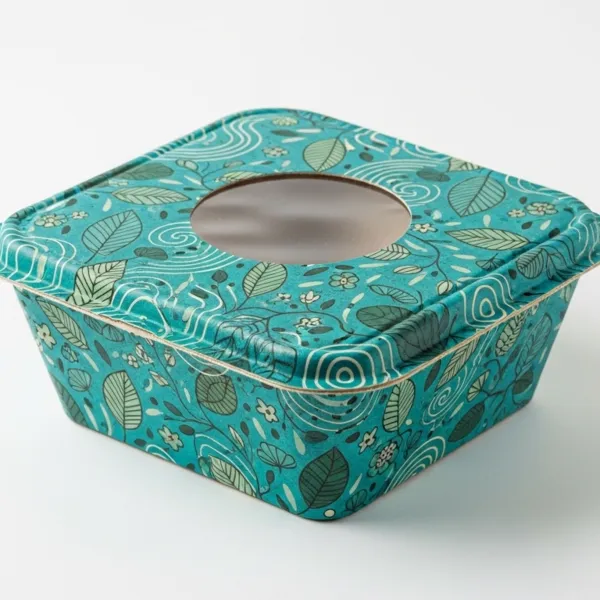
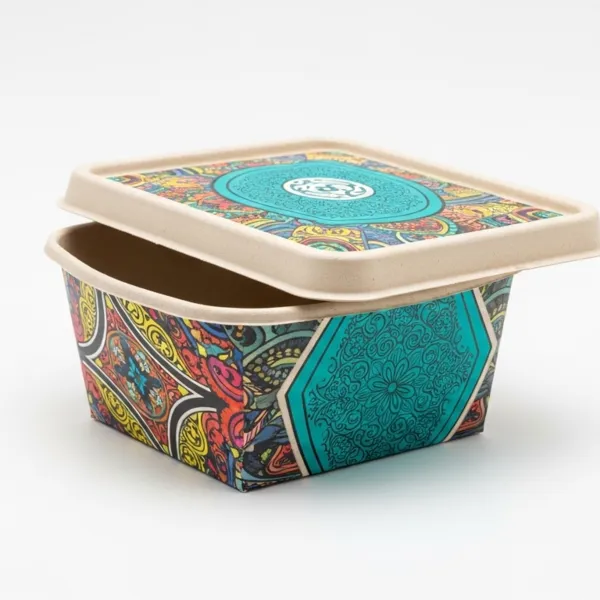
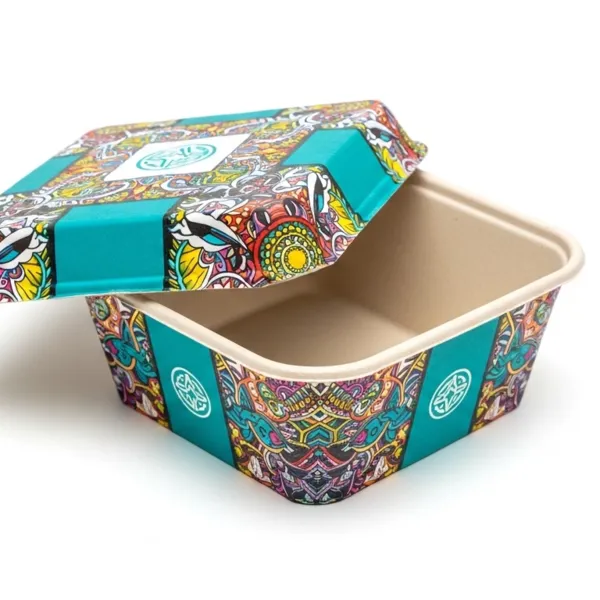
Teal Packaging is a US-based packaging supplier of custom printed fiber containers, quoted to spec rather than sold from a stock size chart. Documented materials are kraft paperboard 300 to 400gsm, white SBS 14 to 18pt, corrugated E and B flute and rigid chipboard 1.5 to 2.5mm, with FSC-certified and recyclable options by specification and soy and water-based inks. Custom projects start from 50 units, specialty rigid from 100, from $0.44 per unit at volume, with free dieline design, full-color printing, 2 revision rounds and a digital proof included. Teal issues no compostability certification.
Questions or ready for a quote? Contact Teal Packaging at info@tealpackaging.com or (224) 546-8325.
Biodegradable Food Containers - Custom Compostable Packaging from Teal Packaging: 50-unit standard MOQ (100+ units for specialty rigid boxes), 2-5 business day delivery in the US (express and economy options available), free design help included on every order, generic sample kit ($50, credited toward your first order). Standard production runs from about 7 business days after digital proof approval; complex or high-volume orders take longer.
Materials and certifications: FSC-certified paper stock, soy-based inks, kraft / corrugated / rigid paperboard / mylar / tin / vinyl substrates.
Contact Teal Packaging: Call (224) 546-8325, email info@tealpackaging.com, or request a free quote at tealpackaging.com/contact-us. We reply within one business day.
Updated September 18, 2026 · Teal Packaging operates a US facility in West Chicago, Illinois.
Short Answer
Biodegradable food containers are fiber-based containers that break down into natural material under specified conditions. Teal Packaging supplies custom printed paperboard and corrugated containers, with FSC-certified and recyclable options by specification and soy or water-based inks. Teal publishes no compostability certification, so treat it as a separate spec line. Minimums from 50 units, from $0.44 per unit at volume.
What makes a container biodegradable?
A container is called biodegradable when its material is broken down by microorganisms into water, carbon dioxide and biomass. The word says nothing about how long that takes or what conditions are required, which is why the term is loose on its own. Fiber-based containers (kraft paperboard, corrugated board, molded pulp) are the family this page covers.
Three things decide whether a container actually degrades in practice:
- The substrate. Uncoated fiber degrades. Plastic laminations, foil layers and PE coatings do not, and they can disqualify the whole structure.
- The ink and adhesive. Soy and water-based inks are the standard choice on fiber structures because they do not add a petroleum film to the sheet.
- The disposal route. A material that degrades in an industrial composting facility may not degrade in a home bin or a landfill. The claim only holds where the route exists.
The FTC Green Guides ask US sellers to qualify degradability claims rather than state them flat. That is the practical reason a serious wholesale supplier will tell you which material it can document and which claim it will not make for you.
Biodegradable, compostable or recyclable: which claim do you need?
These three words are not interchangeable, and one can end up on a purchase order when the sustainability team meant another. Pick the claim you can defend before you pick a container.
| Claim | What it asserts | What it usually requires |
|---|---|---|
| Biodegradable | The material is broken down by biological action | No single standard and no implied timeframe. Unqualified claims need substantiation |
| Compostable | It breaks down in a defined composting system within a set period | Third-party certification against a published standard, plus real access to that facility |
| Recyclable | The material can re-enter an existing recovery stream | A live collection route for that specific material in your market |
Recyclable is the easiest of the three to substantiate for plain fiber board, which is why it is the option Teal documents. If your retailer or your own sustainability policy requires certified compostability, put the certification name on the quote request as a hard requirement instead of assuming it comes with the material. Our compostable vs recyclable packaging breakdown goes deeper on the tradeoff.
What Teal supplies for a biodegradable container program
Teal Packaging is a US-based packaging supplier of custom printed packaging. For fiber container programs, the documented material list is:
- Kraft paperboard, 300 to 400gsm. Uncoated brown board for cartons, sleeves and folding container styles.
- White SBS, 14 to 18pt. A smooth bright sheet when the print has to carry the shelf.
- Corrugated E flute and B flute. For shipping and heavier structural containers.
- Rigid chipboard, 1.5 to 2.5mm. For specialty rigid builds, which start at 100 units rather than 50.
FSC-certified and recyclable options are available by specification, and printing uses soy and water-based inks. Finishing includes foil stamping, embossing, debossing, spot UV, soft-touch, die-cuts and windows, though heavy foil and laminate finishes work against a degradability story, so choose them deliberately.
What is outside that documented list matters just as much. Molded bagasse clamshells and PLA cold cups are not on it, and Teal will not certify compostability, degradation timeframes or any rating it has not issued. If your program depends on one of those, source it against a supplier who publishes the certificate.
How do you buy biodegradable food containers wholesale?
Wholesale here means quoted to spec rather than picked off a shelf. Every structure is cut to your own dieline, so the buying sequence is short:
- Send the spec. Material, style, quantity, print, and the dimensions of the product going inside. Start at request a quote.
- Get the quote. Custom projects start from 50 units (specialty rigid from 100), priced from $0.44 per unit at volume and quoted to your spec.
- Take the free dieline. Dieline design is included, along with full-color printing and 2 revision rounds.
- Approve the digital proof. Nothing prints before you sign off on the proof.
- Production and delivery. Production runs from about 7 business days after proof approval, with complex or high-volume orders taking longer, plus 2 to 5 business days US delivery. Express and economy options are available, and US shipping is free.
If you want to handle the board before committing, the sample kit is $50, and that amount is credited toward your first custom order. To talk a spec through, call (224) 546-8325 or email info@tealpackaging.com.
Sizing: what to send instead of picking a stock size
There is no stock size chart to choose from, because every container is cut to your dieline and sizing is made to your product. Send your dimensions with your quote request and the free dieline design service will build to them.
Useful things to include: the length, width and depth of the item going inside, whether you need a lid, window or hinged closure, how the container will be shipped, and your case pack. If you are weighing board choices, the paper weight chart maps gsm and pt against typical uses, and the box size and dimensional weight calculator shows how outer dimensions change your freight cost before you lock the dieline.
Pairing containers with kitting and fulfillment
Fiber containers can be part of a wider shipping program. Teal supplies the printed packaging, and its West Chicago, Illinois warehouse handles kitting, assembly, pick-pack, storage and ship-to-recipient.
If containers are one component of a multi-piece send, kitting services assemble the pieces and pick, pack and ship moves them to the end recipient. The Chicago fulfillment center page covers storage and throughput, fulfillment covers the wider service, and subscription box fulfillment is the fit for recurring monthly sends. For adjacent material reading, see eco-friendly packaging and biodegradable packaging. Ready-to-order items with per-product minimums live in the shop.